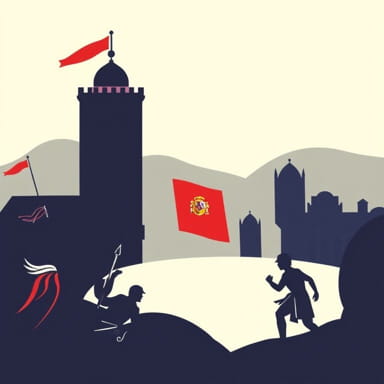
The Spanish conquest and the rise of centralism were deeply transformative processes that reshaped entire societies in the Americas. When Spanish conquistadors arrived in the New World, they brought not only their weapons and horses but also new political, religious, and economic systems. These systems sought to replace the decentralized native structures with a rigid and centralized authority that revolved around the Spanish crown. The legacy of these changes continues to influence the political and social landscapes of former Spanish colonies today, especially in Latin America.
Origins of the Spanish Conquest
Early Expeditions and Motives
The Spanish conquest began with the voyages of Christopher Columbus in 1492 and quickly evolved into a more aggressive campaign of colonization. The motives were clear: gain wealth through gold, silver, and trade; spread Christianity through missionary work; and expand Spanish political influence. These goals were pursued through a combination of military power and strategic alliances with rival indigenous factions.
Major Conquests in the Americas
The most notable conquests included Hernán Cortés’s overthrow of the Aztec Empire in 1521 and Francisco Pizarro’s destruction of the Inca Empire in 1533. These events marked the collapse of two of the most powerful and centralized indigenous civilizations in the Americas. Despite their strength, internal divisions and diseases brought by Europeans greatly weakened these empires, making them more vulnerable to conquest.
Centralism as a Colonial Tool
Establishment of the Viceroyalties
After securing control over large regions, the Spanish crown implemented a centralized administrative system to maintain order and extract resources. This led to the creation of viceroyalties such as New Spain (centered in Mexico) and Peru. Each viceroyalty was governed by a viceroy who represented the king and had broad executive, legislative, and judicial powers.
Centralized Religious Authority
The Catholic Church played a central role in Spanish colonial governance. The creation of bishoprics and the establishment of missions extended both religious conversion and political control. Religious orders such as the Franciscans and Jesuits were granted vast influence over indigenous communities, effectively integrating them into the centralized colonial order.
Legal and Economic Centralization
The Laws of the Indies codified the organization of Spanish colonial life, including town planning, governance, and treatment of indigenous peoples. The encomienda and later repartimiento systems centralized labor control by granting Spanish settlers rights to indigenous labor. Meanwhile, all economic activities were tightly regulated by the Council of the Indies in Spain, ensuring that wealth flowed back to the Iberian Peninsula.
Consequences for Indigenous Societies
Collapse of Local Power Structures
The centralism imposed by the Spanish effectively dismantled pre-existing power networks. Native rulers were often removed or reduced to figureheads under Spanish supervision. This led to the erosion of traditional authority and contributed to long-term social fragmentation.
Cultural Assimilation and Resistance
Centralism brought about a forced cultural homogenization. Spanish language, Catholicism, and European norms were introduced, often at the expense of local traditions. However, indigenous resistance persisted in many areas. Some communities maintained their languages, customs, and governance practices in private or in remote regions, showing the limits of Spanish centralism.
Long-Term Effects of Spanish Centralism
Centralism in Post-Independence States
After the independence movements of the 19th century, many Latin American countries inherited the centralist models established during the colonial period. National capitals remained dominant over regional and rural areas, often leading to uneven development and internal conflicts. The legacy of Spanish centralism influenced how power and resources were distributed in these new nations.
Struggles Between Federalism and Centralism
Throughout the 19th and 20th centuries, many former Spanish colonies experienced tension between federalist and centralist ideologies. While centralists argued for strong national governments, federalists sought to empower local and regional authorities. These struggles were often rooted in the centralized systems established during the Spanish conquest and colonization era.
Comparative Perspective: Spanish vs. Other Colonial Powers
Differences in Centralized Control
Unlike the British model that allowed more local autonomy in colonies like those in North America, Spanish centralism was marked by rigid top-down governance. The crown had direct oversight over appointments, policies, and even commerce. This meant less flexibility and local input, which in turn influenced the patterns of governance that emerged post-independence.
Lasting Cultural and Political Impacts
The centralized structures left behind by the Spanish conquest continue to shape national identity and governance models in Latin America. Issues like centralized education, religious influence in politics, and dominant urban centers all have roots in the colonial era. These patterns distinguish Latin American nations from former British, French, or Dutch colonies.
The Enduring Legacy
The Spanish conquest and centralism were more than just historical events they were transformative processes that redefined the Americas. By replacing decentralized indigenous systems with highly centralized colonial rule, Spain not only achieved control over vast territories but also planted the seeds for future political systems. The legacy of this centralism can still be seen today in the administrative structures, political tensions, and cultural dynamics of Latin America. Understanding this legacy helps explain both the achievements and challenges that these nations face in the modern era.