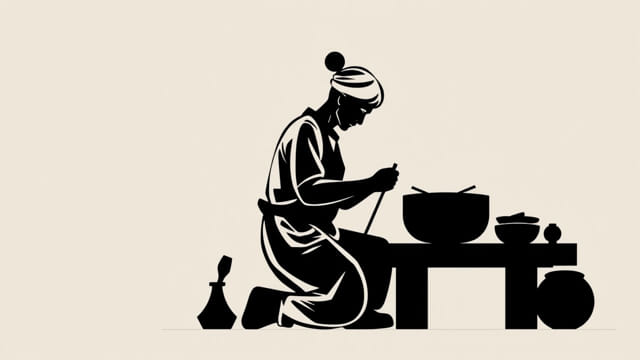
Throughout much of human history, the craftsman undertook much of the production of goods, tools, and household items. Before the rise of industrial factories, economies depended heavily on the skills of individual artisans and tradespeople. These skilled workers were responsible for everything from shaping iron and carving wood to weaving fabric and crafting pottery. Their role was not only central to economic survival but also vital to cultural expression and technological progress. The craftsman’s hand, guided by experience and creativity, laid the foundation for countless industries we know today.
Understanding the Role of the Craftsman
A craftsman is typically defined as someone who is highly skilled in a specific manual trade. These trades could include woodworking, blacksmithing, masonry, leatherworking, ceramics, tailoring, and many more. In earlier societies, the craftsman undertook much of the production because most goods were made individually, often by hand and with minimal machinery.
Characteristics of a Traditional Craftsman
- Mastery of technique developed over years of apprenticeship
- Personal pride in craftsmanship and attention to detail
- Close relationship with materials such as wood, metal, clay, or fabric
- Autonomy in decision-making regarding design and method
Because of these attributes, craftspeople were highly respected within their communities and often passed down their skills through generations.
Historical Context of Craft-Based Production
Before the Industrial Revolution, economies functioned on a smaller scale. Cities and villages depended on local craftsmen to meet their everyday needs. Whether for agriculture, construction, household use, or clothing, artisans produced essential items with care and customization.
Medieval and Renaissance Guild Systems
During the Middle Ages and Renaissance, the guild system organized craftspeople into structured communities based on trade.
- Guilds regulated quality standards and ethical practices.
- They ensured training through a tiered system: apprentice, journeyman, and master.
- Guilds protected the interests of craftsmen and their families.
Under this system, the craftsman undertook much of the production not simply as labor, but as a way of life rooted in community and responsibility.
Production Methods and Tools
The craftsman’s methods were labor-intensive but allowed for significant creativity and quality control. Each tool used had a specific function, often designed or modified by the craftsman themselves.
Tools of the Trade
- Woodworkersused chisels, planes, and saws to shape furniture and structures.
- Blacksmithsworked with anvils, tongs, and hammers to forge weapons and tools.
- Pottersused spinning wheels and kilns to form and harden ceramics.
- Weaversoperated looms to create textiles from raw fibers.
These tools, though simple by modern standards, allowed craftsmen to create durable, functional, and often beautiful objects tailored to local needs and tastes.
Craftsmanship and Economic Contribution
Artisans not only produced goods for individual use but also played an essential role in trade and commerce. Markets and fairs were vibrant centers where craftspeople could sell their wares and interact with customers directly.
Crafts and the Pre-Industrial Economy
- Most people relied on locally produced items made by neighborhood artisans.
- Craftsmen formed the backbone of small-scale manufacturing and commerce.
- They often worked from home or small workshops attached to their residences.
This local model of production supported economies that were more sustainable and personalized compared to the mass production systems that came later.
The Transition to Industrialization
With the rise of the Industrial Revolution in the 18th and 19th centuries, the role of the individual craftsman changed dramatically. Factories with machines capable of producing items faster and in greater numbers began to dominate the landscape.
Impact on Craftsmen
- Many skilled tradespeople lost their jobs as mechanized production grew.
- Mass-produced items became cheaper but often lacked the quality of handmade goods.
- Some craftsmen adapted by specializing in luxury or custom-made products.
The craftsman, who once undertook much of the production for entire communities, now found themselves competing with industrial models that favored quantity over artistry.
Preservation of Craft Traditions
Despite industrialization, the art of craftsmanship never fully disappeared. In fact, modern movements have revived interest in traditional craft methods, valuing authenticity and skill over uniformity and speed.
Modern Appreciation of Craftsmanship
- Artisan markets and craft fairs promote handmade goods.
- Educational programs teach traditional techniques in schools and workshops.
- Local crafts are recognized as part of cultural heritage and identity.
Today, being a craftsman often carries prestige, as consumers increasingly value items that are made with care, attention, and ethical standards. Many modern artisans blend historical techniques with contemporary aesthetics to create unique and desirable products.
Examples of Enduring Craft Traditions
Some craft traditions have stood the test of time and continue to thrive around the world. These traditions preserve the role of the craftsman in modern society and keep ancient skills alive for future generations.
Notable Examples
- Japanese woodworking Known for intricate joinery and architectural elegance.
- Moroccan leatherwork Features vibrant colors and centuries-old tanning methods.
- Indian block printing Produces hand-printed fabrics with geometric and floral designs.
- Scandinavian metalwork Combines functionality with minimalist design.
In all these traditions, the craftsman remains central to production, carrying forward the legacy of manual skill and cultural artistry.
For centuries, the craftsman undertook much of the production that sustained communities and enriched daily life. These skilled individuals shaped the world through their hands, tools, and creative minds. Though industrialization shifted much of the world’s manufacturing to machines, the importance of craftsmanship has not faded. In fact, it has become more meaningful in an age of mass production and digital automation. Whether through heritage crafts, modern artisanal goods, or educational revival efforts, the craftsman’s influence endures reminding us that quality, care, and human touch are irreplaceable elements of meaningful production.
1/2