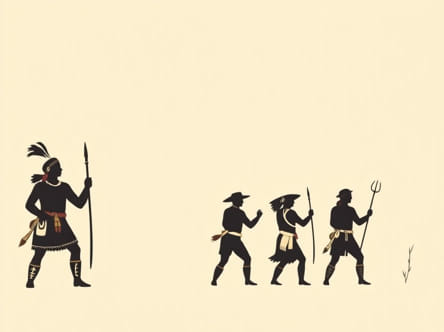
During the American Revolutionary War, Native Americans played a critical yet often overlooked role. While the war is generally viewed through the lens of colonial rebellion against British rule, for many Indigenous nations, the conflict represented a dangerous shift in power, land control, and tribal sovereignty. Native American involvement was complex, strategic, and varied across different tribes and geographic locations. The Revolutionary War was not just a colonial revolt; it was a turning point that significantly affected the future of Native American life in North America.
Strategic Alliances and Divided Loyalties
Tribal Decision-Making and Diplomacy
Before and during the Revolutionary War, Native American tribes faced the difficult decision of whom to support if anyone at all. Some tribes remained neutral, attempting to avoid entanglement in what they saw as a European conflict, while others made calculated alliances. These choices were not uniform across tribes or even within them. Strategic alliances were based on long-standing relationships, previous trade arrangements, and promises made by either the British Crown or the American revolutionaries.
The Iroquois Confederacy
The Iroquois Confederacy, or the Haudenosaunee, is a key example of how the Revolutionary War fractured long-standing Native political alliances. Traditionally a unified group of six nations the Mohawk, Oneida, Onondaga, Cayuga, Seneca, and Tuscarora the Confederacy was split by the war. The Mohawk, Seneca, Onondaga, and Cayuga largely supported the British, while the Oneida and Tuscarora sided with the Americans. This division caused internal conflicts and weakened the Confederacy’s political unity in the years to follow.
Why Many Tribes Supported the British
Land Protection and Fear of Colonists
Many Native American groups chose to side with the British primarily because they believed a British victory would better protect their lands. The British Proclamation of 1763 had previously limited colonial expansion westward, which some tribes viewed as a safeguard against settler encroachment. By contrast, the American colonists had a history of pushing into Native territory, and their victory could mean the loss of tribal lands on a much larger scale.
Military Aid and Promises
British agents and loyalists were active in recruiting Native allies, offering weapons, supplies, and assurances of territorial integrity. British promises often included respect for Native autonomy and protection from colonial settlers. These incentives, though not always honored after the war, swayed many tribes toward supporting the British cause.
Native American Warriors in Combat
Key Battles and Contributions
Native American warriors participated in several key battles during the war. Their knowledge of terrain, guerrilla tactics, and ability to move quickly and silently through forests made them invaluable in irregular warfare. Tribes such as the Mohawk under the leadership of Joseph Brant, a British ally, conducted raids and skirmishes in New York and Pennsylvania, significantly disrupting American supply lines and settlements.
Roles Beyond the Battlefield
Native Americans also served as scouts, messengers, and guides. Their expertise was especially important in frontier regions where formal armies struggled to navigate the landscape. In some instances, Native warriors engaged in diplomacy on behalf of their allies, negotiating ceasefires and gathering intelligence that informed broader military strategy.
The Oneida Support for the Patriots
A Rare Pro-American Alliance
While most tribes favored the British, the Oneida tribe is a notable exception. The Oneida aligned themselves with the American patriots early in the war. Their motivations included local rivalries within the Iroquois Confederacy and a belief that closer cooperation with the colonists could benefit their community. The Oneida provided troops, food, and intelligence to George Washington’s army, even fighting at the pivotal Battle of Oriskany in 1777.
Postwar Recognition and Betrayal
Despite their support, the Oneida and other pro-American tribes received little gratitude from the new U.S. government after the war. Promises of land and protection went unfulfilled, and American expansionism soon reached Oneida territory. This pattern of betrayal would repeat with many tribes in the decades that followed.
Consequences of the War for Native Americans
Loss of Land and Sovereignty
The American victory led to the Treaty of Paris in 1783, which redrew the map of North America without any Native American input. British and American diplomats decided the fate of vast territories inhabited by Indigenous peoples, transferring control of Native land without consultation or consent. As a result, Native Americans were left politically and geographically vulnerable in the postwar era.
Escalation of Westward Expansion
The new United States government, freed from British constraints, began aggressively expanding westward. Settlers flooded into the Ohio Valley and beyond, leading to violent clashes and new wars with Native tribes. The Revolutionary War did not end Indigenous resistance, but it marked the beginning of a more systemic push to remove Native peoples from their ancestral lands.
Long-Term Impacts on Native American Identity and Unity
Fracturing of Tribal Alliances
The war deepened existing divisions between tribes and within confederations. Tribal unity suffered as former allies blamed each other for outcomes or took different sides in future conflicts. These divisions made it easier for the U.S. government to pursue policies of divide and conquer in subsequent treaties and wars.
Emergence of New Resistance Movements
While the Revolutionary War weakened many tribes, it also laid the groundwork for future resistance. Leaders such as Tecumseh in the early 19th century would later rally tribes across regions to resist American expansion, learning from the political fragmentation that had occurred during the war. Indigenous nationalism began to take shape, driven by the need for greater unity in the face of U.S. expansionism.
A Forgotten but Essential Legacy
Native Americans in the Revolutionary War were not passive observers but active participants who shaped the conflict’s course and consequences. Their decisions whether to fight, remain neutral, or support one side were made in pursuit of survival, sovereignty, and self-determination. While often forgotten in mainstream historical narratives, their role in the war had lasting effects not only on the outcome but also on the future of Native nations. The Revolutionary War was a defining moment in Indigenous history, one that reshaped tribal landscapes, political alliances, and cultural identities for generations to come.