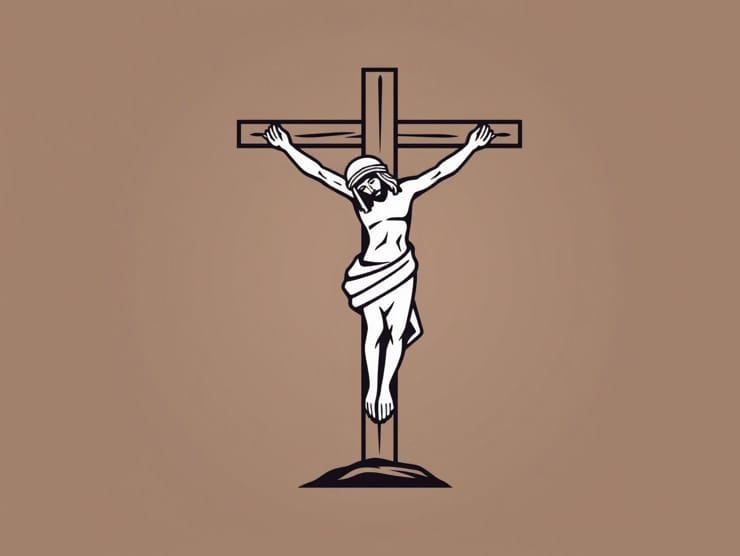
The crucifixion of Jesus is one of the most well-known events in human history, central to the Christian faith and deeply rooted in historical tradition. While many accept the narrative that Jesus was crucified on a wooden cross by the Romans, some debates have emerged over time regarding the exact method of execution. To understand whether the Romans crucified Jesus on a cross, it’s necessary to explore the historical, linguistic, and archaeological evidence that surrounds Roman crucifixion practices and their application in Judea during the first century CE.
Historical Context of Roman Crucifixion
Purpose and Method of Roman Execution
Crucifixion was a brutal method of execution used by the Romans to punish slaves, rebels, and criminals. It was not just a form of capital punishment it was also a public display meant to instill fear and maintain order in the provinces. Victims were often scourged beforehand and then forced to carry part of their own cross to the place of execution.
Roman Use of Crosses
The Latin term ‘crux’ is generally translated as ‘cross,’ but it could refer to a variety of wooden structures, including T-shaped (tau cross), X-shaped (St. Andrew’s cross), or traditional -shaped crosses. The Romans employed these different styles depending on the circumstances and location. The crossbeam, or ‘patibulum,’ was commonly carried by the condemned to the execution site, where it would be affixed to a vertical post already in place.
Biblical Accounts of the Crucifixion
Gospel Descriptions
All four canonical gospels Matthew, Mark, Luke, and John describe Jesus being crucified. These accounts mention that Jesus was nailed to a ‘cross’ and that a sign was placed above His head declaring, Jesus of Nazareth, King of the Jews. The Greek word used in these texts is ‘stauros,’ which can mean either a stake or a cross. However, by the time of the Roman Empire, ‘stauros’ typically referred to a cross-like structure used in executions.
Use of the Term Cross’
The use of the word cross in English translations stems from the Latin ‘crux.’ Early Christian writers, including Church Fathers such as Justin Martyr and Tertullian, also used the term in reference to the traditional Christian understanding of a cross with both vertical and horizontal beams.
Archaeological and Historical Evidence
Crucifixion Practices in Judea
Historical sources such as the Jewish historian Josephus and the Roman writer Seneca confirm that crucifixion was used widely in Judea, especially during periods of unrest. Josephus, for instance, recounts mass crucifixions carried out by Roman authorities in Jerusalem during times of rebellion.
The Heel Bone Discovery
In 1968, archaeologists uncovered the remains of a crucified man named Yehohanan in a Jerusalem ossuary. His heel bone was pierced with an iron nail, providing physical proof that nails were indeed used in crucifixions. The position of the nail and remnants of wood confirm that the victim had been fastened to a wooden structure most likely a crossbeam attached to a vertical post.
Form and Shape of the Cross
Different Cross Types
As noted earlier, several types of crosses were used by the Romans:
- Crux simplex: A simple upright stake with no crossbeam.
- Crux commissa: A T-shaped cross (the tau cross).
- Crux immissa: The traditional Christian cross with a vertical post and intersecting horizontal beam.
Most Christian imagery and early textual sources suggest that Jesus was crucified on a crux immissa. The mention of a sign placed above His head implies a space above the crossbeam, reinforcing the idea that the cross had the traditional shape.
Symbolism in Early Christianity
Early Christian art and symbols, including the writings of the Church Fathers and catacomb inscriptions, depict Jesus on a cross with both vertical and horizontal elements. These depictions further support the belief that the crucifixion occurred on a traditional cross, not merely a stake or pole.
Why Did the Romans Choose Crucifixion?
A Tool of Public Terror
The Romans chose crucifixion because it was slow, painful, and humiliating. Victims could suffer for hours or even days, exposed to the elements and public ridicule. This method served as a warning to anyone who might consider defying Roman authority.
Local Enforcement in Judea
In Judea, Roman governors like Pontius Pilate used crucifixion to suppress dissent and eliminate threats to Roman rule. Jesus was condemned for claiming to be King of the Jews, a title seen as a political challenge to Roman sovereignty. Therefore, crucifixion was not just a punishment but a political statement.
Was Jesus Crucified on a Cross?
Evidence from Multiple Disciplines
Considering historical texts, archaeological findings, and theological tradition, the consensus among scholars is that Jesus was indeed crucified on a cross by the Romans. While minor debates exist over the precise shape of the cross, the dominant view remains that it resembled the traditional Christian cross.
Modern-Day Confusion
Some modern groups question the traditional view, claiming Jesus may have been crucified on a stake. However, these claims often rely on selective linguistic interpretations and disregard broader historical and archaeological contexts. The totality of evidence linguistic, textual, artistic, and physical supports the cross theory.
Yes, the Romans did crucify Jesus on a cross. The form of this execution method was consistent with Roman practices at the time, especially in rebellious provinces like Judea. Though the exact dimensions and shape may be debated, early Christian writings and archaeological evidence support the traditional -shaped cross. This form of crucifixion was both a punishment and a deterrent, serving Roman political interests while also marking a defining moment in Christian theology. The crucifixion of Jesus on a Roman cross remains one of the most powerful symbols in religious history, deeply embedded in the memory and traditions of millions around the world.