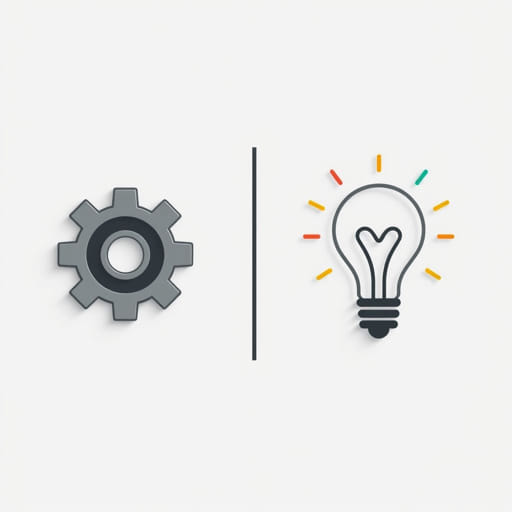
Understanding the difference between practical and inventive is essential when discussing approaches to problem-solving, innovation, and personality traits. These two adjectives represent contrasting yet sometimes complementary qualities. People may exhibit one more than the other depending on context, profession, or personal disposition. In everyday conversations, these words are often used loosely, but their meanings carry distinct implications, especially in academic, creative, or professional environments. Clarifying the difference between practical and inventive can improve communication and help individuals identify their own strengths or describe others more accurately.
Definitions and Core Meaning
What Does Practical Mean?
The term practical refers to the quality of being realistic, functional, and results-oriented. A practical person is focused on what works efficiently and effectively. They make decisions based on logic, facts, and real-world application rather than abstract theory or untested ideas. Being practical often involves solving problems with tried-and-true methods and focusing on utility over novelty.
- Rooted in real-life application
- Focused on feasibility and efficiency
- Often conservative in approach
What Does Inventive Mean?
On the other hand, inventive refers to the ability to create new ideas, concepts, or solutions. An inventive person thinks outside the box and often challenges conventional wisdom. They thrive on innovation, experimentation, and original thinking. Their ideas might not always be immediately practical, but they often lead to breakthroughs or progress in a field.
- Creative and original in thought
- Willing to experiment with new concepts
- Focus on novelty and innovation
Key Differences in Application
Problem-Solving Styles
A practical thinker looks for established solutions that are proven to work. They are likely to rely on existing tools, processes, or guidelines. For example, if a practical person encounters a plumbing issue, they will probably call a plumber or use a standard repair kit.
An inventive thinker, in contrast, might try to design a new tool or create an alternative method for fixing the problem. Their approach may not be the fastest, but it could lead to an unexpected solution that becomes more efficient in the future.
Work Environments and Roles
In a workplace setting, practical individuals are often drawn to roles that require planning, logistics, or operations. They keep systems running smoothly, ensure deadlines are met, and prioritize reliability.
Inventive individuals are typically found in research, development, design, or marketing roles where creative thinking is encouraged. They might be behind new product concepts, advertising campaigns, or technological innovations.
Compatibility and Balance
Strengths of Practical Thinking
Being practical allows for stability and predictability. Practical people are good at managing time and resources, reducing risk, and maintaining efficiency. They can quickly assess what is feasible and act accordingly without wasting effort on unrealistic ideas.
Strengths of Inventive Thinking
Inventiveness opens the door to progress and change. Inventive individuals drive industries forward with fresh perspectives. They are not afraid to make mistakes because they view failure as a stepping stone to discovery.
When They Work Together
Practical and inventive traits are not mutually exclusive. The most successful teams or individuals often exhibit a balance of both. For example, a product design team may include inventive thinkers to generate ideas and practical thinkers to ensure those ideas can be produced efficiently and affordably. Innovation becomes reality when creativity meets feasibility.
Everyday Examples
In Technology
A practical approach to smartphone design might focus on battery life, durability, and user-friendly interfaces. An inventive approach could introduce revolutionary features like foldable screens or gesture controls. When combined, the result is a product that’s both usable and innovative.
In Education
Teachers with practical tendencies may follow a set curriculum, emphasize standardized testing, and use proven teaching methods. Inventive teachers, meanwhile, might create interactive learning games or adapt lessons to the unique needs of their students. Both approaches enrich education in different ways.
In Daily Life
A practical person might plan meals for the week based on a set grocery list and budget. An inventive person might experiment with new recipes using whatever is in the fridge. Both methods can result in satisfying meals but stem from different mindsets.
Misconceptions and Overlaps
Can a Person Be Both?
Yes, individuals can demonstrate both practical and inventive traits. For example, an engineer might use practical skills to execute plans and inventive thinking to improve designs. The key is context and adaptability.
Is One Better Than the Other?
Neither trait is superior. Practicality ensures things get done, while inventiveness ensures growth and evolution. Success often depends on the ability to switch between these traits depending on the challenge.
Language Use and Tone
How They Appear in Communication
When someone is described as practical, it may imply that they are grounded, sensible, and realistic. Saying someone is inventive often conveys that they are imaginative, original, and full of ideas. These descriptors can be complimentary in different contexts.
In Writing and Speech
Writers may use practical language in instructional manuals or business documents where clarity and precision are vital. Inventive language appears more in poetry, storytelling, or marketing copy where emotional engagement and novelty matter.
The difference between practical and inventive lies primarily in their approach to thinking, decision-making, and creativity. Practical individuals prioritize efficiency, functionality, and results. Inventive individuals value originality, innovation, and unorthodox methods. While they differ in their natural tendencies, both mindsets are essential in personal development, the workplace, and society as a whole. Understanding how to identify and utilize these traits in yourself and others can lead to better collaboration, productivity, and creativity in all areas of life.