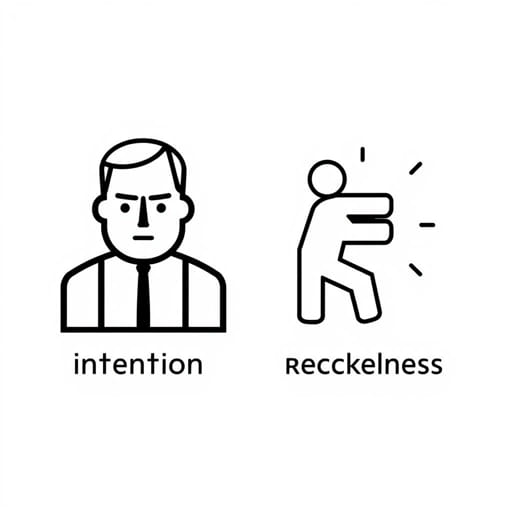
In legal and moral discussions, the concepts of intention and recklessness play a crucial role in determining an individual’s level of responsibility. These two mental states are fundamental in criminal law, ethics, and decision-making processes. Understanding the difference between intention and recklessness is essential because it helps differentiate between actions that are deliberate and those that occur due to a conscious disregard for potential consequences. Although they are sometimes used interchangeably in everyday language, intention and recklessness carry distinct meanings with serious implications in both legal and practical contexts.
Definition of Intention
Deliberate and Purposeful Actions
Intention refers to a mental state where a person plans or means to carry out a specific act with a particular outcome in mind. It is characterized by purpose and foresight. In legal terms, an act done intentionally implies that the individual acted with full knowledge of what they were doing and desired the result.
For example, if someone plans a theft and executes it, knowing and wanting to take someone else’s property unlawfully, this is considered intentional. Intention involves a high degree of awareness and a clear objective.
Types of Intention
- Direct Intention: The outcome is the individual’s primary aim. They act specifically to achieve that result.
- Oblique Intention: The outcome is not the individual’s main purpose, but they are aware that the result is a virtually certain consequence of their actions.
In both types, intention shows a level of calculated thinking and consideration of consequences. This makes intention a more serious mental state in criminal responsibility than recklessness.
Definition of Recklessness
Conscious Disregard of Risk
Recklessness, in contrast, refers to a situation where a person is aware of a risk but chooses to proceed regardless. It is less deliberate than intention but still involves some level of conscious awareness. Recklessness does not mean the person wanted the result, but that they acted knowing there was a substantial and unjustifiable risk.
A common example of recklessness would be driving at high speed in a crowded area. The driver may not intend to hit anyone, but by ignoring the potential dangers, they are acting recklessly.
Subjective vs Objective Recklessness
- Subjective Recklessness: The individual is actually aware of the risk and consciously disregards it.
- Objective Recklessness: The individual may not be aware of the risk, but a reasonable person would have recognized it. Some legal systems only accept subjective recklessness.
This distinction is important because it determines how culpable a person is in different legal frameworks. Subjective recklessness indicates a higher degree of moral blame than objective recklessness.
Key Differences Between Intention and Recklessness
Awareness and Desire
The core difference lies in the mindset. Intention involves both awareness of the consequences and a desire to bring about that outcome. Recklessness, however, involves awareness of a risk but no desire to cause harm it is a matter of ignoring the potential consequences rather than aiming for them.
Severity of Legal Penalties
Because intention demonstrates a higher level of moral blameworthiness, crimes committed with intention generally attract harsher penalties. For instance, intentional murder is typically punished more severely than manslaughter resulting from reckless behavior. Legal systems take into account the mental state to ensure that punishment fits the degree of culpability.
Proof and Evidence
Proving intention often requires stronger evidence, such as planning, prior threats, or clearly deliberate actions. Recklessness may be inferred from the circumstances, such as ignoring warnings or acting despite visible risks. Because recklessness is more about disregard than deliberate planning, it is sometimes harder to distinguish from mere negligence.
Practical Examples in Criminal Law
Intentional Harm
If a person points a loaded gun at another and pulls the trigger, knowing it will likely kill, this act is intentional. They aimed to cause death or serious injury. The law considers this deliberate and imposes severe punishment.
Reckless Behavior
Now, if someone fires a gun into the air during a celebration, knowing people are around and that the bullet could hit someone, but they don’t aim at anyone in particular, that could be considered reckless. The individual did not intend to harm anyone specifically, but they ignored the obvious risk.
Importance in Legal Judgments
Mens Rea and Criminal Liability
In legal terminology, both intention and recklessness fall under the category ofmens rea, or the ‘guilty mind’ required for a criminal conviction. Different offenses require different levels of mens rea. The distinction influences not only whether someone is found guilty but also the severity of the charge and sentence.
Policy Considerations
Legal systems aim to balance justice with deterrence. Recognizing the difference between intentional and reckless behavior ensures that individuals are held accountable in proportion to their mental state. Punishing intentional harm more severely discourages premeditated crime, while penalizing recklessness warns against careless behavior without over-criminalizing human error.
Recklessness vs Negligence
It’s also important to distinguish recklessness from negligence. Negligence usually refers to a failure to be aware of a risk that one should have known. Recklessness requires actual awareness of the risk. Thus, recklessness occupies a middle ground between intention and negligence in terms of culpability.
The difference between intention and recklessness lies in the degree of mental engagement and awareness of consequences. Intention is deliberate and purposeful, often involving premeditation and desire for a specific result. Recklessness, while not purposeful, still involves awareness and conscious disregard of risk. Understanding these differences is vital in criminal law, ethical reasoning, and public policy because they guide how responsibility is assigned and justice is administered. When analyzing human actions, especially those leading to harm, recognizing whether a person acted with intention or recklessly can make all the difference in legal and moral evaluations.