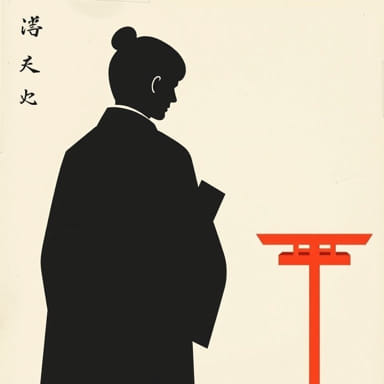
Japan’s journey from the devastation of World War II to becoming a vibrant hub of postmodern art is one of resilience, innovation, and cultural reawakening. The period following the war was marked by deep social, political, and philosophical questioning, and this upheaval was powerfully expressed through the visual arts. Japanese artists grappled with identity, modernity, memory, and the shifting relationship between tradition and contemporary thought. From postwar realism to conceptual installations, the evolution of Japanese art reflects a compelling blend of native aesthetics and global influence.
Postwar Art and Its Roots in Trauma
Rebuilding Identity through Realism
In the immediate postwar years, Japanese artists responded to the trauma of war and defeat with works grounded in realism. These pieces often depicted suffering, the urban destruction of Tokyo and Hiroshima, and the daily struggles of survivors. Art became a way to document loss and convey anti-war sentiments. Painters like Saburo Miyamoto and Tadashi Asai created stark, somber canvases reflecting the deep emotional and physical scars left by the war.
The Rise of Avant-Garde Collectives
By the late 1940s and early 1950s, artists began rejecting traditional styles in favor of experimental forms. Groups like theDemokrato Artists AssociationandJikken Kobo(Experimental Workshop) sought to break free from academic norms and political ideologies. These collectives blended music, photography, film, and painting, signaling the first major steps toward a more radical, interdisciplinary approach to art in Japan.
Gutai: Rebellion and Radical Expression
The Gutai Art Association
One of the most significant movements in Japan’s postwar art scene was the Gutai Art Association, formed in 1954 in the Kansai region. Led by Jiro Yoshihara, Gutai challenged the limitations of conventional art by emphasizing physical engagement, spontaneity, and materiality. The word Gutai itself means concreteness, highlighting the group’s interest in raw materials and unorthodox techniques.
Performance, Material, and Process
Gutai artists like Kazuo Shiraga and Saburo Murakami created art through bodily actions Shiraga painted with his feet, while Murakami burst through paper screens. Their work wasn’t just about the final product but the process and performance. This radical approach predated many Western movements, such as happenings and conceptual art, placing Japanese innovation on the global stage.
Influence of Western Modernism
International Exhibitions and Exchange
During the 1950s and 60s, Japanese artists gained exposure to Western modernist movements like Abstract Expressionism, Dadaism, and Surrealism. American occupation also brought in new cultural materials, influencing Japan’s art education and museum institutions. Japanese artists adopted and reinterpreted these global styles, often infusing them with native elements such as calligraphy and Zen philosophy.
Japanese Responses to Modernism
Rather than imitate the West, many artists sought to create a distinct voice. Artists like Taro Okamoto combined primitive motifs with abstraction, while Yayoi Kusama began exploring repetitive patterns and psychological motifs that would later dominate her signature installations. Her early works already hinted at the transition from modern to postmodern sensibilities, particularly in their obsessive detail and disorienting effects.
Conceptual Shifts and Mono-ha Movement
Introduction of Mono-ha
In the late 1960s, the Mono-ha (School of Things) movement emerged as a reaction to both Western minimalism and Japanese modernism. Artists like Lee Ufan, Nobuo Sekine, and Kishio Suga emphasized the relationship between natural and industrial materials. Instead of altering the materials, they arranged them to reveal their essence and interactions with space.
Philosophy and Aesthetic
Mono-ha was not just about objects but about perception and philosophy. Rooted in Eastern thought and anti-formalism, it questioned the very definition of art. A rock placed on a mirror or a steel plate leaning on a stone invited viewers to rethink their assumptions about material, space, and presence. Mono-ha was less interested in spectacle and more focused on subtlety and presence.
The Move Toward Postmodernism
Post-1970s Cultural Complexity
By the 1970s and 80s, Japan’s economic boom brought rapid urbanization, mass consumerism, and technological advancement. These shifts were reflected in its art. The new generation of artists began to question narratives of purity, tradition, and authenticity, embracing parody, pastiche, and irony hallmarks of postmodern art.
Neo-Pop and Otaku Aesthetics
In the 1990s, artists like Takashi Murakami embraced mass culture, anime, and commercial design. His Superflat theory criticized both Western high art and Japanese consumerism, flattening the distinction between them. Murakami’s work, alongside others like Yoshitomo Nara, blurred the lines between art, commerce, and subculture, pushing Japanese art further into the postmodern domain.
Major Trends in Postmodern Japanese Art
Fragmentation and Cultural Commentary
Postmodern Japanese art is characterized by fragmentation and eclecticism. Artists frequently sample styles, symbols, and narratives from various sources, constructing works that challenge linear interpretation. There’s a persistent critique of modern myths, such as technological progress and national identity.
Installation and Media Art
With advancements in digital technology, Japanese artists embraced video, sound, and interactive installations. Artists like Ryoji Ikeda and Mariko Mori merged science fiction, virtual reality, and Buddhist cosmology, offering immersive experiences that question the boundaries between body, machine, and spirit.
Continuity and Contrast with Traditional Aesthetics
Respect for Simplicity and Nature
Even in the midst of modern and postmodern experimentation, traditional Japanese aesthetics such as minimalism, impermanence (wabi-sabi), and harmony with nature continue to influence contemporary artists. Whether through restrained design or quiet spatial compositions, echoes of Japan’s cultural heritage remain alive.
Disruption of Historical Narratives
At the same time, many artists deliberately subvert traditional values. They critique nationalism, militarism, and cultural nostalgia by presenting distorted or ironic versions of historical motifs. This tension between reverence and rebellion adds depth to modern Japanese art discourse.
Notable Artists Across the Eras
- Jiro Yoshihara Founder of Gutai, pioneer of action painting in Japan.
- Kazuo Shiraga Known for dynamic body-based abstract works.
- Yayoi Kusama Internationally recognized for her polka dots and immersive installations.
- Lee Ufan Central figure in Mono-ha and minimalist philosophical art.
- Takashi Murakami Blending high art with otaku culture and consumerism.
- Yoshitomo Nara Famous for his rebellious, childlike characters in paintings and sculptures.
The evolution of Japanese art from the postwar period to the postmodern era reflects a nation in constant negotiation with its past, present, and future. From the ashes of war rose a vibrant and provocative artistic culture that has continued to redefine itself through experimentation, resistance, and adaptation. The journey from Gutai to Superflat, from realism to conceptual minimalism, encapsulates not only aesthetic evolution but also deep social and philosophical reflection. Today, Japanese art stands at the crossroads of tradition and global innovation, offering a rich, layered perspective that continues to captivate and challenge audiences worldwide.
#kebawah#