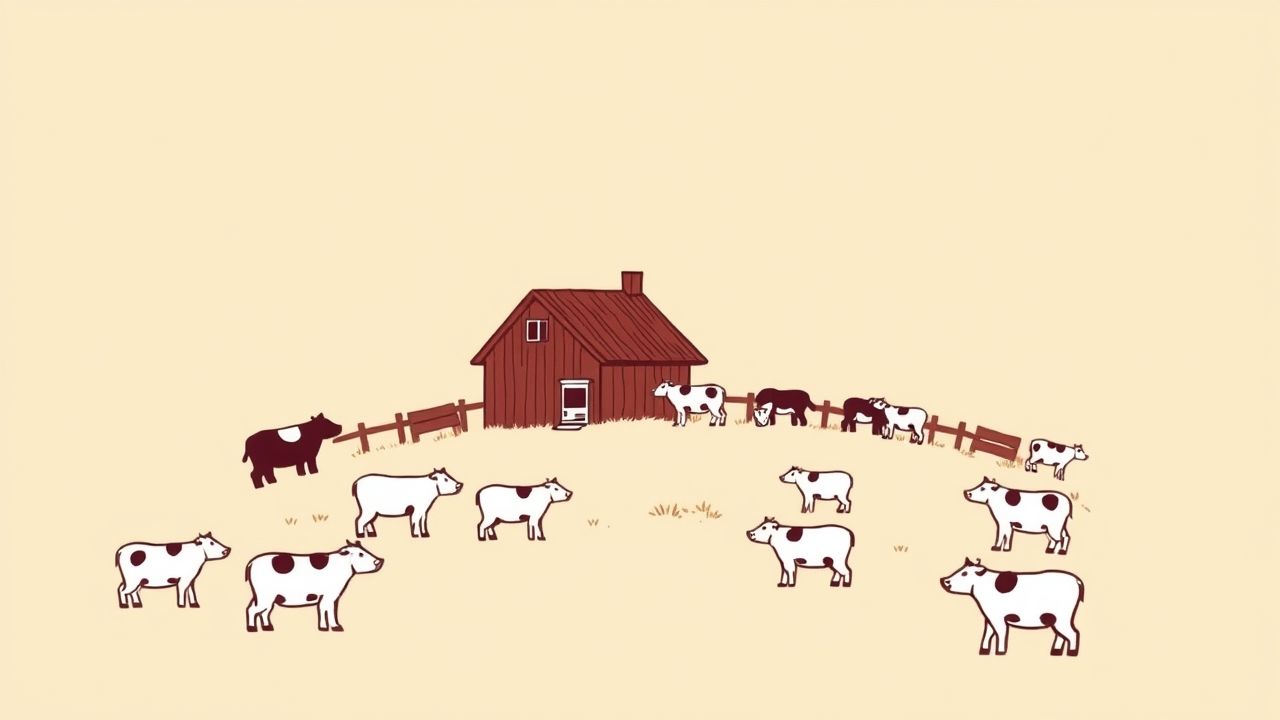
In George Orwell’s political allegoryAnimal Farm, the Battle of the Cowshed stands out as one of the most pivotal and symbolically rich moments in the entire narrative. Taking place shortly after the animals’ successful rebellion against Mr. Jones, this battle serves not only as an action-packed event in the plot but also as a direct representation of a key historical occurrence. Through allegory, Orwell uses the Battle of the Cowshed to parallel the Russian Civil War, presenting deep commentary on revolution, defense, propaganda, and the manipulation of truth. Understanding what the Battle of the Cowshed represents is essential to interpreting the broader themes ofAnimal Farmand appreciating Orwell’s warning about totalitarianism and betrayal of ideals.
Historical Allegory and Its Roots
The Russian Civil War Parallel
The Battle of the Cowshed is widely understood to represent the Russian Civil War, which followed the Bolshevik Revolution of 1917. After the Tsar was overthrown and Lenin’s Bolsheviks seized power, counter-revolutionary forces (often referred to as the Whites”) attempted to restore the old order. This conflict, which lasted from 1918 to 1921, was marked by brutal fighting, shifting loyalties, and ideological warfare. InAnimal Farm, the humans (led by Mr. Jones) who attempt to retake the farm symbolize these White forces, while the animals defending the farm mirror the Bolsheviks.
Mr. Jones as the Symbol of the Old Regime
Mr. Jones returning to reclaim Animal Farm mirrors the White Army’s efforts to reclaim Russia from the Communists. His failed attempt to regain control and the animals’ victory signifies the early success of the Bolsheviks in fending off external threats and solidifying their power. Just as the White Army was fragmented and ultimately unsuccessful, Jones and his allies fail to cooperate effectively and are driven away by the united animal front.
Character Symbolism in the Battle
Snowball as Trotsky
Snowball plays a heroic and strategic role in the Battle of the Cowshed. He organizes the animals’ defense, uses tactics, and personally fights bravely much like Leon Trotsky, who led the Red Army during the Russian Civil War. Snowball’s actions in the battle win him admiration and support, emphasizing his intelligence and leadership. However, just as Trotsky would later be exiled and vilified by Stalin, Snowball is eventually forced out by Napoleon and erased from the farm’s official history, despite his contributions.
Napoleon’s Role in the Aftermath
Interestingly, Napoleon does not play a visible role during the battle itself. This absence hints at his manipulative nature he is not involved in the hard work or the dangers but later takes credit for the victory. This reflects Joseph Stalin’s rise to power, during which he downplayed Trotsky’s influence and revised historical records to promote his own legacy.
The Role of Propaganda
Twisting the Truth
After the battle, the animals commemorate the victory with ceremonies and medals. Initially, Snowball is celebrated for his bravery. However, as Napoleon consolidates power, the narrative changes. Snowball is accused of cowardice and betrayal, and his role is downplayed or erased entirely. This shift demonstrates how propaganda can be used to manipulate public memory, control the narrative, and rewrite history a practice common under Stalin’s regime.
Squealer and State-Controlled Media
Squealer, acting as the mouthpiece for Napoleon, plays a key role in altering the story of the Battle of the Cowshed. He justifies Napoleon’s claims and demonizes Snowball to keep the animals in line. This echoes the use of state-controlled media in authoritarian regimes to promote government-approved versions of events, regardless of the truth.
Thematic Reflections of the Battle
Defense of Revolution
The battle represents the vulnerable period following a revolution when the new regime must defend itself from internal and external threats. The animals, though inexperienced, show unity and courage, reflecting the idealistic early phase of revolutionary movements. Their initial solidarity underscores the power of collective action and shared purpose.
Betrayal and Corruption of Ideals
As the memory of the battle is distorted and Snowball is vilified, the original ideals of the revolution begin to erode. The betrayal of Snowball’s heroism highlights how those in power may manipulate history to serve their own interests. This process marks the beginning of a larger pattern in the novel the corruption of revolutionary ideals and the rise of a new oppressive regime under Napoleon.
Symbolism and Literary Devices
Irony and Foreshadowing
The Battle of the Cowshed, at first, seems like a triumphant defense of liberty and justice. However, Orwell layers the scene with irony. The very principles for which the animals fought freedom, equality, and self-rule are gradually abandoned. The battle foreshadows the coming totalitarian control and the betrayal of the revolution’s original goals.
Animal Unity and Division
During the battle, the animals fight together regardless of species, which symbolizes the unity of the working class. Yet, as time passes, the pigs elevate themselves above the others, creating new social divisions. The temporary unity during the battle becomes a distant memory, replaced by hierarchy and inequality.
Impact on the Story’s Development
Legitimizing Napoleon’s Rule
The retelling of the Battle of the Cowshed serves as a tool to legitimize Napoleon’s growing authoritarian rule. By rewriting history and vilifying Snowball, Napoleon consolidates power, silences dissent, and establishes a cult of personality. The animals’ reverence for the battle becomes a blind loyalty to Napoleon, even as their conditions worsen.
Memory as a Political Tool
Orwell uses the manipulation of the battle’s memory to emphasize the dangers of unchecked power. The animals’ inability to remember or question past events illustrates how memory can be shaped by those in control. When truth becomes flexible, resistance becomes nearly impossible. The Battle of the Cowshed, once a symbol of hope, becomes a means of oppression.
What the Battle Truly Represents
The Battle of the Cowshed inAnimal Farmis not merely a dramatic moment in the plot it is a critical allegorical device that reflects the Russian Civil War, highlights the manipulation of truth, and marks the beginning of the animals’ descent into tyranny. By examining the historical, symbolic, and thematic layers of the battle, readers gain insight into Orwell’s warning about political power, propaganda, and the fragility of revolutionary ideals. The event stands as a powerful reminder that the outcome of any revolution depends not only on who wins the battle, but on who controls the story afterward.