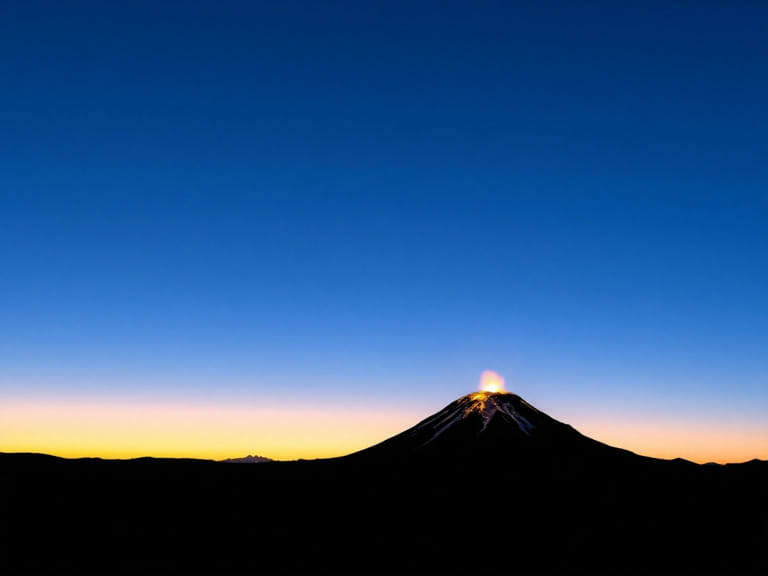
Thousands of years ago, in what is now southern Oregon in the United States, a towering stratovolcano dominated the landscape. This mountain, known as Mount Mazama, dramatically changed the region’s geography and history through one of the most powerful volcanic eruptions in North America during the Holocene epoch. The eruption of Mount Mazama is not only a significant geological event but also the origin story of one of America’s most iconic natural features Crater Lake. Understanding the eruption of Mount Mazama involves exploring its geological history, the events leading to the eruption, its aftermath, and the cultural impact it had on indigenous peoples and scientists alike.
Geological Background of Mount Mazama
Formation of the Volcano
Mount Mazama was part of the Cascade Range, a chain of volcanic mountains formed by the subduction of the Juan de Fuca Plate beneath the North American Plate. Over hundreds of thousands of years, magma rose from the Earth’s mantle, creating a complex stratovolcano built by successive layers of lava, pumice, and ash.
Before its catastrophic eruption, Mount Mazama stood approximately 12,000 feet (3,700 meters) high. Its size and activity made it a prominent feature in the Cascade Volcanic Arc, a region known for its tectonic volatility.
The Cataclysmic Eruption
Timeline and Scale of the Eruption
The climactic eruption occurred around 7,700 years ago, although estimates may vary slightly based on radiocarbon dating. The eruption was one of the most explosive in North America over the last 10,000 years, with a Volcanic Explosivity Index (VEI) of 7. This places it in the same category as some of the largest known volcanic events globally.
The eruption began with a violent explosion that sent ash, pumice, and volcanic gases high into the atmosphere. Ashfall from the eruption has been found across much of the western United States, from British Columbia to Nevada. It is estimated that over 12 cubic miles (50 cubic kilometers) of material were ejected during the event.
Collapse of the Summit
As magma was rapidly evacuated from beneath the volcano, Mount Mazama could no longer support its own weight. This led to the collapse of the summit and the formation of a massive caldera a depression that would later become Crater Lake. The caldera is roughly 5 miles (8 kilometers) in diameter and over 1,000 feet (300 meters) deep.
Impact of the Eruption
Environmental and Climatic Effects
The eruption of Mount Mazama released large amounts of ash and volcanic gases into the atmosphere, including sulfur dioxide. These gases can lead to temporary global cooling by reflecting sunlight away from the Earth. While specific climatic effects from the Mazama eruption are difficult to isolate, it’s believed the event had regional environmental consequences, including changes in weather patterns and damage to ecosystems from ash fallout.
Regional Geological Effects
The ash and pyroclastic flows from the eruption drastically reshaped the local terrain. Rivers were dammed, valleys were filled with debris, and new landscapes formed from the deposition of volcanic materials. These changes affected the course of ecosystems and hydrology for thousands of years.
Human and Cultural Impact
Indigenous peoples living in the Pacific Northwest likely witnessed the eruption firsthand. Oral histories from Native American tribes, such as the Klamath people, describe a catastrophic volcanic event and the formation of Crater Lake. These stories often align with geological evidence and are considered by some scientists to be among the oldest continuously preserved oral traditions in the world.
Crater Lake A Natural Wonder
Formation of the Lake
After the eruption and collapse of Mount Mazama, the caldera began to fill with rainwater and snowmelt. Over centuries, this water accumulated, creating Crater Lake the deepest lake in the United States, with a maximum depth of about 1,949 feet (594 meters). The lake has no inlets or outlets, making it one of the clearest bodies of freshwater in the world.
Geological Features Within the Lake
Within Crater Lake, two notable geological features remain from post-eruption activity
- Wizard Island– A cinder cone that rises above the lake’s surface, formed by subsequent eruptions after the main caldera collapse.
- Merriam Cone– A submerged volcanic cone beneath the lake’s surface, indicating that volcanic activity continued for some time after the main eruption.
Scientific and Recreational Significance
Today, Crater Lake is the centerpiece of Crater Lake National Park, established in 1902. It serves as a valuable site for geological research, offering scientists insight into caldera formation, volcanic processes, and post-eruption ecological recovery. It also attracts hundreds of thousands of visitors each year who marvel at its vivid blue waters and dramatic scenery.
Volcanic Monitoring and Modern Research
Current Status of Mount Mazama
Although Mount Mazama is considered dormant, it is not extinct. The region remains volcanically active, and minor seismic activity continues to be monitored by the United States Geological Survey (USGS). Understanding the eruption of Mount Mazama helps scientists model future volcanic hazards in the Cascade Range, which includes other active volcanoes like Mount St. Helens and Mount Rainier.
Research Technologies
Modern tools such as remote sensing, lake sediment analysis, and seismic monitoring allow geologists to study the caldera in great detail. Sediment layers within Crater Lake provide a timeline of post-eruption environmental changes and help identify periods of renewed volcanic activity within the caldera.
Legacy and Cultural Interpretation
Indigenous Perspectives
The Klamath and other tribes view Crater Lake as a sacred site. According to their legends, the lake formed after a battle between powerful spirits, mirroring the geological narrative of Mount Mazama’s destruction. These stories have been passed down for millennia and remain central to the cultural identity of the region’s native peoples.
Educational Value
Mount Mazama’s eruption is frequently cited in textbooks and documentaries as a key example of explosive volcanism and caldera formation. It serves as a compelling case study for both students and researchers interested in geology, environmental science, and Native American history.
The eruption of Mount Mazama was a monumental geological event that transformed a towering volcano into a deep, serene lake. Its legacy endures not only in the striking beauty of Crater Lake but also in the valuable scientific, cultural, and historical insights it continues to provide. From the violent collapse that shaped the landscape to the peaceful waters that now fill the caldera, Mount Mazama tells a story of destruction, renewal, and enduring mystery. Understanding this eruption enriches our knowledge of the Earth’s dynamic processes and the resilience of both natural ecosystems and human cultures in the face of profound change.