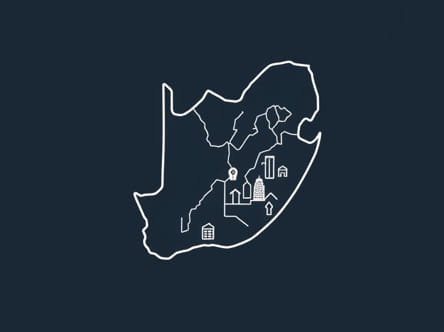
In South Africa, urban growth has led to the development of large metropolitan areas where cities and towns merge to form continuous urban landscapes. This phenomenon, known as conurbation, is a result of industrial expansion, population growth, and improved transportation links. One of the most prominent examples of a conurbation in South Africa is the Gauteng City Region, particularly the area encompassing Johannesburg, Pretoria, and Ekurhuleni. This region represents a dense, interconnected urban zone that plays a crucial role in South Africa’s economy, infrastructure, and population distribution.
Understanding Conurbation
Definition and Characteristics
A conurbation is a large, continuous urban area formed when multiple cities, towns, or urban areas grow and merge due to population increase, economic development, and infrastructure connectivity. It is not just a collection of cities, but a cohesive region where daily life, commuting patterns, and economic activity span across municipal boundaries.
- Urban areas physically connected without significant rural separation
- Shared infrastructure such as transport networks and utilities
- Integrated labor and housing markets
- Common economic and social ties
Importance in Urban Geography
Conurbations are important because they concentrate economic activity and resources. They often become national or regional economic engines and centers for innovation, finance, culture, and education. However, they also pose challenges such as congestion, inequality, and environmental strain.
The Gauteng City Region A South African Conurbation
Location and Overview
The most well-known example of conurbation in South Africa is the Gauteng City Region. Gauteng is the smallest province by land area but the most populous and economically significant. The core cities Johannesburg, Pretoria (Tshwane), and Ekurhuleni form an interconnected network of urban centers within the province. Over the years, urban sprawl and development have filled in the gaps between these cities, creating a continuous urban corridor.
Key Cities in the Conurbation
- JohannesburgThe largest city in South Africa and the economic heart of the country, known for finance, commerce, and mining headquarters.
- Pretoria (Tshwane)South Africa’s administrative capital, hosting government offices, foreign embassies, and universities.
- EkurhuleniA large metropolitan municipality composed of several towns, including Germiston, Boksburg, and Benoni, and home to OR Tambo International Airport.
These cities, while historically distinct, now operate as parts of a greater metropolitan ecosystem, making Gauteng a textbook example of conurbation.
Drivers of Conurbation in Gauteng
Economic Growth and Industrialization
The industrial revolution in South Africa, particularly around mining and manufacturing, drew large numbers of people to Gauteng. Johannesburg’s gold rush in the late 19th century sparked rapid urban growth, which soon spread to surrounding towns. Pretoria developed as a government center, while Ekurhuleni grew due to its proximity to mines and transport routes.
Transportation Infrastructure
Efficient transport links are essential to conurbations. Gauteng’s road and rail networks connect its cities, enabling commuting and the movement of goods and services across municipal boundaries.
- Gautrain – A high-speed rail system linking Johannesburg, Pretoria, and OR Tambo Airport
- Major highways – Including the N1, N3, and N12 corridors
- Bus Rapid Transit systems – Such as Rea Vaya in Johannesburg and A Re Yeng in Pretoria
Urban Sprawl and Residential Expansion
As populations increased, housing developments extended the boundaries of urban areas. Suburbs, townships, and informal settlements expanded, eventually linking neighboring cities. This residential sprawl contributed to the physical merging of urban zones, typical of conurbations.
Challenges Facing the Gauteng Conurbation
Urban Planning and Coordination
Managing a conurbation requires coordinated urban planning across multiple municipalities. However, administrative boundaries can lead to fragmented decision-making and inefficient resource use. Gauteng’s cities must collaborate on transportation, housing, water, and electricity supply to ensure sustainable development.
Socioeconomic Disparities
The Gauteng region reflects stark inequalities. While Johannesburg and Pretoria boast affluent suburbs and business centers, they are also surrounded by underdeveloped areas facing poverty, unemployment, and limited access to services. Addressing these disparities is crucial for balanced regional growth.
Environmental Impact
- Air pollution from traffic and industry
- Water stress due to high consumption
- Loss of green spaces from urban expansion
As the urban footprint grows, so do the environmental costs. Policies focusing on sustainability and green infrastructure are needed to manage the ecological effects of conurbation.
Benefits of the Gauteng Conurbation
Economic Synergy
The proximity of major urban centers creates opportunities for economic collaboration. Businesses benefit from access to larger markets, diverse labor pools, and shared infrastructure. Johannesburg’s financial expertise complements Pretoria’s administrative capacity and Ekurhuleni’s logistics services.
Improved Services and Connectivity
Shared urban infrastructure, such as transportation systems, healthcare, and education networks, can improve efficiency and accessibility when managed collectively. The Gauteng City Region has begun steps toward regional governance to promote such collaboration.
Innovation and Cultural Exchange
Dense urban areas are often hubs for creativity, innovation, and cultural exchange. Gauteng hosts universities, research centers, museums, music venues, and theaters that enrich public life and foster new ideas.
Future of Conurbation in South Africa
Trends in Urbanization
Urbanization in South Africa is projected to continue, with more people moving to urban areas for opportunities. Other regions may see similar conurbation patterns in the future, such as Durban and Pietermaritzburg in KwaZulu-Natal or Cape Town and Stellenbosch in the Western Cape.
Smart City Initiatives
Technology offers solutions to many challenges facing conurbations. Gauteng is exploring smart city projects that integrate data, sensors, and automation to improve traffic flow, energy use, and public safety.
Regional Development Strategies
- Improving coordination between municipalities
- Investing in affordable housing and inclusive transport
- Protecting the environment through green planning
To manage growth sustainably, South Africa must strengthen regional planning and invest in infrastructure that supports equitable urban development.
The Gauteng City Region, encompassing Johannesburg, Pretoria, and Ekurhuleni, is a prime example of conurbation in South Africa. This interconnected urban zone reflects the country’s economic dynamism, population trends, and infrastructural capabilities. While it brings numerous benefits such as economic synergy and enhanced connectivity, it also faces challenges including inequality, environmental degradation, and governance complexity. As South Africa continues to urbanize, understanding and managing conurbation will be critical for creating inclusive, efficient, and sustainable cities.