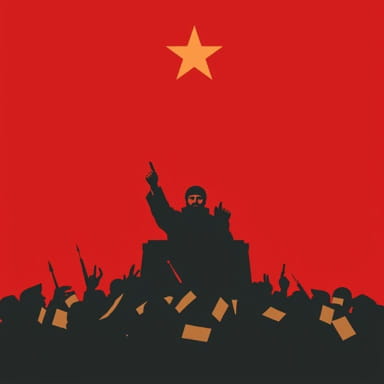
The Bolshevik Revolution, also known as the October Revolution, was a pivotal event in world history that reshaped Russia and set the stage for the creation of the Soviet Union. Occurring in 1917, this revolution marked the overthrow of the provisional government that had taken power after the abdication of Tsar Nicholas II. The movement was led by the Bolshevik Party, under the leadership of Vladimir Lenin, and it sought to establish a socialist state based on Marxist principles. Understanding the Bolshevik Revolution requires exploring its causes, key events, major figures, and the profound social, political, and economic changes it brought to Russia and the world.
Background and Causes
The roots of the Bolshevik Revolution can be traced to longstanding social, economic, and political tensions in Russia. For decades, the Russian Empire faced inequality, widespread poverty, and oppressive autocratic rule under the Romanov dynasty. The majority of the population were peasants living in harsh conditions, while industrial workers in urban centers endured long hours and low wages. Political dissatisfaction grew among various groups, including intellectuals, workers, and soldiers, who demanded reforms and greater representation. The strain of World War I further exacerbated these issues, as millions of Russians suffered casualties, food shortages, and economic instability.
Role of World War I
World War I was a significant catalyst for revolutionary sentiment. The Russian military suffered devastating losses, and logistical failures left soldiers poorly equipped and demoralized. Civilians faced severe shortages of food, fuel, and essential goods, leading to strikes, protests, and unrest. The war exposed the inefficiency and corruption of the government and highlighted the need for radical change. Many Russians, especially soldiers and urban workers, began to support revolutionary ideas that promised a more just and equitable society.
The February Revolution
The first phase of the Russian Revolution occurred in February 1917 (March in the Gregorian calendar), resulting in the abdication of Tsar Nicholas II. This event ended centuries of Romanov rule and led to the establishment of the Provisional Government. Although the Provisional Government aimed to implement reforms, it struggled to address critical issues, such as ending the war, land distribution, and economic hardships. Its inability to satisfy popular demands created an opportunity for more radical groups, including the Bolsheviks, to gain influence and support among workers, soldiers, and peasants.
Rise of the Bolsheviks
The Bolsheviks, a faction of the Russian Social Democratic Labor Party, gained prominence under the leadership of Vladimir Lenin. They advocated for the immediate withdrawal from World War I, redistribution of land to peasants, and transfer of power to soviets, or councils of workers and soldiers. Lenin’s slogans, including Peace, Land, and Bread, resonated with the struggling population, attracting widespread support. By 1917, the Bolsheviks had become a major political force, capable of challenging the Provisional Government and organizing revolutionary actions.
The October Revolution
The Bolshevik Revolution reached its climax in October 1917 (November in the Gregorian calendar). On the night of October 25-26, Bolshevik forces, supported by armed workers and soldiers, stormed key government buildings in Petrograd, including the Winter Palace. The Provisional Government was swiftly overthrown with minimal bloodshed, and power was transferred to the Bolsheviks. This event marked the beginning of Soviet rule and the establishment of the Russian Soviet Federative Socialist Republic. The October Revolution was not just a political takeover; it represented a radical shift in Russian society, aimed at transforming economic structures and social hierarchies.
Immediate Changes and Reforms
Following the revolution, the Bolsheviks implemented a series of sweeping reforms. Land was redistributed to peasants, factories were nationalized, and worker control was encouraged in industries. The government withdrew Russia from World War I by signing the Treaty of Brest-Litovsk with Germany, despite the territorial concessions it required. Additionally, the Bolsheviks sought to consolidate power by suppressing opposition parties and establishing a centralized government based on communist principles. These immediate changes were designed to address the grievances that had fueled revolutionary sentiment and to build a foundation for a socialist state.
Russian Civil War
The Bolshevik Revolution was followed by a prolonged civil war from 1918 to 1922. The conflict pitted the Bolshevik Red Army against the anti-Bolshevik White Army, which included monarchists, liberals, and foreign interventionists. The civil war was brutal, resulting in widespread destruction, famine, and millions of deaths. Despite these challenges, the Bolsheviks emerged victorious, consolidating their control over Russia. The victory solidified the foundations of the Soviet state and demonstrated the determination of the Bolsheviks to maintain power and implement their vision of socialism.
Impact on Russian Society
The Bolshevik Revolution fundamentally transformed Russian society. Feudal landholding structures were dismantled, industries were nationalized, and social services such as education and healthcare were expanded. The revolution also altered political culture, introducing one-party rule under the Communist Party. While the revolution promised equality and social justice, it also led to authoritarian measures, censorship, and suppression of dissent. Nonetheless, the revolution provided the framework for a new social order that sought to prioritize the needs of workers and peasants over elite interests.
Global Significance
The Bolshevik Revolution had far-reaching effects beyond Russia. It inspired communist movements worldwide and prompted fear among capitalist nations concerned about the spread of socialism. The revolution contributed to ideological polarization in the 20th century, influencing events such as the Cold War, the spread of Marxist-Leninist regimes, and global political debates about economic and social systems. The revolution’s impact on international relations, labor movements, and political thought underscores its historical importance and enduring relevance.
Lessons and Reflections
- The Bolshevik Revolution highlights the power of social and economic grievances in driving political change.
- Effective leadership, organization, and messaging were critical in mobilizing support for revolutionary action.
- Revolutions can result in both positive social reforms and unintended consequences, including authoritarianism and conflict.
- The revolution demonstrates how ideology and practical governance must intersect to achieve lasting societal transformation.
The Bolshevik Revolution was a transformative event that reshaped Russia and influenced global politics for decades. Driven by social inequality, economic hardship, and political discontent, it led to the overthrow of the Provisional Government and the rise of Bolshevik power under Lenin. The revolution brought immediate reforms, a civil war, and the establishment of the Soviet state, leaving a complex legacy of social change, authoritarian rule, and ideological influence. Understanding the Bolshevik Revolution provides valuable insights into the dynamics of political upheaval, the role of leadership and ideology, and the profound impact of revolutionary movements on society and the world.