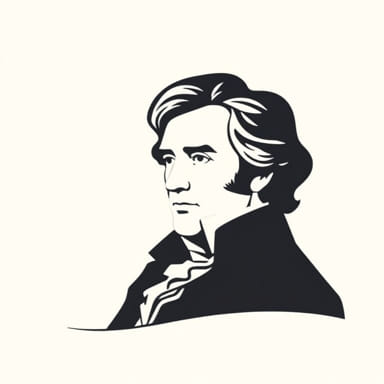
Among the many influential thinkers in American history, Ralph Waldo Emerson stands out as a voice that still resonates with readers, students, and philosophers. Known for his essays, lectures, and poetry, Emerson is often closely associated with Transcendentalism a philosophical and literary movement that emerged in the early 19th century. But is Emerson a Transcendentalist in the strictest sense? Or did he carve out a unique path that merely intersected with Transcendentalist ideals? By examining his works, beliefs, and public life, we can better understand his position within or outside of this movement and assess how deeply his ideology aligns with Transcendentalism.
Understanding Transcendentalism
Before evaluating Emerson’s association with Transcendentalism, it’s important to define what the movement stood for. Transcendentalism emphasized the inherent goodness of people and nature, promoting individual intuition and spiritual insight over established doctrine and institutional authority. It valued self-reliance, nonconformity, and a connection with the natural world as key to understanding truth and morality.
Emerging primarily in New England during the 1830s and 1840s, Transcendentalism was a response to both rationalism and organized religion. It sought to redefine the boundaries between the spiritual and the empirical, often blending philosophy, literature, and theology. The movement attracted thinkers, poets, and reformers who rejected traditional authority in favor of inner conviction and universal truths.
Emerson’s Role in the Movement
Emerson was not only part of the Transcendentalist movement he was arguably its most prominent figure. His 1836 essayNatureis considered a foundational text of Transcendentalist thought. In this work, Emerson urges readers to look inward and toward the natural world for spiritual insight. He writes about the transparent eyeball, a metaphor that suggests the dissolution of the ego and the absorption of the self into the larger universe central themes in Transcendentalist philosophy.
Moreover, Emerson helped create the Transcendental Club, a gathering of like-minded thinkers including Henry David Thoreau, Margaret Fuller, Bronson Alcott, and others. These intellectuals frequently exchanged ideas and published their work in the journalThe Dial, which Emerson supported as both a contributor and editor. This collaboration strengthened Emerson’s identity as a leading Transcendentalist.
Key Transcendentalist Themes in Emerson’s Work
- Self-RelianceIn his essay Self-Reliance, Emerson champions the individual above societal expectations. He encourages readers to trust themselves and to be nonconformists a direct reflection of Transcendentalist values.
- The Over-SoulEmerson often references a divine spirit that connects all individuals, which he calls the Over-Soul. This idea is closely aligned with the Transcendentalist belief in a shared universal spirit.
- Nature as a Spiritual GuideFor Emerson, nature is not just scenery but a mirror for the soul and a path to higher truth. This view is expressed in nearly all of his writings and is a cornerstone of the Transcendentalist ethos.
Philosophical Influences on Emerson
Emerson’s philosophy was influenced by a blend of Eastern and Western thought. He read widely, drawing inspiration from German idealists like Immanuel Kant and Eastern texts such as the Bhagavad Gita and Tao Te Ching. His holistic view of the universe and belief in intuitive knowledge also mirror the ideas found in these works, which complemented and deepened his Transcendentalist leanings.
Unlike many of his contemporaries, Emerson was not a systematic philosopher. He wrote in essays and aphorisms rather than treatises, preferring poetic and metaphorical language. Yet, his insights were profound and spiritually rich. His belief in an interconnected universe and the divine potential of the individual aligned well with the goals of Transcendentalism, even as he ventured into more abstract territory than some of his peers.
Public Reception and Legacy
During his lifetime, Emerson was both celebrated and criticized for his radical views. His Harvard Divinity School Address in 1838 caused significant controversy for questioning the authority of traditional Christian teachings. Nevertheless, he became a sought-after speaker and essayist, influencing not only literary figures but also political and social movements.
Many later reformers and activists cited Emerson as a source of inspiration. His advocacy for abolition, women’s rights, and education reform were deeply influenced by his Transcendentalist convictions. Even today, his works are studied in schools and universities for their moral insight, philosophical depth, and literary artistry.
Emerson vs. Other Transcendentalists
Although Emerson and Thoreau are often mentioned together, their paths diverged in some key ways. Thoreau embraced a more active lifestyle of civil disobedience and immersion in nature, as seen inWalden. Emerson, by contrast, remained more philosophical and reflective. He did not withdraw from society but engaged with it through his lectures and essays.
Furthermore, Emerson distanced himself from some of the more utopian and communal experiments of other Transcendentalists, such as Brook Farm. He valued independence too deeply to fully commit to group endeavors that required conformity, even in the name of idealism. This selective involvement shows that while Emerson was foundational to Transcendentalism, he also remained distinct within it.
So, Is Emerson a Transcendentalist?
The answer is both simple and nuanced. Yes, Ralph Waldo Emerson is a Transcendentalist. He played a central role in founding and shaping the movement, and his writings embody its core beliefs self-reliance, spiritual intuition, reverence for nature, and the quest for truth beyond sensory experience. His influence helped define what Transcendentalism came to mean in American culture and literature.
At the same time, Emerson’s thinking evolved over time. He explored themes that went beyond the boundaries of the movement, incorporating a more expansive, global, and metaphysical view of the universe. His intellectual independence ensured that while he was a Transcendentalist, he was never bound by labels.
Ralph Waldo Emerson’s place in the history of Transcendentalism is both foundational and unique. His contributions laid the groundwork for the movement’s core ideals, and his philosophical writings gave voice to a generation seeking spiritual renewal and individual empowerment. While he resisted categorization and embraced a fluid intellectual identity, the essence of Transcendentalist thought runs through nearly every piece he wrote. To study Emerson is to understand the heartbeat of Transcendentalism, not just in theory, but in living practice. In this light, Emerson is not just a Transcendentalist he is its most vital expression.