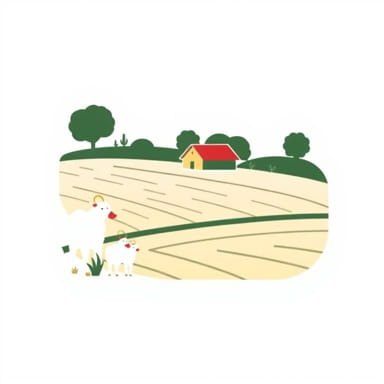
Extensive farming is a concept that plays a vital role in understanding global agricultural practices, especially in regions with vast stretches of arable land and relatively low population density. It refers to a method of farming that uses large areas of land with minimal input of labor and capital per unit area. This form of agriculture is practiced widely in countries such as Australia, Canada, Russia, and parts of the United States, where land is abundant but manpower and resources may be limited. Unlike intensive farming, which focuses on maximizing output from smaller plots, extensive farming stretches productivity across large fields, often involving monocultures or livestock grazing. To fully grasp how this method works and its relevance in today’s agricultural landscape, it’s essential to identify the key features that distinguish it from other farming systems.
Land Use and Size
Large Area of Cultivation
One of the most prominent features of extensive farming is the vast amount of land utilized. Farms practicing this method are often measured in hundreds or thousands of hectares. The large field size allows for broad planting and grazing patterns, which helps reduce the need for intensive management on each plot of land.
Low Land Productivity per Unit Area
Despite the wide land coverage, the yield per hectare is usually lower compared to intensive farming systems. However, because of the massive scale of operations, the total output can still be considerable. The goal is not to maximize production on a small area but to achieve acceptable outputs across a vast expanse.
Labor and Capital Input
Low Labor Intensity
Extensive farming requires less labor per unit of land. This is due to the mechanization of farming activities, especially in developed regions. One person or a small team can manage a large farm with the help of modern machinery such as tractors, harvesters, and irrigation systems.
Minimal Capital Investment per Hectare
Capital inputs such as fertilizers, pesticides, and irrigation systems are used sparingly. Instead of focusing on enhancing individual plot productivity, the scale compensates for lower inputs. The cost-effectiveness of extensive farming lies in its ability to produce at a low cost per unit of output.
Technological Dependence
Use of Machinery
Machinery plays a central role in extensive farming. From land preparation to harvesting, various machines are used to increase efficiency and reduce the need for manual labor. This makes it easier to manage large tracts of land and allows for timely agricultural practices.
Low-Tech in Traditional Settings
In less developed regions, extensive farming may still rely on traditional techniques and natural rainfall instead of irrigation. In such cases, the farming is dictated by seasonal patterns, and yields can vary significantly from year to year.
Cropping Patterns and Livestock
Monoculture Practices
Extensive farming often involves the cultivation of a single crop across vast areas. This is known as monoculture. Common examples include wheat, barley, and maize in temperate regions. The uniformity of crops simplifies planting and harvesting processes but can also increase vulnerability to pests and diseases.
Grazing-Based Livestock Farming
In many parts of the world, especially in dry or semi-arid zones, extensive farming includes livestock grazing. Animals such as cattle, sheep, and goats are allowed to graze freely over large pastures. This method supports meat, dairy, and wool production with relatively low maintenance.
Environmental Impact
Lower Environmental Pressure per Unit Area
Compared to intensive farming, extensive methods exert less environmental pressure per hectare. Since chemical inputs and artificial interventions are limited, the risk of soil degradation and water pollution is often reduced. This can be beneficial for maintaining ecological balance.
Land Degradation Risks
Despite its advantages, extensive farming can still lead to land degradation if not managed properly. Overgrazing, deforestation, and poor soil management are risks associated with poorly monitored extensive systems. Sustainable practices must be employed to preserve long-term land health.
Geographical Suitability
Regions with Abundant Land
Extensive farming is best suited for countries with vast expanses of flat or rolling land and a sparse population. Such areas offer the space needed for large-scale operations without intense competition for land use. Examples include the prairies of North America and the steppes of Central Asia.
Climate Dependence
Farming in extensive systems often relies heavily on natural weather patterns. Irrigation is rarely used due to the cost of covering large areas. Consequently, droughts or floods can severely impact production, making these systems more vulnerable to climate variability.
Economic Characteristics
Cost Efficiency
One of the main economic advantages of extensive farming is its low production cost per unit. Because fewer inputs are used and labor requirements are minimal, farmers can achieve profitability even with moderate yields. This makes it appealing in regions where land is cheap and labor is scarce.
Market Orientation
In commercial extensive farming, the produce is generally meant for markets rather than personal consumption. These farms often contribute significantly to a country’s export economy, supplying commodities like grains, beef, and wool to international markets.
Sustainability and Future Outlook
Advantages in Sustainability
When managed responsibly, extensive farming can support sustainable land use. Its low-input approach reduces the risk of chemical runoff, soil exhaustion, and biodiversity loss. Rotation of grazing areas and fallow periods can further enhance soil recovery and resilience.
Challenges to Sustainability
However, the potential for land misuse remains a concern. Over-reliance on monoculture, expansion into fragile ecosystems, and lack of investment in soil conservation can lead to long-term damage. Sustainable extensive farming requires careful planning, government support, and farmer education.
Comparison with Intensive Farming
Contrasting Approaches
Extensive and intensive farming represent two ends of the agricultural spectrum. While intensive farming maximizes output through high inputs on small areas, extensive farming spreads productivity across vast lands with low inputs. Both have their advantages and disadvantages depending on context.
Hybrid Systems
Modern agriculture increasingly seeks a balance between the two. Some farms adopt hybrid approaches using technology and selective inputs while maintaining lower population and environmental pressures. Such integration can lead to higher sustainability and efficiency.
Understanding the distinguishable features of extensive farming helps clarify how different agricultural systems operate under varying conditions. Key characteristics such as low labor input, vast land usage, reliance on natural resources, and relatively low yield per hectare define this method. Although it offers several economic and environmental benefits, it also comes with challenges related to sustainability, climate vulnerability, and ecological impact. As global food demands grow and climate change influences farming practices, extensive farming will continue to evolve balancing tradition with innovation to support future generations.