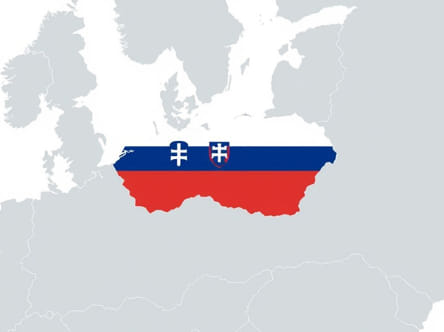
Slovakia is a country that often gets overlooked on the map of Europe, yet it sits at the very heart of the continent. With its rich cultural history, mountainous terrain, and central location, Slovakia plays a quiet but important role in the European landscape. Many people may have heard of its capital city, Bratislava, or its famous Tatra Mountains, but still wonder where exactly is Slovakia located on the map? Understanding Slovakia’s position is key to appreciating its geography, neighbors, political context, and role in European history.
Geographical Location of Slovakia
Central Europe Placement
Slovakia is situated in Central Europe, a region often referred to as the crossroads of the continent. It is landlocked, meaning it does not have any coastline or access to the sea. Its location places it at the center of several major historical, cultural, and economic routes. On a world map, Slovakia can be found slightly east of the geographic center of Europe, making it an ideal location for trade and cultural exchange.
Coordinates and Time Zone
Slovakia lies between 47° and 50° N latitude, and 16° to 23° E longitude. This puts it in the Central European Time Zone (CET), which is UTC+1, and UTC+2 during daylight saving time. These coordinates position Slovakia at a similar latitude to countries like Austria, France, and parts of Canada.
Countries Bordering Slovakia
One of the easiest ways to locate Slovakia on a map is by identifying the countries it borders. Slovakia shares boundaries with five other European nations
- Czech Republicto the northwest
- Austriato the west
- Hungaryto the south
- Ukraineto the east
- Polandto the north
These neighbors create a unique geographical position for Slovakia. It acts as a bridge between Western Europe and Eastern Europe, particularly between the European Union and post-Soviet states.
Strategic Location in Europe
Slovakia’s location has historically made it a hub of transportation and trade. It is part of several pan-European transport corridors, allowing access to major cities such as Vienna, Prague, Budapest, and Warsaw within just a few hours. This central position is one of the reasons why Slovakia is a member of organizations such as the European Union, NATO, and the Schengen Area.
Slovakia on a Political Map
National Borders and Regions
On a political map of Europe, Slovakia is clearly marked as an independent country, having become a sovereign state in 1993 after the peaceful dissolution of Czechoslovakia. It is typically shown in the middle of the European continent, with national borders outlined in bold. Major Slovak cities like Bratislava, Košice, Prešov, and Žilina are often labeled to help identify the country more easily.
Capital City Bratislava
Bratislava is located in the far southwestern corner of Slovakia, right on the border with Austria and close to Hungary. It is the only national capital in the world that borders two other countries. Its proximity to Vienna (only about 60 km away) makes Bratislava one of the most easily accessible capitals in Central Europe. On a map, spotting Bratislava is one way to quickly locate Slovakia.
Slovakia on a Physical Map
Natural Features and Terrain
On a physical map, Slovakia stands out due to its mountainous terrain. The Carpathian Mountains dominate the northern part of the country, with the High Tatras forming a natural border with Poland. These mountains are home to the highest peaks in Slovakia, including Gerlachovský štít.
Other key physical features include
- The Danube River, flowing along the southern border near Bratislava
- The Low Tatras and Slovak Ore Mountains
- The Váh River, the longest river within Slovakia
- Forested areas and national parks covering over 40% of the country
Climate and Location Influence
Slovakia’s central and inland position gives it a continental climate. Winters are cold and snowy, especially in the mountains, while summers are warm. This climate has influenced both the culture and economy of Slovakia, with activities like skiing, hiking, and agriculture being important aspects of life in the region.
Regional Divisions Within Slovakia
Administrative Regions
Slovakia is divided into eight administrative regions, known locally as kraje.” Each region is centered around a major city
- Bratislava Region
- Trnava Region
- Trenčín Region
- Nitra Region
- Žilina Region
- Banská Bystrica Region
- Prešov Region
- Košice Region
These regions can be helpful reference points when examining a map of Slovakia more closely. They reflect the internal political and economic organization of the country and are often color-coded in atlas maps.
Historical Context and Map Changes
From Czechoslovakia to Slovakia
Before 1993, Slovakia was part of Czechoslovakia, a country that included the Czech Republic and Slovakia. After the Velvet Divorce, Slovakia became an independent republic. Since that time, maps have shown Slovakia as a separate nation, and it has built its own international identity.
Changes in European Borders
Slovakia’s map has changed over the centuries, having been part of the Austro-Hungarian Empire, then Czechoslovakia, and now an independent country. Understanding these historical shifts helps explain why Slovakia’s borders and influence have evolved over time. On older maps, it may be found as part of historical territories such as Upper Hungary or Czechoslovakia.
How to Identify Slovakia on Different Types of Maps
World Map
On a world map, Slovakia is a small, centrally located country in Europe. It may not be immediately obvious due to its size, but finding Central Europe and tracing the Danube River can help narrow it down. Slovakia typically appears east of Austria and west of Ukraine.
European Map
On a more detailed map of Europe, Slovakia becomes easier to find. Look for its five neighboring countries and the label “Slovakia” near the middle of the continent. Political maps will show its borders clearly, while physical maps highlight the mountain ranges and river systems.
Interactive and Digital Maps
Modern tools like Google Maps or digital atlases allow for zooming into Slovakia to see roads, terrain, and city layouts. These tools make it easier to explore the geography and understand how the country connects with the rest of Europe through roadways and natural features.
Locating Slovakia on the Map
Slovakia may not always stand out at first glance, but once you understand its position and significance in Central Europe, it becomes a key piece in the puzzle of European geography. Surrounded by five countries, defined by mountains and rivers, and home to a unique cultural identity, Slovakia holds an important place on the map. Whether you’re studying history, planning a trip, or simply curious about world geography, learning where Slovakia is and what it represents adds valuable insight into the heart of Europe.