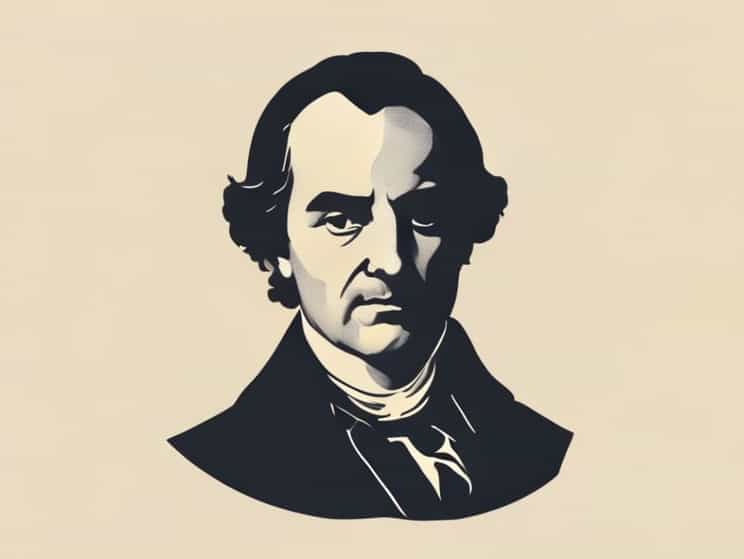
Alexis de Tocqueville’sDemocracy in Americaremains one of the most influential works ever written about politics, society, and democratic life. Many readers today search for Alexis de Tocqueville Democracy in America PDF because they want direct access to this classic text for study, research, or personal understanding. Even nearly two centuries after its publication, the ideas presented in this book continue to shape discussions about democracy, equality, freedom, and the role of citizens in modern societies.
Who Was Alexis de Tocqueville
Alexis de Tocqueville was a French political thinker, historian, and aristocrat born in 1805. He lived during a time of major political change in Europe, when monarchies were challenged and democratic ideals began to spread. Tocqueville was deeply interested in understanding how democracy worked in practice, not just in theory.
In 1831, he traveled to the United States, officially to study the American prison system. However, his real goal was broader. He wanted to observe American society, institutions, and culture to understand why democracy seemed to function so successfully there compared to Europe.
The Background of Democracy in America
Democracy in Americawas published in two volumes, the first in 1835 and the second in 1840. The book is based on Tocqueville’s observations during his travels across the United States, where he spoke with politicians, judges, ordinary citizens, and community leaders.
Rather than focusing only on government structures, Tocqueville examined social habits, religious beliefs, local institutions, and everyday life. This broad approach is one reason the book remains relevant and widely read today.
Main Themes of Democracy in America
Equality of Conditions
One of the central ideas inDemocracy in Americais what Tocqueville called the equality of conditions. He observed that American society was more socially equal than European societies of his time. Titles of nobility carried little meaning, and social mobility was relatively high.
Tocqueville believed this social equality shaped how people thought, behaved, and participated in public life. It influenced family relationships, education, and political engagement.
Liberty and Individualism
Tocqueville admired the strong sense of personal freedom in American society. He noted that citizens valued independence and personal responsibility. At the same time, he warned that excessive individualism could lead people to withdraw from public life and focus only on private interests.
This balance between personal liberty and civic duty is a recurring theme throughout the book and remains highly relevant in modern democratic societies.
The Role of Religion
Another important observation Tocqueville made was the role of religion in American democracy. He noticed that religion and politics were largely separated institutionally, yet religious beliefs strongly influenced moral behavior and social norms.
Tocqueville argued that religion helped support democracy by encouraging ethical behavior and social stability, without directly controlling political power.
Political Institutions and Local Governance
InDemocracy in America, Tocqueville paid close attention to American political institutions. He admired the system of checks and balances, federalism, and the independence of the judiciary.
He placed special emphasis on local self-government, such as town meetings and local councils. Tocqueville believed these local institutions taught citizens how to participate in democracy, cooperate with others, and take responsibility for public affairs.
The Tyranny of the Majority
One of Tocqueville’s most famous and influential concepts is the tyranny of the majority. While democracy gives power to the people, Tocqueville warned that majority opinion could become oppressive.
He feared that minority viewpoints might be silenced, not through violence, but through social pressure and public opinion. This idea remains central to debates about free speech, minority rights, and democratic governance today.
Slavery and Race in Democracy in America
Tocqueville did not ignore the contradictions within American democracy. He wrote extensively about slavery and racial inequality, recognizing them as serious moral and political problems.
He predicted that the legacy of slavery would create long-term social and racial tensions in the United States. His analysis shows both insight and limitation, reflecting the historical context in which he wrote.
Why People Search for Democracy in America PDF
The search term Alexis de Tocqueville Democracy in America PDF reflects the continued importance of this work in education and research. Students, teachers, and readers often look for digital versions because the text is widely studied in political science, sociology, history, and philosophy.
The book is frequently assigned in universities and discussed in debates about democracy, citizenship, and modern political culture.
Modern Relevance of Tocqueville’s Ideas
Many of Tocqueville’s observations feel surprisingly modern. His concerns about individualism, political apathy, and the influence of public opinion resonate strongly in the age of social media and mass communication.
His emphasis on civic engagement and local participation offers valuable lessons for societies struggling with declining trust in institutions and low political participation.
Key Lessons from Democracy in America
- Democracy is shaped as much by culture and habits as by laws
- Equality can strengthen society but also create new challenges
- Active citizenship is essential for a healthy democracy
- Freedom requires moral and social responsibility
These lessons explain why Tocqueville’s work remains essential reading for anyone interested in democratic systems.
Style and Structure of the Book
Democracy in Americais not written as a simple narrative. It combines political analysis, social observation, historical reflection, and philosophical insight. Tocqueville’s writing style is thoughtful and detailed, yet accessible to readers willing to engage deeply with the text.
This combination of clarity and depth is one reason the book continues to be studied worldwide.
Influence on Political Thought
Tocqueville’s ideas have influenced generations of political thinkers, scholars, and leaders. His work is often cited in discussions about constitutional design, civil society, and democratic values.
Both supporters and critics of modern democracy continue to draw on his insights when analyzing political trends and social change.
Alexis de Tocqueville’sDemocracy in Americaremains a cornerstone of democratic thought. The continued interest in Alexis de Tocqueville Democracy in America PDF shows how relevant and valuable this work still is for understanding political life.
By exploring equality, freedom, religion, and civic participation, Tocqueville provided a timeless analysis of democracy’s strengths and weaknesses. His observations continue to offer guidance for readers seeking to understand the challenges and possibilities of democratic societies today.