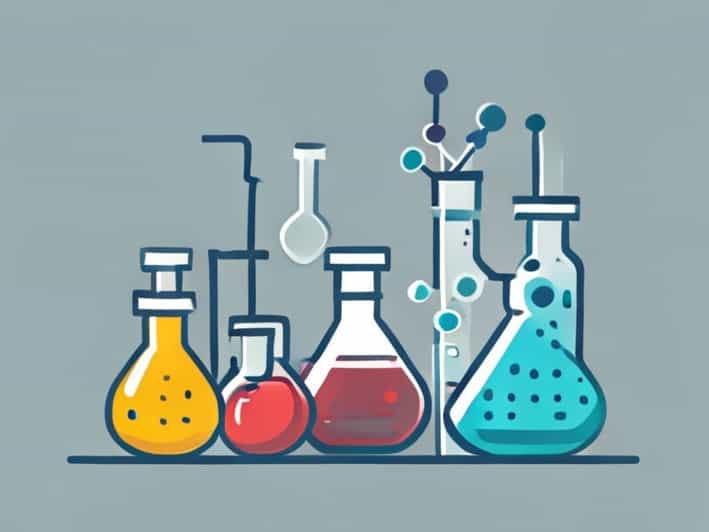
Chemical substances produced artificially in a laboratory are essential components of modern science, industry, and medicine. Unlike naturally occurring chemicals, these substances are created through controlled chemical reactions under specific conditions, allowing scientists to design compounds with desired properties. Artificially produced chemicals have revolutionized fields such as pharmaceuticals, agriculture, materials science, and environmental technology. Understanding how these substances are synthesized, their applications, and their impact on society provides insight into the importance of laboratory chemistry in everyday life.
Definition and Overview of Artificial Chemical Substances
Artificial chemical substances are compounds synthesized in a laboratory rather than obtained from natural sources. These substances can range from simple molecules like water or ammonia to complex organic compounds such as antibiotics, polymers, and synthetic hormones. Laboratory synthesis allows chemists to control purity, concentration, and composition, which is often difficult to achieve with naturally occurring chemicals.
Characteristics of Artificial Chemical Substances
- Produced through controlled chemical reactions
- High purity and specific composition
- Customizable properties to suit applications
- Reproducible in large quantities
- Can include both organic and inorganic compounds
These characteristics make laboratory-produced chemicals indispensable in research and industry, providing materials that are often unavailable or scarce in nature.
Synthesis Methods in the Laboratory
Creating chemical substances in a laboratory involves a variety of techniques depending on the nature of the compound and the desired outcome. Laboratory synthesis can be broadly classified into organic and inorganic methods, with further specialization for specific applications.
Organic Synthesis
Organic synthesis focuses on compounds containing carbon atoms. These processes often involve multiple reaction steps, catalysts, and solvents to create complex molecules. Examples include the synthesis of pharmaceutical drugs, dyes, and polymers. Key techniques include
- Substitution reactions – replacing one atom or group with another
- Addition reactions – combining molecules to form larger compounds
- Oxidation and reduction reactions – altering the oxidation state of atoms
- Polymerization – linking small molecules into large polymer chains
Inorganic Synthesis
Inorganic synthesis deals with compounds that do not primarily contain carbon-hydrogen bonds. This includes metals, salts, and coordination complexes. Techniques often involve precipitation, crystallization, and thermal decomposition. Applications range from catalysts and electronic materials to fertilizers and pigments.
Examples of Artificially Produced Chemicals
Laboratory-produced chemicals cover a wide range of applications and industries. Some prominent examples include
Pharmaceuticals
- Antibiotics such as penicillin derivatives and synthetic cephalosporins
- Pain relievers like acetaminophen and ibuprofen
- Synthetic hormones and insulin
- Vaccines that include chemically synthesized adjuvants
Industrial Chemicals
- Ammonia for fertilizers via the Haber process
- Polyethylene and polypropylene for plastics
- Synthetic dyes for textiles and printing
- Petrochemicals derived from laboratory modifications of hydrocarbons
Environmental and Laboratory Chemicals
- Detergents and surfactants
- Analytical reagents for chemical testing
- Synthetic antioxidants and preservatives
- Chemicals used in water treatment and pollution control
These examples highlight how artificial chemical substances are central to modern technology and daily life, providing products that are safer, more effective, and widely available compared to naturally sourced alternatives.
Advantages of Artificial Chemical Production
Producing chemicals in a laboratory offers several advantages over extracting them from natural sources. These advantages include greater control, sustainability, and innovation possibilities.
Key Benefits
- Purity – Laboratory synthesis allows the production of highly pure substances, reducing contaminants.
- Consistency – Controlled reactions produce chemicals with consistent properties and quality.
- Scalability – Large quantities can be produced to meet industrial or research demands.
- Customization – Chemical properties can be modified to suit specific applications.
- Environmental impact – Reduces dependence on scarce natural resources and allows greener synthesis routes.
These benefits make laboratory-produced chemicals essential for innovation in medicine, technology, and sustainable industry practices.
Challenges and Safety Considerations
Despite the advantages, artificial chemical production comes with challenges. Safety, waste management, and ethical considerations are critical in laboratory environments. Many synthetic chemicals are hazardous, requiring strict handling protocols and protective measures.
Challenges in Laboratory Production
- Toxicity – Some chemicals are harmful if inhaled, ingested, or absorbed through skin.
- Waste management – Chemical synthesis often generates byproducts that require careful disposal.
- Complexity – Multi-step syntheses can be time-consuming and require expertise.
- Cost – High-purity reagents and specialized equipment can be expensive.
Proper laboratory design, personal protective equipment, and adherence to regulatory standards are necessary to mitigate these risks and ensure safe chemical production.
Applications in Research and Innovation
Artificially produced chemicals are fundamental to research and innovation. In pharmaceutical research, synthetic compounds enable the development of new drugs, vaccines, and therapies. In materials science, laboratory-produced polymers and alloys drive advancements in electronics, construction, and nanotechnology. Environmental science relies on synthetic reagents for pollution monitoring, water purification, and sustainable chemical processes.
Examples of Research Applications
- Drug discovery – Testing new molecular structures for therapeutic effects
- Material development – Creating polymers with specific mechanical and chemical properties
- Analytical chemistry – Using synthetic standards and reagents for accurate measurements
- Biotechnology – Synthesizing enzymes, DNA sequences, and biomolecules for experiments
Artificial chemical substances thus provide the building blocks for scientific discovery and technological progress, enabling researchers to explore and manipulate matter in ways that would be impossible using only naturally occurring materials.
Chemical substances produced artificially in a laboratory are vital to modern science, industry, and healthcare. These substances, synthesized through controlled chemical reactions, offer purity, consistency, and customizability that cannot always be achieved with natural compounds. From pharmaceuticals and industrial chemicals to research reagents and environmental solutions, laboratory-produced chemicals have transformed human life and technological capabilities. While challenges such as toxicity, waste management, and cost exist, careful laboratory practices and safety protocols allow these chemicals to be used safely and effectively. Understanding the production, applications, and impact of artificially created chemical substances highlights their indispensable role in advancing knowledge, innovation, and daily life in the modern world.