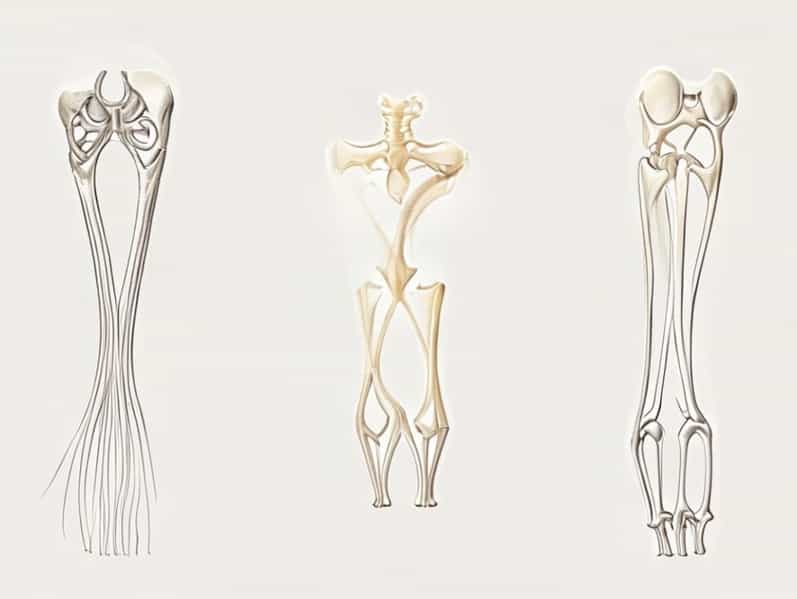
Learning about joints is a key part of understanding how the human body moves and stays stable. Many students search for terms like fibrous cartilaginous and synovial joints quizlet when preparing for anatomy or biology exams, because these joint classifications can be confusing at first. Each type of joint has a unique structure, level of movement, and function in the body. By breaking down the differences in a clear and simple way, this topic becomes much easier to understand and remember.
Why Joint Classification Matters
Joints are the places where two or more bones meet. They allow movement, provide stability, and help support body weight. Classifying joints helps explain why some parts of the body move freely, while others are fixed or only slightly movable. In anatomy, joints are commonly grouped into fibrous, cartilaginous, and synovial joints based on the type of connective tissue that holds the bones together.
Structural vs Functional Classification
Structural classification focuses on what kind of tissue connects the bones and whether a joint cavity is present. Functional classification, on the other hand, looks at how much movement the joint allows. These two systems work together, and understanding both can help students answer exam questions and quizzes more confidently.
Fibrous Joints Explained
Fibrous joints are held together by dense connective tissue, mainly collagen fibers. These joints do not have a joint cavity and generally allow little to no movement. They are designed for strength and stability rather than flexibility.
Types of Fibrous Joints
- Sutures
- Syndesmoses
- Gomphoses
Sutures are found in the skull, where bones are tightly joined to protect the brain. Syndesmoses connect bones with ligaments or sheets of connective tissue, such as the joint between the tibia and fibula. Gomphoses are specialized joints that anchor teeth into their sockets.
Function of Fibrous Joints
The main role of fibrous joints is to provide strong connections between bones. Because movement is limited or absent, these joints are ideal for protecting vital organs and maintaining structural integrity. In study guides and fibrous cartilaginous and synovial joints quizlet sets, fibrous joints are often described as immovable or slightly movable.
Cartilaginous Joints Overview
Cartilaginous joints are connected by cartilage rather than fibrous tissue. These joints also lack a joint cavity, but they allow more movement than fibrous joints. Cartilaginous joints are important for flexibility and shock absorption.
Types of Cartilaginous Joints
- Synchondroses
- Symphyses
Synchondroses are joints where bones are joined by hyaline cartilage. A common example is the growth plate in developing bones. Symphyses are joints where bones are connected by fibrocartilage, such as the pubic symphysis and the intervertebral discs.
Role in the Human Body
Cartilaginous joints allow limited movement while providing strength and flexibility. They play a key role in absorbing shock and supporting weight. This makes them essential in areas like the spine, where both stability and movement are needed.
Synovial Joints and Free Movement
Synovial joints are the most complex and most common type of joint in the human body. They are characterized by a joint cavity filled with synovial fluid, which reduces friction and allows smooth movement.
Key Features of Synovial Joints
- Joint cavity
- Articular cartilage
- Synovial fluid
- Joint capsule
- Ligaments
These features work together to support a wide range of movements. Because of their complexity, synovial joints are often the focus of anatomy exams and fibrous cartilaginous and synovial joints quizlet study sets.
Types of Synovial Joints
There are several types of synovial joints, each allowing different movements
- Hinge joints, such as the elbow and knee
- Ball-and-socket joints, like the shoulder and hip
- Pivot joints, found in the neck
- Gliding joints, such as those in the wrist
- Saddle joints, like the thumb
- Condyloid joints, found in the fingers
Understanding these types helps explain how the body performs complex actions like walking, lifting, and writing.
Comparing Fibrous, Cartilaginous, and Synovial Joints
One of the most effective ways to remember joint types is by comparing them directly. This approach is commonly used in study notes and online quizzes.
Main Differences
- Fibrous joints use dense connective tissue and allow little movement
- Cartilaginous joints use cartilage and allow limited movement
- Synovial joints have a joint cavity and allow free movement
By focusing on tissue type, presence of a joint cavity, and range of motion, students can quickly identify each joint category.
Functional Classification of Joints
Functionally, joints are classified as synarthroses, amphiarthroses, or diarthroses. These terms describe how much movement a joint allows.
Movement-Based Categories
- Synarthroses immovable joints
- Amphiarthroses slightly movable joints
- Diarthroses freely movable joints
Fibrous joints are usually synarthroses, cartilaginous joints are often amphiarthroses, and synovial joints are diarthroses. This connection between structure and function is a common topic in exams.
Why Students Search for Quizlet Resources
Many learners use flashcards and quizzes to memorize anatomy terms. Searching for fibrous cartilaginous and synovial joints quizlet reflects a need for quick review and clear definitions. While memorization is helpful, true understanding comes from knowing how each joint type works in real life.
Effective Study Tips
- Use diagrams to visualize joint structures
- Relate joint types to everyday movements
- Practice classification with examples
- Review definitions regularly
Combining these strategies can make learning joint classifications less stressful and more engaging.
Real-Life Importance of Joint Knowledge
Understanding joints is not only important for exams but also for health awareness. Joint injuries, arthritis, and mobility issues are often linked to specific joint types. Knowing whether a joint is fibrous, cartilaginous, or synovial helps explain why certain injuries heal differently.
Applications in Healthcare and Fitness
Healthcare professionals use joint classification to diagnose and treat conditions. Fitness trainers use this knowledge to design safe exercise programs. Even everyday decisions, such as posture and movement habits, can benefit from understanding how joints function.
Fibrous, cartilaginous, and synovial joints form the foundation of human movement and stability. Each type has a distinct structure and role, from the protective sutures of the skull to the flexible synovial joints that allow complex motion. While many students turn to fibrous cartilaginous and synovial joints quizlet searches for exam preparation, a deeper understanding of these joints makes the information easier to remember and apply. By learning how these joint types differ and work together, anyone can gain a clearer picture of how the body moves and stays strong.