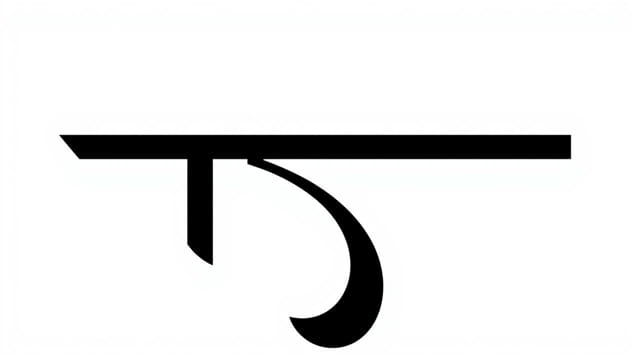
The Bengali script and the Devanagari script are often mentioned together when discussing Indian languages, but they are not the same. Each script has its own distinct characteristics, history, and usage. Many people mistakenly believe that Bengali is written using the Devanagari script due to their visual similarities and their shared use across the Indian subcontinent. However, Bengali is written in its own unique script known as the Bengali script. Understanding the difference between the two can help clarify confusion and shed light on the rich linguistic diversity of South Asia.
Understanding the Bengali Script
The Bengali script, also known as Bangla script, is an abugida, which means each consonant has an inherent vowel sound. It is used to write several languages, most notably Bengali (or Bangla), which is the official language of Bangladesh and the state of West Bengal in India. The script is also used to write Assamese and sometimes Manipuri and Bishnupriya Manipuri, though with variations.
Bengali script has evolved from the Brahmi script through the Eastern Nagari script. It is similar to, but not the same as, the Devanagari script. Bengali script has a distinctive horizontal line running along the tops of the letters, similar to Devanagari, but its characters have unique forms and pronunciations. The Bengali alphabet contains 11 vowels and 39 consonants.
Characteristics of Bengali Script
- It is written from left to right.
- The script has no distinction between upper and lower case.
- The shape of letters is more rounded compared to Devanagari.
- Uses vowel diacritics placed before, after, above, or below consonants.
- Includes many ligatures (combined consonants).
Overview of Devanagari Script
Devanagari is another abugida script used across India and Nepal. It is the writing system for languages like Hindi, Marathi, Nepali, and Sanskrit. Like the Bengali script, Devanagari also descends from the ancient Brahmi script. However, Devanagari developed independently and has a different structure and set of characters.
Devanagari is easily recognized by its horizontal top line that connects letters in a word. The script has 14 vowels and 33 consonants and includes an array of consonant conjuncts. Though it may look similar to Bengali at a glance, especially to someone unfamiliar with Indian scripts, the differences are quite notable when compared closely.
Key Features of Devanagari
- Also written from left to right.
- Uses a horizontal line called the Shirorekha.
- Widely used in India and Nepal for many languages.
- Characters are more angular and less rounded than Bengali script.
- Includes symbols such as anusvara and visarga for nasal and aspirated sounds.
Is Bengali Written in Devanagari Script?
No, Bengali is not written in Devanagari script. While both scripts are related through their ancient Brahmic ancestry and share some stylistic features, they are separate writing systems. Bengali uses its own script, which has developed distinct characteristics over centuries of use. The Bengali script serves the phonetic needs of the Bengali language better than Devanagari would.
Although it is technically possible to transliterate Bengali into Devanagari or vice versa, this is not how the languages are customarily written. Each script is an integral part of the cultural and linguistic identity of the people who use it.
Transliteration vs. Native Script
Transliteration refers to representing the sounds of one script using another script. For example, Bengali words can be written in Devanagari letters, and vice versa. However, this does not mean the language uses that script officially or traditionally. Transliteration is sometimes used for linguistic or educational purposes but is not standard practice for everyday writing or communication.
Historical Development of Bengali Script
The Bengali script emerged from the Siddham script, which itself evolved from Brahmi. Over time, the script transformed into the Gaudi script, and from there into modern Eastern Nagari, the root of modern Bengali and Assamese scripts. While Devanagari followed a different evolution path, both were influenced by similar ancient scripts.
Despite these shared origins, the differences in evolution have led to two distinct scripts, each with its own shape, sound rules, and usage. These differences reflect the linguistic diversity and regional history of India and its neighboring countries.
Practical Use of Bengali and Devanagari Scripts
Bengali script is used not only in West Bengal and Bangladesh but also by Bengali-speaking communities around the world. Books, newspapers, websites, and official documents in Bengali are written using the Bengali script.
Devanagari is used for Hindi, one of the most spoken languages globally, as well as for classical texts in Sanskrit. Both scripts are supported by digital platforms, including Unicode standards, which allow proper representation of these scripts on computers and mobile devices.
Digital Representation
Both scripts are included in modern Unicode standards. Fonts are widely available for Bengali and Devanagari, allowing users to type, print, and display texts accurately in both scripts across different digital devices and websites.
Bengali Is Not Devanagari
To conclude, the Bengali script is not the same as the Devanagari script. While they share a distant ancestry and some visual elements, they are distinct in form, function, and cultural context. Bengali script has developed independently to serve the specific phonetic structure of the Bengali language and is deeply tied to the identity of its speakers. Devanagari, on the other hand, serves other major languages like Hindi, Marathi, and Sanskrit.
Recognizing the difference between Bengali and Devanagari not only helps in language learning but also honors the unique traditions and cultures each script represents. Both are beautiful and sophisticated systems of writing that have stood the test of time and continue to play vital roles in communication across the Indian subcontinent.