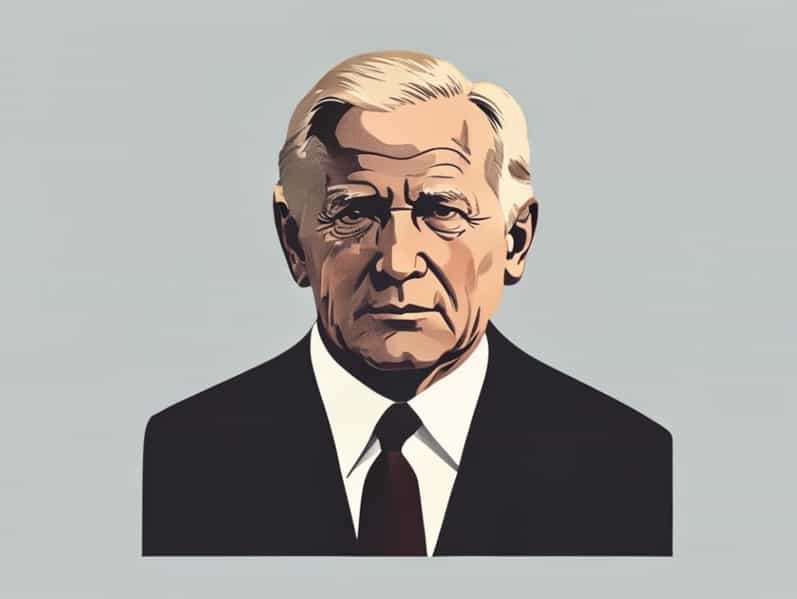
In the summer of 1979, the United States was facing deep economic anxiety, rising energy costs, and growing public frustration with political leadership. Against this backdrop, President Jimmy Carter delivered what would later become known as the crisis of confidence speech. Officially titled a televised address on energy and national goals, the speech quickly entered American political history because of its blunt tone and its attempt to diagnose not just economic problems, but a deeper moral and psychological challenge facing the nation.
Historical Context of the Crisis of Confidence Speech
To understand the Jimmy Carter crisis of confidence speech, it is important to look at the conditions of the late 1970s. The United States was dealing with high inflation, rising unemployment, and repeated oil shocks that caused fuel shortages and long gas lines. Many Americans felt uncertain about the future, and trust in government institutions had already been weakened by events such as the Vietnam War and the Watergate scandal.
Jimmy Carter entered the presidency promising honesty and moral leadership. By 1979, however, his administration was struggling to deliver economic stability. Energy dependence, particularly on foreign oil, had become a symbol of national vulnerability. Carter believed the problem was not only technical or political, but also cultural.
The Setting and Delivery of the Speech
The crisis of confidence speech was delivered on July 15, 1979, from the Oval Office. Unlike many presidential addresses, Carter preceded the speech with an unusual step. He temporarily withdrew from public view and invited a wide range of Americans to Camp David, including labor leaders, business executives, clergy, and academics, to discuss the nation’s problems.
This period of reflection shaped the tone of the address. When Carter spoke to the nation, he did not simply announce new policies. Instead, he offered a broader critique of American attitudes toward consumption, materialism, and national purpose.
Main Themes of the Jimmy Carter Crisis of Confidence Speech
The core idea of the speech was that America was experiencing a crisis of confidence. Carter argued that this crisis was not limited to inflation or energy shortages, but reflected a loss of faith in the future and in shared values.
Loss of Trust and Purpose
Carter spoke about declining trust in government, churches, schools, and other institutions. He suggested that Americans had begun to doubt not only their leaders, but also themselves as a people. This erosion of confidence, he warned, threatened democracy more than any foreign enemy.
Energy as a Moral Issue
A major portion of the speech focused on energy policy. Carter framed energy conservation as a moral responsibility rather than a temporary inconvenience. He argued that excessive consumption was undermining both economic stability and national character.
Critique of Materialism
One of the most memorable aspects of the crisis of confidence speech was Carter’s criticism of materialism. He suggested that Americans had come to define success by possessions rather than values. This message was unusual for a modern president and made the speech stand out.
Policy Proposals Within the Speech
Although the address is remembered for its philosophical tone, it also included specific policy proposals. Carter outlined plans to reduce oil imports, encourage alternative energy sources, and create a national energy mobilization effort.
He proposed measures such as higher efficiency standards, incentives for renewable energy, and a push to reduce reliance on foreign oil. These ideas reflected Carter’s long-standing belief that energy independence was essential to national security.
Public Reaction to the Speech
The immediate reaction to the Jimmy Carter crisis of confidence speech was mixed. In the days following the address, Carter’s approval ratings briefly increased. Some Americans appreciated his honesty and willingness to speak about deeper social issues.
However, others reacted negatively. Critics argued that Carter appeared to blame the American people for problems caused by economic forces and political failures. The term malaise, though never actually used in the speech, became widely associated with it and shaped public perception.
Political Consequences
Shortly after the speech, Carter asked for the resignations of several members of his cabinet, a move that created an image of instability within his administration. What might have been intended as a reset instead fueled criticism that Carter lacked strong leadership.
Opponents seized on the crisis of confidence speech as evidence that Carter was pessimistic and ineffective. This perception would later play a role in the 1980 presidential election, where Ronald Reagan offered a more optimistic vision of American renewal.
Media Interpretation and the Malaise Label
The media played a significant role in shaping how the speech was remembered. Journalists quickly labeled it the malaise speech, even though Carter never used that word. The label stuck and became shorthand for what critics saw as a gloomy and lecturing tone.
This framing overshadowed some of the more practical energy proposals and moral arguments Carter made. Over time, the phrase crisis of confidence itself became less well known than the nickname assigned by commentators.
Long-Term Impact and Reassessment
In the decades since 1979, historians and political analysts have revisited the Jimmy Carter crisis of confidence speech with fresh perspectives. Many now view it as a thoughtful and even courageous attempt to address systemic issues that went beyond short-term politics.
Concerns about energy dependence, environmental sustainability, and excessive consumption have become more relevant in the modern era. As a result, some of Carter’s warnings appear prescient rather than misguided.
Key Ideas That Still Resonate Today
- The link between national confidence and democratic health
- The dangers of defining success purely through material wealth
- The importance of energy independence and conservation
- The role of leadership in addressing moral as well as economic challenges
Why the Speech Remains Significant
The crisis of confidence speech stands out because it broke with traditional political messaging. Instead of offering simple reassurance or blaming external forces, Carter asked Americans to reflect on their own values and choices.
While this approach carried political risks, it also demonstrated a form of leadership that prioritized long-term national well-being over short-term popularity. This makes the speech a unique moment in presidential history.
The Jimmy Carter crisis of confidence speech remains one of the most debated presidential addresses in modern American history. Delivered during a time of economic uncertainty and social change, it attempted to confront not only policy failures but also a deeper sense of national unease.
Although the speech may have contributed to Carter’s political difficulties, it also offered insights that continue to resonate. By framing energy, consumption, and confidence as interconnected issues, Carter challenged Americans to think differently about progress and responsibility. Today, the speech stands as a reminder that leadership sometimes involves difficult truths, even when they are uncomfortable to hear.