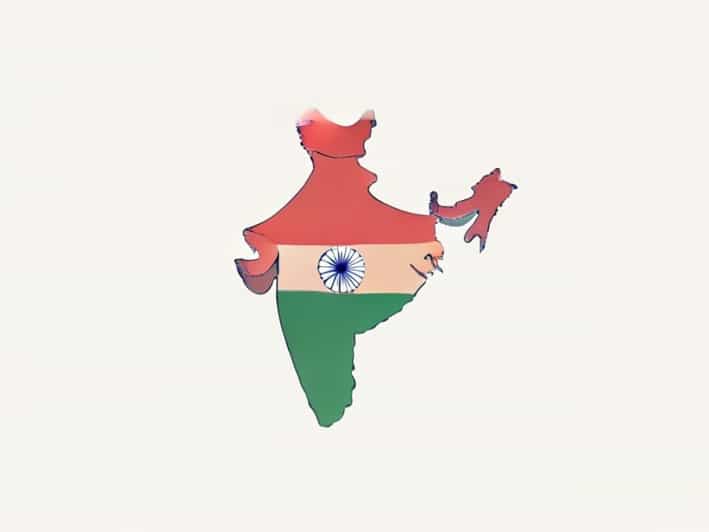
Many people around the world ask the question, there are how many states in India, because India’s political structure can seem complex at first glance. As one of the largest and most diverse countries in the world, India is made up of multiple states and union territories, each with its own government, culture, language, and traditions. Understanding how many states India has today requires looking not only at the current number, but also at how the country’s internal boundaries have evolved over time.
The Current Number of States in India
At present, there are 28 states in India. These states form the primary administrative divisions of the country and have significant powers under the Indian Constitution. Each state has its own elected government, led by a Chief Minister, and its own legislative assembly.
This number has changed several times since India gained independence in 1947, reflecting political, linguistic, and cultural developments across the nation.
States and Union Territories Understanding the Difference
When discussing how many states are in India, it is important to distinguish between states and union territories. While both are part of India, they are governed differently.
What Makes a State Different
States in India have a higher degree of autonomy. They have their own governments that can make laws on a wide range of subjects, as outlined in the Constitution of India.
What Are Union Territories
Union territories are regions governed directly by the central government, although some have limited legislative powers. Currently, India has 8 union territories, which are separate from the 28 states.
List of the 28 States of India
To clearly answer the question of how many states are in India, it helps to look at the full list. Each state reflects a unique combination of history, geography, and culture.
- Andhra Pradesh
- Arunachal Pradesh
- Assam
- Bihar
- Chhattisgarh
- Goa
- Gujarat
- Haryana
- Himachal Pradesh
- Jharkhand
- Karnataka
- Kerala
- Madhya Pradesh
- Maharashtra
- Manipur
- Meghalaya
- Mizoram
- Nagaland
- Odisha
- Punjab
- Rajasthan
- Sikkim
- Tamil Nadu
- Telangana
- Tripura
- Uttar Pradesh
- Uttarakhand
- West Bengal
Each of these states has its own capital, administrative structure, and regional identity.
How the Number of States Changed Over Time
India did not always have 28 states. When the country became independent in 1947, it inherited a complex patchwork of provinces and princely states from British rule. Over the years, these regions were reorganized to better reflect linguistic and cultural boundaries.
States Reorganisation Act of 1956
One of the most important moments in India’s political history was the States Reorganisation Act of 1956. This law reorganized state boundaries primarily based on language, making governance more effective and reducing regional tensions.
This act significantly reshaped the political map of India and laid the foundation for the current structure.
Recent Changes to India’s State Structure
The most recent major change affecting the number of states in India occurred in 2014, when Telangana was created as a separate state from Andhra Pradesh. This increased the number of states from 27 to 28.
Such changes usually happen after long political movements and discussions, showing that India’s federal system remains flexible and responsive.
Why India Has So Many States
India’s large number of states reflects its immense diversity. The country is home to hundreds of languages, multiple religions, and a wide range of cultural traditions. Creating states based on shared characteristics helps ensure better administration and representation.
Linguistic and Cultural Identity
Many Indian states were formed to protect linguistic identity. For example, Tamil Nadu is predominantly Tamil-speaking, while Maharashtra is primarily Marathi-speaking.
This approach helps people feel represented and preserves regional cultures within a unified national framework.
Role of States in India’s Federal System
India follows a federal system of government, meaning power is divided between the central government and the states. States play a vital role in governance, managing areas such as education, healthcare, law enforcement, and local infrastructure.
Division of Powers
- States manage local governance and public services
- The central government handles defense and foreign affairs
- Some responsibilities are shared between both levels
This division allows states to address regional needs more effectively.
Comparison with Other Large Countries
When people ask how many states are in India, they often compare it to other federal countries like the United States or Australia. India has more states than most countries, reflecting its population size and diversity.
Unlike some nations where states have similar cultures, Indian states can differ dramatically in language, food, clothing, and customs.
Importance of Knowing the Number of States in India
Knowing how many states India has is important for students, travelers, researchers, and anyone interested in geography or politics. It helps in understanding election systems, administrative divisions, and regional development policies.
This knowledge also provides insight into how India manages unity while respecting diversity.
Common Confusion About States and Union Territories
Many people confuse the number of states with the total number of administrative divisions in India. When union territories are included, the total number of major divisions becomes 36.
However, when the question specifically asks how many states are in India, the correct answer remains 28.
The Future of India’s States
India’s political structure may continue to evolve. There are ongoing discussions in some regions about statehood or administrative changes. Any future changes would follow constitutional procedures and democratic debate.
This adaptability is one of the strengths of India’s federal system.
To clearly answer the question, there are how many states in India, the current number is 28. These states form the backbone of India’s federal structure, each contributing to the nation’s cultural richness and administrative efficiency.
Understanding the number of states in India also means understanding the country’s history, diversity, and political system. As India continues to grow and change, its states remain essential to balancing unity and regional identity within one of the world’s largest democracies.