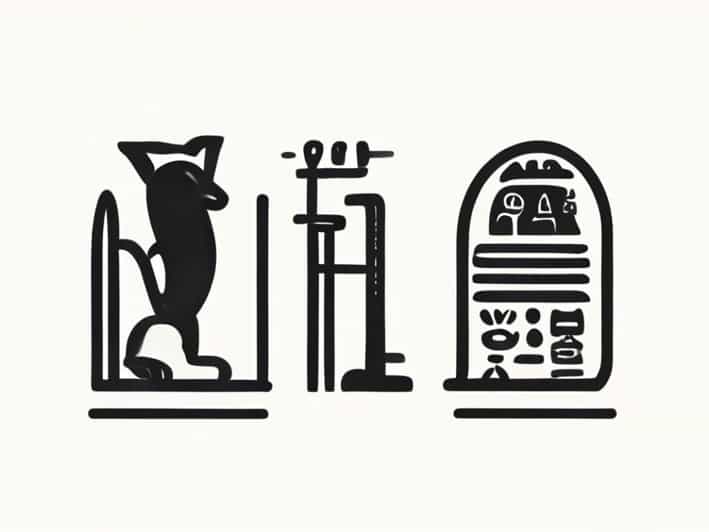
Human beings have been leaving marks, symbols, and images on stone surfaces for thousands of years. These ancient markings give modern people valuable clues about early cultures, beliefs, and ways of life. Two terms that often appear in discussions of ancient writing and rock art are petroglyphs and hieroglyphs. While they may sound similar and both involve carved symbols, they serve different purposes and come from different cultural traditions. Understanding what’s the difference between petroglyphs and hieroglyphs helps clarify how early humans communicated visually.
Defining Petroglyphs
Petroglyphs are images or symbols that are carved, pecked, or etched directly into rock surfaces. The word comes from Greek roots meaning rock and carving. These markings are usually found on natural rock faces, cliffs, or boulders and are considered one of the earliest forms of visual expression.
How Petroglyphs Were Created
Petroglyphs were made by removing part of the rock surface using stone tools or harder rocks. Artists would chip away the outer layer, revealing a lighter surface underneath. This method allowed the images to stand out against darker rock backgrounds.
Because they are carved into stone, petroglyphs can survive for thousands of years when protected from erosion.
Common Themes in Petroglyphs
Petroglyphs often depict scenes from daily life or spiritual beliefs rather than written language. Common subjects include
- Animals such as deer, bison, or birds
- Human figures and hunting scenes
- Geometric shapes and patterns
- Symbolic or spiritual imagery
These images are believed to have cultural or ceremonial meanings rather than serving as a direct written message.
Understanding Hieroglyphs
Hieroglyphs are a formal writing system that uses symbols to represent sounds, words, or ideas. The term is most closely associated with ancient Egypt, where hieroglyphs were used for religious texts, official inscriptions, and monumental art.
The Structure of Hieroglyphic Writing
Unlike petroglyphs, hieroglyphs function as a true written language. Each symbol can represent
- A sound, similar to a letter
- A whole word
- An idea or concept
This system allowed complex messages, stories, and historical records to be preserved in stone and other materials.
Where Hieroglyphs Were Used
Hieroglyphs were commonly carved or painted on temple walls, tombs, monuments, and papyrus scrolls. They were often used to record religious beliefs, royal achievements, and important events.
Unlike petroglyphs, hieroglyphs were created by trained scribes who followed established rules.
Main Differences in Purpose
One of the most important ways to understand what’s the difference between petroglyphs and hieroglyphs is to look at their purpose. Petroglyphs are primarily artistic or symbolic, while hieroglyphs are linguistic.
Petroglyphs as Visual Expression
Petroglyphs are thought to express ideas, stories, or beliefs through images rather than structured language. Their meanings can be open to interpretation and may vary depending on cultural context.
Hieroglyphs as Written Communication
Hieroglyphs were designed to communicate specific information. Because they follow a defined system, modern scholars have been able to translate many hieroglyphic texts and understand their messages.
Cultural and Geographic Origins
Another key difference lies in where and by whom these markings were created.
Origins of Petroglyphs
Petroglyphs appear all over the world, created by many different cultures across time. They can be found in North and South America, Africa, Europe, Asia, and Australia. Each region’s petroglyphs reflect local traditions and environments.
Origins of Hieroglyphs
Hieroglyphs are most famously linked to ancient Egypt, though similar symbolic writing systems existed in other cultures. Egyptian hieroglyphs are among the most studied because of their complexity and historical importance.
Differences in Complexity
The level of complexity also separates petroglyphs from hieroglyphs.
Simplicity of Petroglyphs
Petroglyphs are usually simple in form, focusing on recognizable shapes and figures. While they may hold deep meaning, they do not follow grammatical rules.
Structured Nature of Hieroglyphs
Hieroglyphs are part of an organized writing system with syntax and conventions. This allows them to convey detailed information, including names, dates, and narratives.
Materials and Techniques
Both petroglyphs and hieroglyphs involve carving, but the techniques and materials differ.
Petroglyph Techniques
Petroglyphs were usually made using basic tools available to early humans. The focus was on durability and visibility rather than precision.
Hieroglyphic Craftsmanship
Hieroglyphs often show a higher level of craftsmanship. Many were carefully carved or painted by skilled artisans, sometimes enhanced with color.
Interpretation and Modern Study
Interpreting petroglyphs can be challenging because their meanings are not always clear. Researchers rely on context, location, and comparison with other cultural artifacts.
Hieroglyphs, once deciphered, can be read more directly. The discovery of bilingual texts helped scholars unlock their meaning.
Why the Difference Matters
Understanding what’s the difference between petroglyphs and hieroglyphs helps us appreciate the diversity of human expression. One represents early artistic communication, while the other marks a major step toward written language.
Petroglyphs and hieroglyphs may both be carved into stone, but they serve very different roles in human history. Petroglyphs are ancient images that express cultural ideas and experiences, often without a fixed meaning. Hieroglyphs, on the other hand, are a structured writing system used to record language and history. By recognizing these differences, we gain a deeper understanding of how humans evolved from symbolic art to complex written communication.