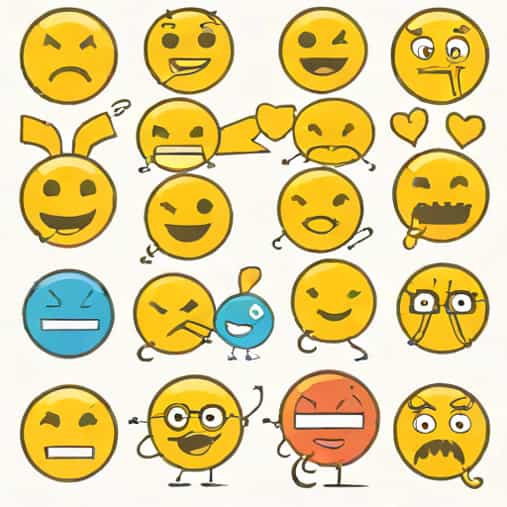
In everyday digital communication, emojis have become a natural part of how people express thoughts and emotions. They appear in text messages, social media posts, emails, and even professional chats. What makes emojis especially interesting is that they are considered both gestural and visual forms of communication. This means they function in ways similar to body language and facial expressions while also relying on visual symbols rather than spoken or written words. Understanding emojis from this perspective helps explain why they are so powerful and widely used.
Emojis as a Form of Visual Communication
At their core, emojis are visual symbols. Unlike alphabetic letters, which represent sounds, emojis represent ideas, emotions, objects, or actions directly through images. A smiling face emoji does not need to be read aloud to be understood; its meaning is instantly recognized through sight.
This visual quality allows emojis to cross language barriers. People from different linguistic backgrounds can often understand the emotional tone of a message simply by seeing an emoji. In this sense, emojis function similarly to pictograms or icons used in public spaces.
Instant Recognition and Meaning
Visual communication is effective because the human brain processes images faster than text. Emojis take advantage of this ability by conveying meaning in a compact and immediate way.
- They reduce the need for lengthy explanations
- They clarify emotional intent
- They make messages more engaging
Why Emojis Are Considered Gestural
Emojis are also considered gestural because many of them represent physical gestures or facial expressions. Gestures such as waving, clapping, pointing, or giving a thumbs-up are common in face-to-face interaction. Emojis recreate these gestures in digital form.
When someone uses a laughing emoji or a facepalm emoji, they are simulating a physical reaction that would normally occur in real-world conversation. This makes emojis a substitute for nonverbal cues that are missing in text-based communication.
Facial Expressions in Digital Space
Facial expressions are a crucial part of human communication. They signal emotions like happiness, anger, surprise, or confusion. Emojis replicate these expressions visually, allowing people to show how they feel without explicitly stating it.
- Smiling emojis indicate friendliness or approval
- Frowning emojis suggest sadness or disappointment
- Winking emojis add humor or irony
The Role of Emojis in Nonverbal Communication
In face-to-face interaction, nonverbal communication often carries more meaning than words. Tone of voice, posture, and gestures all contribute to understanding. In digital communication, these cues are absent, which can lead to misunderstandings.
Emojis help fill this gap. By acting as gestural and visual markers, they provide context and emotional nuance. A simple sentence can change meaning entirely depending on the emoji that follows it.
Emojis and Emotional Expression
One of the main reasons emojis are widely used is their ability to express emotion quickly and clearly. Writing out feelings in words can feel awkward or time-consuming. Emojis offer a shortcut that feels natural.
Because emojis are visual and gestural, they often feel more genuine than text alone. A heart emoji or a crying face can communicate empathy in ways that words sometimes cannot.
Softening and Strengthening Messages
Emojis can soften potentially harsh messages or strengthen positive ones. This function is closely related to their gestural nature.
- A smiling emoji can reduce the seriousness of criticism
- A celebratory emoji can amplify praise
- A playful emoji can signal joking intent
Social and Cultural Dimensions of Emojis
Although emojis are visual, their interpretation is influenced by culture and social context. A gesture that is positive in one culture may have a different meaning in another. Emojis reflect this complexity.
Despite these variations, many emojis are widely understood because they are based on universal human expressions and gestures. This balance between universality and cultural nuance makes emojis a fascinating communication tool.
Emojis as a Bridge Between Speech and Writing
Traditional writing lacks many features of spoken language, such as intonation and rhythm. Emojis help bridge this gap by adding emotional and gestural elements to written text.
In this way, emojis act as a hybrid form of communication. They are visual like images, gestural like body language, and functional like punctuation. A single emoji can change the tone of an entire sentence.
Emojis as Modern Paralinguistic Tools
Paralinguistic features include elements that accompany speech, such as tone or facial expression. Emojis serve a similar purpose in digital communication.
- They signal humor or sarcasm
- They show emotional emphasis
- They guide interpretation of text
The Evolution of Emojis in Digital Communication
Emojis have evolved from simple smiley faces into a complex visual language. Today, they include gestures, objects, activities, and diverse representations of people. This evolution reflects the growing need for expressive tools in online communication.
As communication becomes more digital, the role of emojis as gestural and visual elements continues to expand.
Criticism and Misunderstandings
Despite their popularity, emojis are sometimes criticized for oversimplifying communication or reducing language skills. Others argue that emojis can be misinterpreted, especially across generations or cultures.
These concerns highlight the importance of context. Like gestures in real life, emojis depend on shared understanding between communicators.
Emojis in Professional and Educational Settings
Once considered informal, emojis are increasingly used in professional and educational communication. When used carefully, they can humanize digital interactions and make messages feel more approachable.
However, because emojis are gestural and visual, their use in formal settings requires sensitivity to tone and audience.
The Psychological Impact of Emojis
Research suggests that emojis can influence how messages are perceived emotionally. Seeing a friendly emoji can trigger positive emotional responses similar to seeing a real smile.
This effect reinforces the idea that emojis function as digital gestures, engaging emotional processing rather than purely logical interpretation.
Emojis are considered gestural and visual because they replicate key aspects of human nonverbal communication in digital form. Through facial expressions, gestures, and symbolic images, emojis enrich text-based interaction by adding emotional depth and clarity. Their ability to function across languages and contexts explains their global popularity. As digital communication continues to evolve, emojis will remain an essential tool for expressing meaning in ways that words alone often cannot.