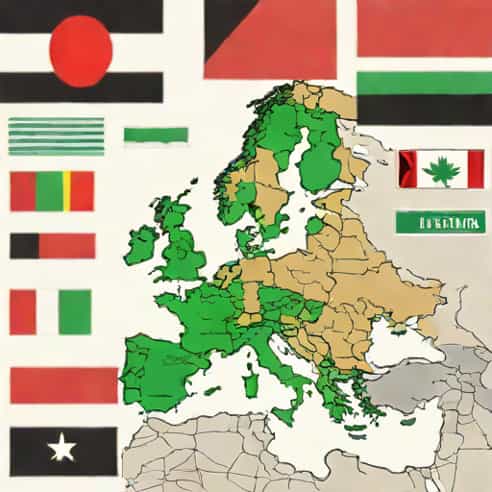
The question of international recognition of Palestine has been a pivotal issue in global diplomacy for decades. Across the world, countries vary in their stance on recognizing Palestine as a sovereign state, with Europe displaying a particularly diverse range of positions. Some European nations have formally recognized Palestine, while others support a two-state solution without official recognition. Understanding which European countries recognize Palestine provides insight into the continent’s political landscape and the ongoing debates surrounding Middle Eastern geopolitics.
Understanding Recognition of Palestine
Recognition of Palestine involves a formal acknowledgment by one state of the Palestinian territories as an independent and sovereign nation. This recognition can have political, diplomatic, and economic implications. For countries in Europe, recognition often reflects broader foreign policy priorities, including human rights, international law, and relationships with Israel and other Middle Eastern states. Recognizing Palestine is not just symbolic; it often leads to the establishment of diplomatic missions, support in international organizations, and cooperation agreements with Palestinian authorities.
Historical Context of Recognition
The concept of Palestinian statehood gained significant international attention following the 1948 Arab-Israeli conflict and the establishment of the State of Israel. Over the decades, numerous United Nations resolutions have called for recognition and negotiation regarding Palestinian self-determination. In Europe, countries have approached the question of recognition in various ways. Some nations, motivated by solidarity with Palestinian aspirations or commitment to international law, have extended formal recognition. Others have preferred to delay recognition in favor of diplomatic negotiations and conflict resolution efforts.
European Countries That Recognize Palestine
Recognition of Palestine in Europe is not uniform, and the list of countries that have officially recognized Palestinian statehood has grown gradually over time. Recognition may come through parliamentary resolutions, government declarations, or formal diplomatic recognition. The following are some European countries that have officially recognized Palestine
Sweden
Sweden became the first major Western European country to officially recognize the State of Palestine in 2014. The decision reflected Sweden’s long-standing support for a two-state solution and its commitment to international law. Following recognition, Sweden has maintained diplomatic relations with Palestinian authorities and has emphasized the importance of peace negotiations between Israel and Palestine.
Iceland
Iceland officially recognized Palestine in 2011. This recognition was based on Iceland’s support for Palestinian statehood within pre-1967 borders and its commitment to human rights. The Icelandic parliament voted in favor of recognition, reflecting strong public and political support for Palestinian self-determination.
Malta
Malta has maintained formal recognition of Palestine since the 1980s. Malta’s government has consistently expressed support for Palestinian sovereignty and emphasized the importance of peaceful negotiations. The country’s recognition reflects both its historical foreign policy approach and solidarity with the Palestinian cause.
Others
In addition to Sweden, Iceland, and Malta, several other European countries have extended recognition of Palestine, though often in a more limited or symbolic capacity. These include countries in Eastern Europe such as Poland, Hungary, and Slovakia. These nations recognize Palestine formally while also supporting diplomatic efforts to achieve a comprehensive peace settlement in the Middle East.
European Countries With Partial or Conditional Recognition
Many European countries do not officially recognize Palestine but support Palestinian statehood in principle or in multilateral settings. These countries often advocate for a two-state solution negotiated through peace talks rather than unilateral recognition. Examples include Germany, France, Italy, and the United Kingdom. These nations provide diplomatic and economic support to Palestinian institutions while maintaining strong bilateral relations with Israel.
Role of the European Union
The European Union as a whole has a nuanced position on Palestinian recognition. While the EU supports Palestinian state-building and provides substantial aid to Palestinian territories, it has not issued a collective formal recognition. Instead, the EU encourages direct negotiations between Israel and Palestine and promotes a two-state solution. Individual EU member states may act independently in recognizing Palestine, creating a complex patchwork of policies across the continent.
Factors Influencing European Recognition
European recognition of Palestine is influenced by a variety of political, historical, and strategic factors. Some of the key considerations include
Historical Ties and Solidarity
Countries with historical support for self-determination movements often lean toward recognizing Palestine. This is influenced by public opinion, historical solidarity with oppressed peoples, and a commitment to international law and human rights principles.
Diplomatic Relations With Israel
European countries also consider their relationships with Israel when deciding whether to recognize Palestine. Some nations delay formal recognition to avoid straining diplomatic or economic ties with Israel. These countries may instead offer conditional support for Palestinian statehood in negotiations facilitated by international mediators.
Internal Politics
Domestic political dynamics play a significant role. Parliamentary votes, party policies, and public opinion can influence recognition decisions. Governments may recognize Palestine to reflect public sentiment, particularly in nations with strong human rights advocacy movements.
Impact of Recognition
Recognition of Palestine by European countries has several notable consequences
- Diplomatic RelationsRecognizing nations often establish formal diplomatic relations with the Palestinian Authority, including embassies or representative offices.
- International AdvocacyRecognizing countries typically support Palestinian initiatives in international organizations such as the United Nations and UNESCO.
- Economic Aid and CooperationRecognition often comes with financial support, development projects, and technical assistance to Palestinian institutions.
- Political MessagingRecognition serves as a statement of support for Palestinian rights and international law, influencing regional and global diplomatic dynamics.
European countries display a spectrum of approaches when it comes to recognizing Palestine. While nations like Sweden, Iceland, and Malta have formally recognized Palestinian statehood, others prefer conditional or symbolic support while maintaining strong diplomatic ties with Israel. The European Union collectively supports Palestinian state-building but emphasizes negotiation and a two-state solution. Understanding which European countries recognize Palestine and the factors influencing their decisions sheds light on the continent’s complex role in Middle Eastern geopolitics. Recognition is not merely a diplomatic gesture; it reflects political priorities, historical considerations, and a commitment to supporting self-determination and international law, playing a significant role in the broader discourse surrounding peace and stability in the region.