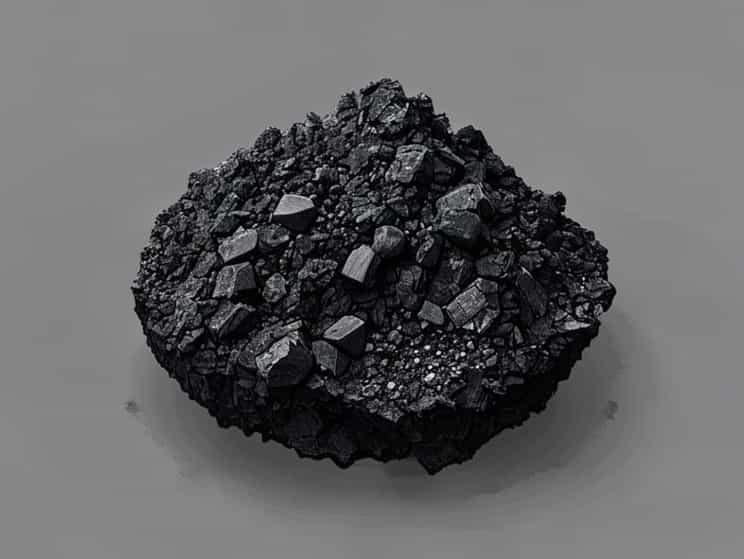
Humic acid has gained increasing attention in agriculture, environmental management, and industry due to its ability to improve soil fertility, enhance nutrient uptake, and support sustainable practices. One of the most important and widely used sources of humic acid is lignite coal, also known as brown coal. The extraction of humic acid from lignite coal is considered efficient because lignite contains a high concentration of humic substances formed through long-term natural decomposition of plant material. Understanding how humic acid is extracted from lignite coal helps explain why it has become a valuable material across many sectors.
Understanding Humic Acid and Lignite Coal
Humic acid is a complex organic compound that belongs to a group of substances called humic substances. These compounds are naturally found in soil, peat, compost, and certain types of coal. Humic acid plays a crucial role in soil health by improving structure, increasing water retention, and enhancing the availability of nutrients to plants.
Lignite coal is a low-rank coal formed from partially decomposed organic matter under relatively low pressure and temperature. Compared to higher-rank coals such as bituminous or anthracite, lignite retains more of its original organic components. This makes lignite coal especially rich in humic acid and ideal for extraction purposes.
Why Lignite Coal Is a Preferred Source
Lignite coal contains a higher percentage of humic substances than most soils or compost materials. Its relatively soft structure also makes it easier to process. Because lignite is abundant in many regions, it provides a cost-effective and scalable source for humic acid production.
- High humic acid content
- Abundant and widely available
- Easier to process than higher-rank coal
Principles Behind Humic Acid Extraction
The extraction of humic acid from lignite coal is based on the solubility behavior of humic substances. Humic acid is insoluble in acidic conditions but becomes soluble in alkaline solutions. This property allows humic acid to be separated from lignite using controlled chemical reactions.
By treating lignite coal with an alkaline solution, humic acid dissolves into the liquid phase. It can then be separated, purified, and converted into usable forms such as powder or liquid concentrates.
Chemical Nature of the Process
The process does not alter humic acid into a synthetic compound. Instead, it isolates naturally occurring organic molecules. This is one reason humic acid products derived from lignite are often accepted in environmentally friendly and sustainable applications.
Preparation of Lignite Coal
Before extraction begins, lignite coal must be properly prepared. Raw lignite is first mined and then cleaned to remove impurities such as stones, sand, and unwanted minerals. This ensures higher extraction efficiency and better product quality.
After cleaning, the lignite is usually dried and ground into smaller ptopics. Reducing ptopic size increases the surface area, allowing the alkaline solution to interact more effectively with the humic substances inside the coal.
Importance of Ptopic Size
Smaller lignite ptopics allow for better contact between the coal and the extracting solution. This leads to higher yields of humic acid and shorter processing times. However, ptopics should not be too fine, as this can complicate filtration later.
Alkaline Extraction Process
The core step in the extraction of humic acid from lignite coal is alkaline treatment. In this stage, prepared lignite is mixed with an alkaline solution, most commonly sodium hydroxide or potassium hydroxide. The mixture is stirred and maintained at controlled temperature and time conditions.
Under alkaline conditions, humic acid dissolves into the solution, forming a dark-colored liquid. This solution contains dissolved humic acid along with other soluble organic substances.
Factors Affecting Extraction Efficiency
Several factors influence how much humic acid can be extracted from lignite coal
- Type and concentration of alkaline solution
- Extraction temperature
- Contact time between coal and solution
- Quality and origin of lignite coal
Careful control of these variables helps maximize yield while minimizing energy use and chemical waste.
Separation and Filtration
Once the alkaline extraction is complete, the mixture contains both solid residues and liquid extract. The next step is separation, usually achieved through filtration or centrifugation. Solid residues, mainly insoluble mineral matter and carbon, are removed from the liquid.
The remaining liquid contains dissolved humic acid and is ready for further processing. Proper filtration is important to ensure the final product is clean and free from unwanted ptopics.
Acid Precipitation of Humic Acid
To recover humic acid from the alkaline solution, the liquid is acidified using a mild acid. When the pH is lowered, humic acid becomes insoluble and precipitates out of the solution as a dark solid.
This step separates humic acid from other soluble components, such as fulvic acid, which remains dissolved even under acidic conditions. The precipitated humic acid can then be collected by filtration.
Difference Between Humic and Fulvic Acid
Although both are humic substances, humic acid and fulvic acid have different properties. Humic acid has larger molecular structures and is more effective at improving soil structure, while fulvic acid is more soluble and works well for nutrient transport.
Drying and Final Processing
After precipitation and filtration, the wet humic acid material is dried to remove excess moisture. Drying methods may include air drying, oven drying, or spray drying, depending on the desired final form.
The dried humic acid can be milled into powder or dissolved again to produce liquid humic acid products. These final products are then packaged for use in agriculture, horticulture, environmental remediation, or industrial applications.
Forms of Humic Acid Products
- Granular humic acid for soil application
- Powdered humic acid for blending
- Liquid humic acid concentrates
Applications of Humic Acid from Lignite Coal
Humic acid extracted from lignite coal is widely used in agriculture to improve soil fertility and plant growth. It enhances nutrient uptake, stimulates root development, and improves microbial activity in soil.
Beyond agriculture, humic acid is also used in environmental applications such as soil remediation, water treatment, and waste management. Its ability to bind heavy metals and organic pollutants makes it valuable for cleaning contaminated environments.
Environmental and Economic Considerations
The extraction of humic acid from lignite coal offers both environmental and economic benefits. It adds value to a low-rank coal that may otherwise have limited use. At the same time, humic acid supports sustainable farming practices by reducing dependence on synthetic fertilizers.
When managed responsibly, the extraction process can be optimized to minimize waste and chemical usage, making it an increasingly attractive option for green industries.
The extraction of humic acid from lignite coal is a well-established process that combines natural resources with simple chemical principles. By utilizing the rich organic content of lignite, this method produces a valuable material that supports agriculture, environmental protection, and sustainable development. As interest in soil health and eco-friendly solutions continues to grow, humic acid derived from lignite coal is likely to remain an important resource for the future.