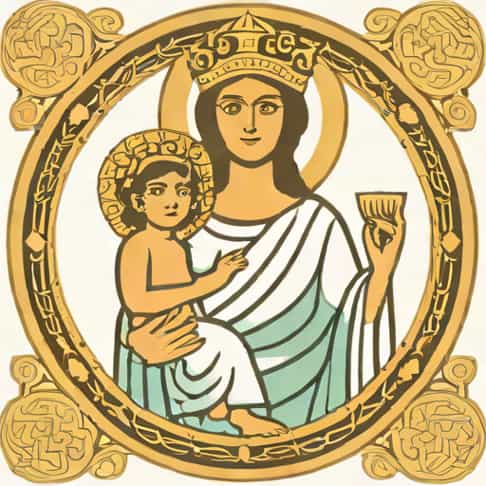
In ancient Greek mythology, marriage and childbearing were not only personal matters but sacred institutions believed to be overseen by divine power. The Greek goddess of marriage and childbearing played a central role in shaping how people understood family, loyalty, and social order. Her presence was felt in weddings, childbirth, and even in moments of marital conflict. Through myths, rituals, and everyday beliefs, this goddess became a powerful symbol of commitment, fertility, and the challenges that come with family life.
Who Is the Greek Goddess of Marriage and Childbearing?
The Greek goddess most closely associated with marriage and childbearing is Hera. She was one of the twelve Olympian gods and the queen of Mount Olympus.
Hera was revered as the protector of lawful marriage, the sanctity of family, and the well-being of women during childbirth. Her influence extended from royal households to ordinary families across ancient Greece.
Hera’s Position Among the Olympians
As the wife of Zeus, the king of the gods, Hera held a position of great authority. Her role symbolized the ideal of a legitimate and socially recognized union.
Despite her status, Hera’s myths often reflect emotional struggles, highlighting the complexities of marriage.
Marriage as a Sacred Institution
In Greek society, marriage was considered essential for social stability and continuation of family lines. Hera embodied this ideal.
She was invoked during wedding ceremonies to bless unions and ensure harmony between husband and wife.
Protector of Lawful Unions
Hera was not associated with romantic love or passion. Instead, she represented commitment, duty, and loyalty.
This distinction set her apart from other deities connected to desire or attraction.
Hera and Childbearing
Beyond marriage, Hera was also deeply connected to childbirth and motherhood. Women prayed to her for safe pregnancies and healthy children.
Her role reflected the importance of fertility and continuity in ancient Greek culture.
Support for Mothers
Hera was believed to watch over women during labor, a time that was both dangerous and sacred in the ancient world.
Offerings were often made to seek her protection and favor.
Symbols Associated with the Goddess
Hera is often depicted with symbols that reinforce her authority and connection to marriage and fertility.
These symbols were commonly used in art, temples, and religious ceremonies.
Peacock and Diadem
The peacock, with its many-eyed feathers, symbolized watchfulness and majesty. It was closely linked to Hera’s identity.
She is also frequently shown wearing a diadem, representing her role as queen of the gods.
Temples and Worship Practices
Hera was widely worshiped throughout ancient Greece. Some of her temples were among the oldest and most important religious sites.
Her worship reflected the central role of marriage and family in Greek society.
Major Centers of Worship
One of the most famous temples dedicated to Hera was located at Argos, where she was honored as the guardian of marriage.
Festivals were held in her name, celebrating fertility, womanhood, and marital unity.
Hera’s Complex Personality in Mythology
Greek myths often portray Hera as both protective and vengeful. This complexity makes her one of the most human-like deities.
Her stories reveal the emotional challenges associated with marriage and motherhood.
Jealousy and Loyalty
Hera is well known for her jealousy, particularly regarding Zeus’s infidelities.
Rather than diminishing her role, these stories emphasize her fierce commitment to the institution of marriage.
Relationship with Zeus
The marriage between Hera and Zeus is one of the most prominent divine relationships in Greek mythology.
It is often depicted as turbulent, reflecting both power struggles and enduring bonds.
A Symbolic Union
Their relationship symbolized the balance between authority and order within the cosmos.
Despite conflicts, their union remained intact, reinforcing the permanence of marriage.
Comparison with Other Goddesses
While Hera was the primary Greek goddess of marriage and childbearing, other goddesses also had related roles.
This shared influence shows how layered Greek mythology was.
Hera and Demeter
Demeter was associated with fertility of the earth and nurturing life.
Hera’s focus, however, was on human relationships and family structure.
Hera and Artemis
Artemis was connected to childbirth but also to virginity and independence.
Hera represented the married woman and mother, creating a contrast in feminine roles.
Cultural Impact in Ancient Greece
Hera’s influence extended beyond religion into social norms and expectations.
Women were often taught to model loyalty and dignity after her example.
Marriage Ideals
The presence of Hera in cultural stories reinforced the importance of fidelity and respect within marriage.
Her image shaped how ancient Greeks viewed the responsibilities of spouses.
Hera in Art and Literature
Hera frequently appears in ancient Greek art, sculpture, and poetry.
Artists portrayed her as regal, mature, and dignified.
Visual Representation
Unlike youthful goddesses, Hera is often depicted as a fully grown woman, emphasizing maturity and authority.
This reinforced her role as a symbol of established marriage and motherhood.
Modern Interpretations of Hera
In modern times, Hera is often reinterpreted through psychological and feminist perspectives.
She is seen as a figure representing the struggles and strength of committed relationships.
A Symbol of Endurance
Many modern readers view Hera as a goddess who endures hardship while maintaining dignity.
This interpretation highlights resilience rather than jealousy alone.
Why the Goddess Still Matters Today
The Greek goddess of marriage and childbearing continues to resonate because her themes remain relevant.
Marriage, family, loyalty, and emotional complexity are still central to human experience.
-
Represents commitment and responsibility
-
Symbolizes protection of family life
-
Reflects emotional depth in relationships
-
Connects ancient beliefs with modern values
The Greek goddess of marriage and childbearing, Hera, embodies the sacred and challenging aspects of family life. Through her role as protector of marriage and guardian of childbirth, she shaped ancient Greek understanding of commitment, loyalty, and social order. Her myths reveal both strength and vulnerability, making her a timeless figure whose influence extends far beyond ancient temples. Even today, Hera remains a powerful symbol of the enduring complexity of marriage and motherhood.