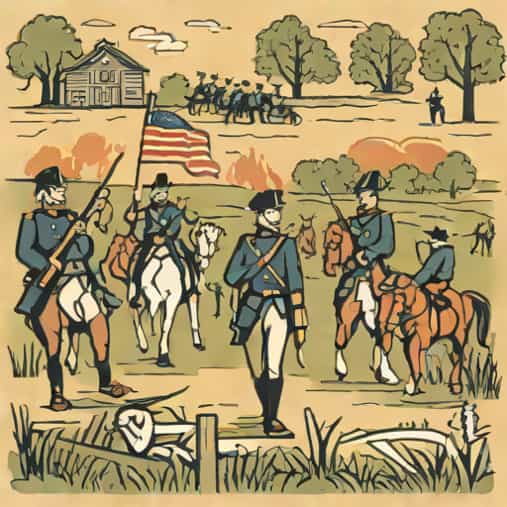
The Battle of Chancellorsville, one of the most famous and controversial encounters of the American Civil War, began under circumstances marked by strategy, risk, and bold decision-making. Fought in early May 1863 in Spotsylvania County, Virginia, this battle involved some of the war’s most notable commanders, including Confederate General Robert E. Lee and Union General Joseph Hooker. The conflict’s origins were shaped by troop movements, intelligence reports, and strategic intentions, all of which converged to ignite a clash that would be remembered for both its brilliance and its high cost. Understanding how the Battle of Chancellorsville started requires exploring the political, military, and geographical context that set the stage for one of the Civil War’s defining confrontations.
The Strategic Context Leading to Chancellorsville
By spring of 1863, the Union Army of the Potomac had suffered a series of setbacks and was eager to regain momentum. General Joseph Hooker assumed command with the goal of reorganizing and revitalizing the army, focusing on morale, training, and logistics. Hooker aimed to outmaneuver the Confederate Army of Northern Virginia, led by Robert E. Lee, and deliver a decisive blow that could potentially end Lee’s campaign in the eastern theater. The Union forces planned to advance through the dense wilderness of Virginia, using the region’s rivers and roads to their advantage, while attempting to surprise the Confederate defenders.
Confederate Preparations and Defensive Strategy
Meanwhile, General Lee recognized the numerical advantage held by Hooker’s forces and understood that a defensive approach alone might not suffice. Lee opted for an aggressive strategy, seeking to exploit the Union army’s movements and potentially divide their forces. Confederate commanders, including Lieutenant General Thomas Stonewall Jackson, were instructed to conduct flanking maneuvers that could strike unexpectedly at the Union positions. The Confederate leadership meticulously studied the terrain, noting the dense forests, narrow roads, and scattered settlements that would shape the battle’s tactics and outcomes.
Hooker’s Plan to Initiate the Battle
Hooker’s strategy involved a combination of direct engagement and strategic positioning. He aimed to use the Union Army’s superior numbers to encircle Lee’s forces, cutting off supply lines and forcing a surrender. The plan called for multiple corps to advance along parallel routes, converging near Chancellorsville to trap the Confederate army. Hooker hoped that by leveraging both numerical strength and careful coordination, the Union forces could overwhelm Lee before he had a chance to react effectively. This ambitious approach reflected Hooker’s confidence and the high stakes of early 1863.
Movement of Troops and Initial Skirmishes
As Union forces moved into position in late April and early May, small skirmishes and reconnaissance encounters signaled the impending conflict. Cavalry units clashed at various points along the roads and bridges, gathering intelligence on enemy positions. Hooker’s troops faced logistical challenges, including difficult terrain and extended supply lines, which slowed their advance and allowed Confederate scouts to monitor their movements. These initial engagements, though minor, were crucial in shaping the commanders’ understanding of the opposing army’s strength and disposition.
The Opening Day May 1, 1863
The Battle of Chancellorsville officially began on May 1, 1863, when Union forces engaged Confederate troops near the village of Chancellorsville. Hooker ordered his corps to probe the Confederate defenses and secure key roadways, intending to position his army for a larger assault. The dense wilderness complicated these efforts, as visibility was limited and units often became disoriented. Confederate forces, anticipating Union movements, took advantage of their knowledge of the terrain to establish strong defensive positions and prepare for counterattacks. The initial encounters were characterized by artillery exchanges, skirmishes, and cautious advances as both sides tested each other’s strength.
Hooker’s Hesitation and Lee’s Bold Response
Despite having the advantage in numbers, Hooker hesitated to press the attack aggressively. Concerns about supply lines, the dense forest, and the strength of Confederate positions contributed to a cautious approach. Lee, observing this hesitation, saw an opportunity to strike decisively. He executed one of the most daring maneuvers of the war by splitting his forces, sending Stonewall Jackson on a flanking march to attack the Union right. This move caught Hooker by surprise and escalated the engagement from limited skirmishes to a full-scale battle. The initial hesitance of Union forces, combined with Lee’s audacity, directly influenced how the battle unfolded in the following days.
Geographical and Logistical Factors
The geography of Chancellorsville played a crucial role in the start of the battle. The Wilderness area, with its dense undergrowth, narrow paths, and limited visibility, created challenges for troop movements and communication. Union forces were forced to advance cautiously, while Confederate units used the forest to conceal their maneuvers. Supply lines and artillery placement were also affected by the terrain, adding complexity to both offensive and defensive operations. These logistical factors contributed to the initial skirmishes escalating into a large-scale confrontation once the armies fully engaged.
The Role of Intelligence and Miscommunication
Intelligence gathering and miscommunication significantly influenced how the Battle of Chancellorsville began. Union scouts provided incomplete or delayed information, which limited Hooker’s understanding of Confederate strength and positions. On the Confederate side, effective reconnaissance allowed Lee to anticipate Union moves and execute the flanking strategy. Miscommunication among Union corps further slowed decision-making, giving Confederate forces a tactical advantage early in the battle. The combination of incomplete intelligence and strategic boldness on Lee’s part set the stage for the intense fighting that followed.
Key Figures at the Start of the Battle
The opening of the Battle of Chancellorsville highlighted the roles of several important commanders. Joseph Hooker, leading the Union Army of the Potomac, faced the challenge of coordinating multiple corps in difficult terrain. Robert E. Lee, commanding the Confederate Army of Northern Virginia, demonstrated audacity and tactical brilliance by dividing his forces despite being outnumbered. Stonewall Jackson, entrusted with the flanking maneuver, executed a daring march that would prove decisive in the battle’s outcome. Their decisions and actions on the first day significantly influenced the course of the engagement.
- Union General Joseph Hooker planned to use numerical superiority to encircle Confederate forces.
- Confederate General Robert E. Lee opted for a bold, aggressive strategy despite being outnumbered.
- Stonewall Jackson led a flanking maneuver that surprised Union troops.
- Dense wilderness terrain complicated troop movements and visibility.
- Initial skirmishes escalated into full-scale battle due to hesitation and tactical opportunity.
- Miscommunication and intelligence gaps shaped the early developments of the battle.
The Battle of Chancellorsville began as a combination of careful planning, strategic hesitation, and bold maneuvers. Union forces under Hooker sought to use their numerical advantage to secure victory, while Confederate leadership, led by Lee and Jackson, relied on audacity, flanking tactics, and intimate knowledge of the terrain. The engagement started with probing movements and skirmishes that quickly escalated as Lee exploited Union hesitation. Understanding how the battle started highlights the importance of strategy, leadership, terrain, and intelligence in shaping one of the Civil War’s most memorable and consequential encounters. The opening of Chancellorsville set the stage for a battle that would become a classic example of tactical brilliance and the high cost of war.