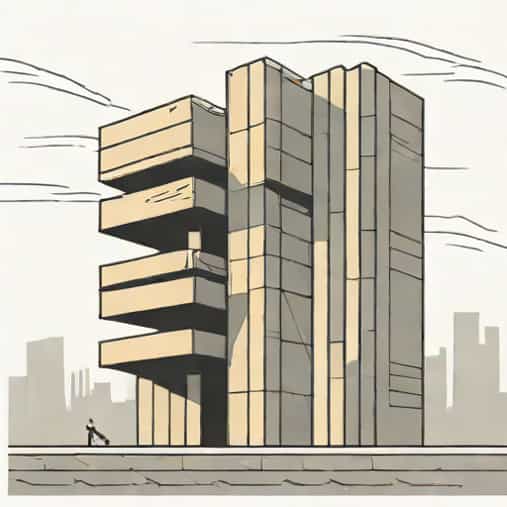
The question of whetherThe Brutalistis based onThe Fountainheadoften comes up among readers and viewers who notice thematic similarities between the two works. Both focus on architecture, individual vision, and the struggle between creative integrity and social pressure. BecauseThe Fountainheadis such a well-known novel, especially for its strong philosophical stance, it is natural to wonder if later works that explore similar ideas are directly inspired by it or simply drawing from shared cultural and artistic concerns.
Understanding The Fountainhead and Its Core Ideas
The Fountainhead, written by Ayn Rand and published in 1943, centers on Howard Roark, an architect who refuses to compromise his artistic vision. The novel is deeply rooted in Rand’s philosophy of individualism, later known as Objectivism. It presents a world where creative originality is constantly challenged by conformity, tradition, and public opinion.
Architecture inThe Fountainheadis more than a profession. It becomes a symbol of personal freedom, innovation, and moral independence. Buildings represent ideas, and the act of designing them reflects the character and values of the architect.
What Is The Brutalist?
The Brutalistis a contemporary film that follows the life of a fictional architect navigating post-war modernism, ambition, trauma, and creative expression. While the title references the architectural movement known as Brutalism, the story itself is more personal and psychological than technical.
The film explores how architecture intersects with identity, memory, and power. Its tone is introspective and often somber, focusing on the emotional cost of creation rather than ideological triumph.
Brutalism as an Architectural Movement
To understand the connection, it helps to understand Brutalism itself. Brutalist architecture emerged in the mid-20th century and is characterized by raw materials, exposed concrete, bold geometric forms, and an emphasis on function over decoration.
Brutalism often aimed to be honest and direct, showing structures exactly as they were made. This honesty in design sometimes parallels the philosophical honesty celebrated inThe Fountainhead, though the movements developed in different contexts.
Key Characteristics of Brutalism
- Exposed concrete and raw materials
- Strong geometric forms
- Minimal ornamentation
- Emphasis on function and structure
Shared Themes Between The Brutalist and The Fountainhead
At a thematic level, there are clear overlaps betweenThe BrutalistandThe Fountainhead. Both works explore the tension between individual vision and external forces. The protagonists are architects who see their work as deeply personal and resist being shaped entirely by societal expectations.
Another shared theme is the idea of architecture as self-expression. Buildings are not neutral objects; they carry emotional, philosophical, and cultural weight.
Key Differences in Tone and Philosophy
Despite these similarities, the two works differ significantly in tone and message.The Fountainheadpresents a confident, almost heroic vision of individualism. Howard Roark is portrayed as morally unshakable, and the narrative strongly supports his worldview.
The Brutalist, on the other hand, tends to be more ambiguous. Its protagonist is shaped by historical trauma, personal loss, and emotional conflict. The film does not present creative integrity as an absolute moral victory but as a complex and sometimes painful pursuit.
Is The Brutalist a Direct Adaptation?
No,The Brutalistis not a direct adaptation ofThe Fountainhead. There is no official indication that the story is based on Ayn Rand’s novel, nor does it follow the same plot, characters, or philosophical framework.
While both works involve architects and creative struggle, this alone does not establish a direct connection. Architecture has long been a powerful metaphor in storytelling, making overlap somewhat inevitable.
Influence vs Coincidence
It is possible thatThe Fountainheadinfluenced the broader cultural image of the architect as a lone visionary, which in turn shaped later stories likeThe Brutalist. However, influence does not mean replication.
Many modern narratives explore individual creativity in conflict with institutions, especially in artistic professions. These themes exist beyond a single novel.
Different Historical Contexts
The Fountainheademerged during a time when modernism was still gaining ground, and its message was a direct challenge to traditionalism and collectivism. Its optimism reflects a belief in progress driven by exceptional individuals.
The Brutalistis shaped by a post-war and postmodern perspective. It reflects uncertainty, fragmentation, and the emotional aftermath of historical upheaval. This difference in context leads to very different storytelling approaches.
Architecture as Symbol Rather Than Argument
One of the biggest distinctions is how architecture functions within each work. InThe Fountainhead, architecture is an argument. It exists to prove a philosophical point about individualism.
InThe Brutalist, architecture is more symbolic. It represents memory, struggle, ambition, and sometimes alienation. The buildings are not presented as moral statements but as reflections of inner life.
Why the Comparison Keeps Coming Up
The comparison persists because both works center on architects who resist compromise. This narrative archetype is compelling and relatively rare, making similarities more noticeable.
Additionally, viewers familiar withThe Fountainheadmay naturally project its themes onto any story involving architecture and strong-willed creators.
Audience Interpretation and Expectation
Audience interpretation plays a major role in linking these works. Some viewers may seeThe Brutalistas a modern response to ideas introduced inThe Fountainhead, even if unintentionally.
Others may see it as a critique or deconstruction of the myth of the uncompromising genius.
Why It Matters Whether They Are Connected
Understanding whetherThe Brutalistis based onThe Fountainheadhelps set expectations. Viewing the film as an adaptation might lead to disappointment or misunderstanding.
Recognizing it as an independent work allows viewers to appreciate its unique themes, tone, and emotional depth.
The Brutalistis not based onThe Fountainheadin any direct or formal sense. While both works share thematic elements related to architecture, individuality, and creative struggle, they emerge from different historical, philosophical, and emotional frameworks.The Fountainheadoffers a clear ideological statement, whileThe Brutalistpresents a more nuanced and introspective exploration of creation and identity. The similarities invite comparison, but the differences reveal that each work stands on its own.