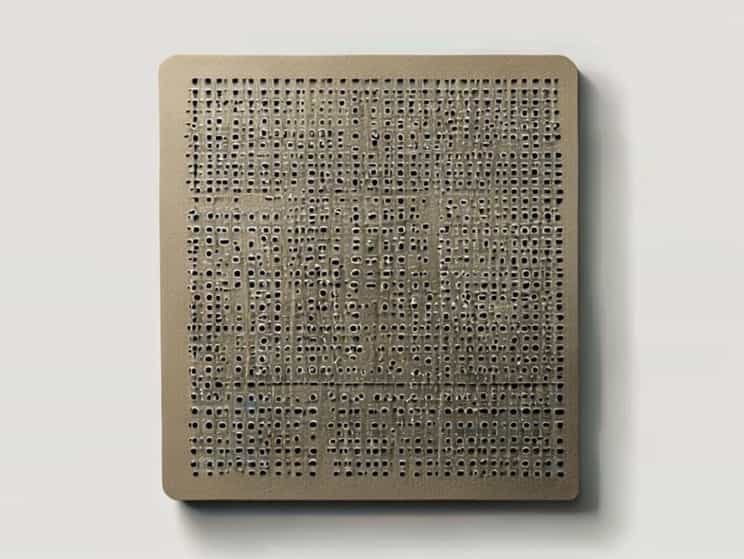
Herman Hollerith was an American inventor whose work revolutionized data processing in the late 19th and early 20th centuries. One of his most significant contributions was the invention of the punch card, a method for recording, storing, and analyzing information mechanically. This innovation played a crucial role in the development of modern computing and significantly improved the efficiency of large-scale data management, particularly in government and business operations. The Hollerith punch card allowed for rapid processing of census data and other statistical information, paving the way for technological advancements that continue to influence data handling today.
Introduction to Herman Hollerith
Herman Hollerith was born in 1860 in Buffalo, New York, and studied engineering and statistics. His early exposure to mathematics and mechanical engineering fueled his interest in developing systems that could handle large amounts of data efficiently. At a time when data processing relied on manual counting and labor-intensive methods, Hollerith recognized the need for a faster and more accurate system. His solution, the punch card, became a foundational technology in information processing and later inspired the development of tabulating machines and early computers.
The Invention of the Punch Card
The punch card developed by Hollerith was a piece of stiff paper in which holes could be punched to represent information. Each position on the card corresponded to a specific data point, and the presence or absence of a hole indicated the value of that data. These cards could then be read by electromechanical machines, which counted and sorted the data quickly and accurately. This innovation dramatically reduced the time required to process large datasets, such as census records, from years to months.
Design and Functionality
The design of Hollerith’s punch card was both simple and ingenious. Each card typically measured about 7.375 inches by 3.25 inches and contained a grid of rows and columns where holes could be punched. The position of a hole represented a particular characteristic, such as age, gender, or occupation. Machines called tabulators were then used to read the cards, which mechanically counted, sorted, and printed the results. This method allowed for consistent and error-free processing of vast amounts of data, a task previously impossible with manual labor.
Applications of the Punch Card
Hollerith initially developed the punch card system to assist the United States Census Bureau. The 1890 census was a massive undertaking, and the traditional methods of counting were insufficient for the growing population. By using punch cards, Hollerith reduced the time required to process census data from eight years in the previous census to just one year. Beyond the census, the punch card system found applications in business, banking, and scientific research, where large volumes of information needed to be organized and analyzed efficiently.
Impact on Data Processing
The introduction of the Hollerith punch card marked a significant milestone in the history of data processing. Before its invention, tasks such as tabulating census data or compiling business records were slow, prone to errors, and extremely labor-intensive. Punch cards enabled faster, more accurate, and repeatable processing, fundamentally changing how organizations handled information. This mechanization of data processing laid the groundwork for the automation of record-keeping and computing.
Efficiency and Accuracy
The punch card system dramatically increased both efficiency and accuracy. Tasks that previously took years could now be completed in months, while the standardized format reduced human error. This was particularly important for government operations like the census, where accuracy was critical for decision-making, policy development, and allocation of resources. Businesses also benefited from faster accounting, inventory tracking, and payroll management.
Influence on Future Computing
Hollerith’s punch card concept influenced the evolution of computing. The principles of data encoding, storage, and automated processing became foundational for early computers. IBM, initially known as the Tabulating Machine Company founded by Hollerith, continued to develop punch card machines, which became standard tools for data processing well into the mid-20th century. These developments directly shaped the transition from mechanical tabulators to electronic computers.
Advantages of the Hollerith Punch Card System
- Fast data processing compared to manual counting
- Standardized format for consistent data representation
- Reduced human error in tabulation
- Versatility in applications for government, business, and research
- Paved the way for mechanized and automated computing systems
Limitations of Punch Cards
While revolutionary, the punch card system also had limitations. Each card could store only a limited amount of information, and physical storage of thousands of cards required significant space. Additionally, the system required specialized machines and trained operators. Despite these constraints, the benefits of rapid processing and accuracy outweighed the challenges, and punch cards remained widely used for decades before electronic storage became practical.
Physical Storage Challenges
Handling thousands or millions of punch cards required careful organization to prevent loss or damage. Filing cabinets and sorting trays became common infrastructure in offices that relied on punch card systems. Although cumbersome by modern standards, these systems were a critical step in scaling data processing operations for large datasets.
Training and Operational Expertise
Effective use of punch cards depended on operators who understood how to encode information correctly and run tabulating machines efficiently. Training programs were developed to ensure accuracy, and many clerical workers specialized in punch card operations. This specialization highlighted the need for skilled labor even as mechanization reduced the overall workload.
Legacy of Herman Hollerith and the Punch Card
Herman Hollerith’s punch card system left a lasting legacy in the fields of computing, data processing, and information management. It demonstrated that complex tasks involving large datasets could be mechanized, paving the way for the development of modern computers. Hollerith’s innovations inspired generations of engineers and inventors to explore automated data processing, leading to the digital systems we rely on today.
Recognition and Influence
Hollerith received widespread recognition for his contributions, and his company eventually became part of IBM, a global leader in computing. The principles of punch card data encoding influenced computer programming, storage formats, and early machine logic. Even after the advent of digital computers, the concepts underlying the punch card system remained foundational for data organization and automation.
Modern Perspective
Today, punch cards are primarily of historical interest, but they illustrate the evolution of data processing technology. The ideas pioneered by Hollerith-standardized data representation, machine-readable information, and automated counting-continue to underpin modern computing and data management systems. His work reminds us of the importance of innovation in addressing practical challenges and the lasting impact a single invention can have on technology and society.
Herman Hollerith’s punch card system was a groundbreaking innovation that transformed data processing in the late 19th and early 20th centuries. By introducing a method to mechanically encode, store, and analyze information, Hollerith addressed the inefficiencies of manual counting and tabulation, particularly for government and business applications. The punch card system improved accuracy, reduced processing time, and established principles that would shape the future of computing.
Despite its physical limitations and reliance on specialized operators, the punch card system remained a standard tool for decades, influencing the development of early computers and automated data processing. Hollerith’s legacy endures in the foundational concepts of information storage, retrieval, and processing, demonstrating how inventive solutions to practical problems can drive technological progress. Understanding the significance of Herman Hollerith and his punch card invention provides valuable insight into the history of computing and the evolution of data management systems that continue to impact our digital world today.