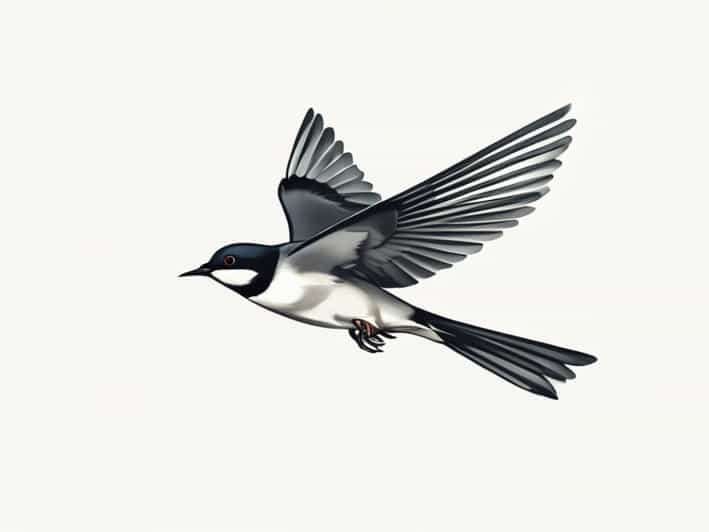
The question of the airspeed velocity of an unladen swallow has captured the curiosity of scientists, bird enthusiasts, and even popular culture fans around the world. Though often joked about in movies and casual conversations, this question touches on real concepts in ornithology, aerodynamics, and animal physiology. Understanding the flight mechanics of swallows, including how they maintain speed, maneuver in the air, and conserve energy during migration, can provide insights into broader topics such as avian adaptation, evolutionary biology, and environmental interaction. This topic explores the topic in detail, examining both the scientific approach and the cultural fascination with the airspeed of unladen swallows.
The Biology of Swallows
Swallows are small, agile birds known for their streamlined bodies, pointed wings, and remarkable flight abilities. Belonging to the family Hirundinidae, swallows are migratory birds that travel thousands of miles between breeding and wintering grounds. Their lightweight bodies, strong pectoral muscles, and long, forked tails make them adept fliers capable of high speeds and precise maneuvers. Understanding swallow biology is essential for estimating their airspeed velocity, as factors such as body mass, wing shape, and muscle efficiency directly influence flight performance.
Species Variation
Not all swallows are the same, and the species under consideration affects flight speed. The European swallow (Hirundo rustica) and the African swallow (Cecropis senegalensis) are two commonly discussed species in both scientific literature and cultural references. European swallows are smaller and lighter, while African swallows are slightly larger and built for longer migratory flights. Differences in size, wing loading, and migratory behavior contribute to variations in airspeed velocity among species, making it important to clarify which swallow is being analyzed in any scientific discussion.
Factors Affecting Airspeed Velocity
The airspeed velocity of a bird depends on several interrelated factors, including wing morphology, body mass, flight mode, and environmental conditions. Swallows typically employ flapping flight combined with gliding and swooping, which allows them to maintain energy efficiency while traveling at high speeds. Aerodynamic principles such as lift, drag, and thrust also play a critical role in determining how fast a swallow can fly. By examining these variables, scientists can estimate the airspeed of an unladen swallow with reasonable accuracy.
- Wing morphologyLonger, pointed wings reduce drag and allow faster flight.
- Body massLighter birds experience less gravitational resistance and require less energy to maintain speed.
- Flight modeContinuous flapping, gliding, and maneuvering affect average velocity.
- Environmental conditionsWind speed, air density, and temperature influence actual flight speed.
Average Flight Speeds
Scientific estimates suggest that the cruising airspeed of an unladen European swallow is approximately 20 to 25 miles per hour (32 to 40 kilometers per hour). This speed represents typical flapping flight during non-migratory periods when the bird is hunting insects or traveling short distances. Swallows can achieve higher bursts of speed during evasive maneuvers or when feeding aggressively in mid-air, sometimes reaching 35 to 40 miles per hour. These speeds illustrate the remarkable agility and endurance of swallows as they navigate complex aerial environments.
Migratory Flight and Long-Distance Travel
During migration, swallows exhibit sustained flight over long distances, often covering hundreds or thousands of miles. Migration requires careful energy management and optimal flight strategies to minimize fatigue. Studies show that swallows may adjust wingbeat frequency and body posture to reduce drag and increase aerodynamic efficiency. While average speeds during migration may vary depending on wind assistance and seasonal conditions, the principles governing their airspeed remain consistent with those observed during normal flapping flight.
Energy Efficiency and Aerodynamics
Swallows are built for energy-efficient flight. Their streamlined bodies reduce air resistance, and their flexible wing and tail movements allow precise control of lift and thrust. The combination of low body weight and high wing aspect ratio maximizes glide efficiency and reduces the energy required to maintain speed. Understanding these adaptations helps explain why swallows are capable of both agile maneuvering and long-distance travel, maintaining relatively high airspeeds without exhausting their energy reserves.
Cultural Significance and Popular References
The airspeed velocity of an unladen swallow gained widespread recognition through popular culture, particularly in comedy and film. The question became iconic as a humorous illustration of obscure knowledge and logical puzzles. While initially posed as a joke, it sparked curiosity about avian flight mechanics and led to scientific discussions regarding swallow biology, migration, and aerodynamics. Cultural fascination with the question demonstrates how humor can intersect with scientific inquiry, encouraging audiences to explore complex topics in accessible and engaging ways.
Educational Implications
Using the airspeed velocity of a swallow as an educational tool allows teachers and communicators to engage students in lessons about biology, physics, and environmental science. Students can explore concepts such as
- Lift, drag, and thrust in aerodynamics
- Adaptations in avian anatomy for flight efficiency
- Energy conservation strategies during migration
- Species-specific differences in flight speed and endurance
This approach illustrates that even seemingly humorous questions can lead to meaningful learning opportunities and inspire curiosity about the natural world.
Limitations and Considerations
Estimating the exact airspeed velocity of an unladen swallow involves several challenges. Variability in species, individual physiology, weather conditions, and measurement techniques can affect results. Furthermore, natural flight behaviors, such as hunting maneuvers, courtship displays, or evasive actions, may temporarily alter flight speeds. While scientific approximations provide useful generalizations, they cannot account for every variable encountered in the dynamic environments where swallows live and migrate.
Scientific Studies and Observations
Researchers studying swallows have used high-speed cameras, radar tracking, and mathematical modeling to estimate flight velocities and energy expenditure. These studies confirm that average airspeed values around 20 to 25 miles per hour are consistent with observed behavior. Additionally, they highlight the importance of wing morphology, muscle power, and aerodynamic principles in determining flight performance. Continuous research contributes to a more complete understanding of how small birds like swallows achieve impressive feats of speed, agility, and endurance.
The airspeed velocity of an unladen swallow, while popularized as a humorous query, represents a fascinating intersection of biology, physics, and cultural interest. Scientific analysis shows that European swallows typically fly at speeds of 20 to 25 miles per hour, with bursts of higher velocity during feeding or evasion. Factors such as wing shape, body mass, environmental conditions, and energy efficiency all influence flight performance. Studying swallows offers insights into avian physiology, migratory behavior, and aerodynamics, while also demonstrating how cultural curiosity can spark scientific inquiry. Understanding the airspeed of unladen swallows helps illustrate broader principles of flight, adaptation, and the remarkable capabilities of small birds, making this topic both entertaining and educational for enthusiasts, students, and researchers alike.