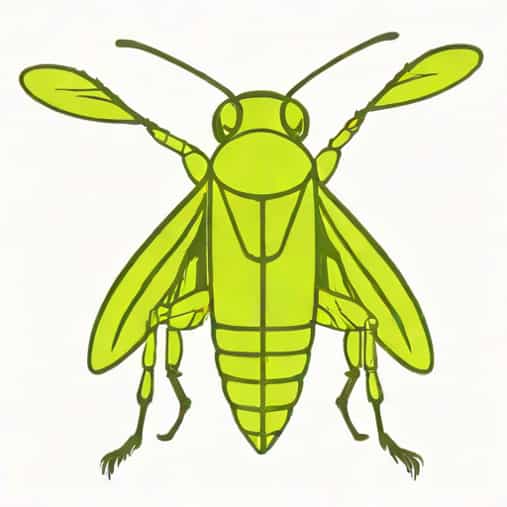
Grasshoppers are among the most familiar insects in the world, often seen jumping through fields, gardens, and grasslands. Despite their common presence, many people are curious about their scientific classification and what exactly their scientific name represents. Understanding the scientific name of the grasshopper helps explain how scientists classify insects, how grasshoppers relate to other species, and why proper naming is important in biology. Exploring this topic also reveals how diverse and widespread these insects truly are.
Understanding Scientific Names in Biology
In biology, every living organism is given a scientific name to avoid confusion caused by regional or local names. This naming system is known as binomial nomenclature and was developed by Carl Linnaeus. Each organism receives a two-part Latin name the first part identifies the genus, and the second part identifies the species.
This system allows scientists from different parts of the world to communicate clearly. While common names like grasshopper may refer to many insects, the scientific name ensures accuracy and consistency in scientific research and classification.
The Scientific Classification of Grasshoppers
Grasshoppers belong to the order Orthoptera, which also includes crickets and katydids. Within this order, grasshoppers are generally classified under the family Acrididae. The most commonly referenced scientific name for a typical grasshopper isAcrididae, which represents the family rather than a single species.
Because there are thousands of grasshopper species, there is no single scientific species name that applies to all grasshoppers. Instead, scientists use the family name Acrididae when referring to grasshoppers as a group.
Taxonomic Breakdown of a Grasshopper
- Kingdom Animalia
- Phylum Arthropoda
- Class Insecta
- Order Orthoptera
- Family Acrididae
This classification places grasshoppers among insects with jointed legs, segmented bodies, and hard exoskeletons. The order Orthoptera is characterized by strong hind legs adapted for jumping and straight wings.
Why There Is No Single Scientific Name for Grasshopper
Unlike animals such as humans, which have one universally recognized species name, grasshoppers represent a large group of related insects. There are more than 11,000 known species of grasshoppers worldwide, each with its own scientific name.
For example, the migratory locust is known asLocusta migratoria, while the differential grasshopper is calledMelanoplus differentialis. Both are grasshoppers, but they belong to different genera within the same family. This diversity explains why the term grasshopper is more of a common category than a single species.
Difference Between Grasshoppers and Locusts
Many people wonder whether grasshoppers and locusts are the same. Scientifically, locusts are a type of grasshopper that can change behavior and form swarms under certain conditions. They still belong to the family Acrididae, but they exhibit unique behavioral and physical changes when population density increases.
This means that while all locusts are grasshoppers, not all grasshoppers are locusts. The scientific naming system helps researchers distinguish between these closely related insects.
Importance of Scientific Naming in Entomology
Using scientific names allows scientists to study insect behavior, ecology, and evolution with clarity. Common names can vary widely between regions and languages, but scientific names remain consistent worldwide.
For example, what one country calls a short-horned grasshopper might be known by a different name elsewhere. However, the scientific classification ensures researchers are discussing the same organism, regardless of location.
How Scientific Names Are Assigned
When a new species is discovered, scientists carefully study its physical features, genetic makeup, and behavior. Once confirmed as a new species, it is given a Latin-based name following international naming rules. The name often reflects a physical trait, habitat, or the person who discovered it.
In the case of grasshoppers, many species names describe color patterns, body shape, or geographic location. This helps scientists quickly understand key characteristics of the insect.
Ecological Role of Grasshoppers
Grasshoppers play a major role in ecosystems around the world. As herbivores, they feed on grasses and plants, influencing plant growth and vegetation patterns. They also serve as an important food source for birds, reptiles, and small mammals.
Because of their sensitivity to environmental changes, grasshoppers are often used as indicators of ecosystem health. Changes in their population can signal shifts in climate, habitat quality, or land use.
Grasshoppers and Human Interaction
Throughout history, grasshoppers have had both positive and negative impacts on humans. In some cultures, they are seen as a food source rich in protein. In agriculture, however, large populations can cause serious crop damage.
Understanding their scientific classification helps researchers develop better pest management strategies while also preserving ecological balance.
Why Knowing the Scientific Name Matters
Knowing the scientific name of a grasshopper is more than just a technical detail. It helps students, researchers, and nature enthusiasts communicate accurately and learn more about biodiversity. Scientific names connect modern research with centuries of biological study.
By understanding that grasshoppers belong to the family Acrididae within the order Orthoptera, people gain a clearer picture of how these insects fit into the larger web of life. This knowledge supports conservation, education, and a deeper appreciation for the natural world.
In summary, while grasshopper is a common and widely used term, its scientific identity lies within a broader classification system. The scientific name of a grasshopper depends on its specific species, but all share common traits that place them within the family Acrididae. Learning about this classification reveals the complexity and diversity hidden behind a familiar insect seen almost everywhere.