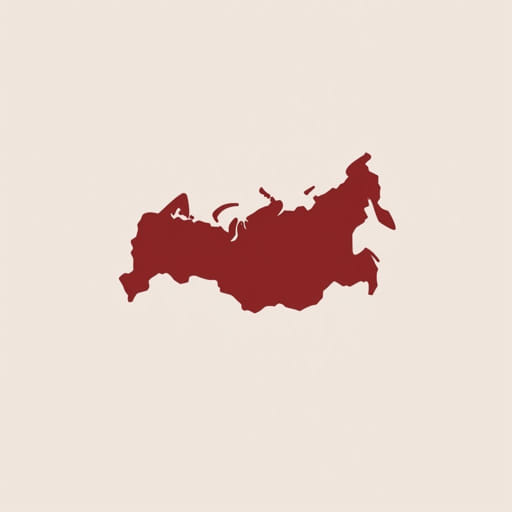
Muscovy is a historical term that often raises the question of whether it was ever a country in the modern sense of the word. Originating in the medieval period, Muscovy refers to a principality centered around the city of Moscow, which played a crucial role in the formation of what would become the Russian state. Although it was not a country as we understand nations today, Muscovy was a distinct political entity with its own government, territory, and ruling dynasty. The evolution of Muscovy from a principality to the Tsardom of Russia marks a key chapter in Eastern European history, highlighting its importance in the region’s political and cultural development.
Understanding Muscovy: Definition and Origins
Muscovy, also known as the Grand Duchy of Moscow, emerged as a prominent principality in the late medieval period, specifically around the 13th century. It was originally one of several Russian principalities that existed following the decline of Kievan Rus. Muscovy gained prominence due to its strategic location, strong leadership, and ability to consolidate surrounding territories under its control.
Geographical Location
- Centered around the city of Moscow in present-day Russia
- Expanded gradually to include neighboring lands and principalities
- Located in the northeastern part of European Russia
Political Structure
- Ruled by princes, later titled Grand Dukes, from the Rurik dynasty
- Had a centralized administration compared to other principalities
- Maintained a feudal system with control over vassal territories
Was Muscovy a Country?
In the strict modern sense, Muscovy was not a country as defined by today’s international standards, which include recognized sovereignty, diplomatic relations, and membership in international organizations. However, it functioned as a sovereign political entity with many characteristics of a country. It had a ruling monarch, controlled a defined territory, exercised law and order, and conducted diplomatic and military activities.
Key Characteristics of Muscovy as a Political Entity
- Autonomous rule independent from the Mongol-Tatar overlords after a certain period
- Developed its own legal codes and governance institutions
- Engaged in warfare and alliances with neighboring states
- Maintained its own army and taxation system
Therefore, while not a country by modern international law, Muscovy was effectively a state with sovereignty over its territory and people.
The Rise of Muscovy
The rise of Muscovy as a dominant power is closely linked to the decline of Mongol control over Russian lands. Initially, Muscovy was a vassal state under the Mongol-Tatar Golden Horde, paying tribute and obeying their overlords. However, through strategic diplomacy, military strength, and leadership, Muscovy gradually asserted independence and began unifying other Russian principalities.
Important Milestones in Muscovy’s Growth
- The Battle of Kulikovo in 1380, where Muscovy-led forces challenged Mongol dominance
- The fall of the Golden Horde’s influence in the 15th century
- The centralization of power under Ivan III, who styled himself as Grand Prince of all Russia
- Expansion of territory through conquest and annexation
Muscovy and the Formation of Russia
Muscovy’s political and territorial consolidation laid the groundwork for the formation of the Russian state. Ivan IV, also known as Ivan the Terrible, was crowned the first Tsar of Russia in 1547, symbolizing the transformation from the Grand Duchy of Moscow into the Tsardom of Russia. This event marked the official emergence of Russia as a centralized, autocratic state.
Transition from Muscovy to Tsardom
- Formal declaration of the Tsar title, emphasizing imperial ambitions
- Expansion into Siberia and other regions beyond traditional Muscovite borders
- Reform of administrative and military systems
- Increased engagement with European powers and the wider world
The Tsardom of Russia can be seen as the political successor to Muscovy, inheriting its institutions, territories, and ruling dynasty.
Cultural and Historical Significance of Muscovy
Muscovy’s importance extends beyond politics into culture, religion, and identity. It became the center of Orthodox Christianity in the region, especially after the fall of Constantinople in 1453, when Moscow claimed the legacy of the Third Rome. This religious role reinforced its political authority and influenced Russian national identity.
Contributions of Muscovy
- Preservation and promotion of Orthodox Christian traditions
- Development of Russian art, architecture, and literature
- Foundation for Russian legal and administrative systems
- Shaping of Russian language and cultural identity
Why the Question Is Muscovy a Country? Matters Today
Understanding whether Muscovy was a country helps clarify how historical states evolved into modern nations. It also sheds light on the nature of sovereignty, governance, and identity in medieval and early modern periods. Today, Muscovy is often referenced to highlight Russia’s historical roots and the long process of state-building that shaped Eastern Europe.
Relevance to Modern Discussions
- Provides context for Russia’s historical claims and territorial continuity
- Helps explain the development of Russian political culture
- Supports studies of medieval state formation and imperial expansion
- Offers lessons on how political entities evolve over time
Muscovy was not a country in the modern, legal sense, but it was a powerful and sovereign principality that played a crucial role in the history of Eastern Europe. Its transformation from a regional duchy into the Tsardom of Russia marks a significant chapter in the emergence of the Russian nation. Recognizing Muscovy’s status as a state-like entity helps us appreciate the complexities of medieval politics and the foundations of one of the world’s largest countries today. The legacy of Muscovy continues to influence Russian identity, culture, and geopolitical perspectives.