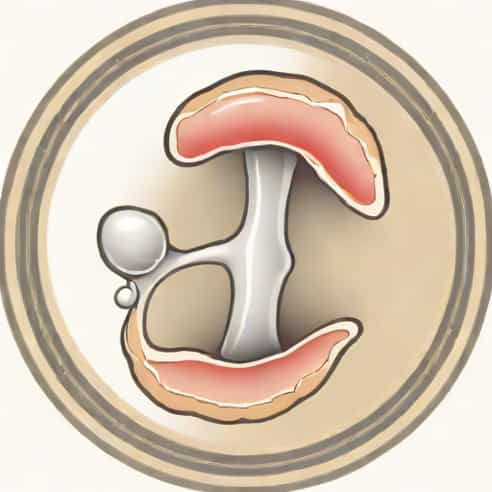
Hyaline cartilage is one of the most important supportive tissues in the human body, yet many people are not fully aware of its exact location or how widely it is distributed. Because it plays a key role in movement, breathing, growth, and joint protection, understanding where hyaline cartilage is found helps explain why even small injuries to this tissue can affect everyday activities. Unlike bone, hyaline cartilage is smooth, flexible, and somewhat translucent, allowing it to cushion forces and reduce friction. Its locations throughout the body reveal its purpose to provide structure, support, and a low-resistance surface wherever movement or stability is essential.
General Overview of Hyaline Cartilage
Hyaline cartilage is the most common type of cartilage in the human body. It has a glassy appearance and a firm, rubber-like texture that makes it ideal for both support and flexibility. Because of its unique structure, it reduces friction in joints, maintains open airways, and serves as the foundation for bone development during early growth.
Its locations can be grouped into several broad categories joints, respiratory structures, growth plates, and supportive skeletal elements. Each of these areas relies on the distinctive properties of hyaline cartilage to perform specific biological functions.
Locations of Hyaline Cartilage in the Human Body
The distribution of hyaline cartilage is extensive, though it is often hidden beneath other tissues. The following sections explain the major anatomical areas where hyaline cartilage is found and why its presence there is so important.
1. Hyaline Cartilage in Synovial Joints
One of the most well-known locations of hyaline cartilage is at the ends of bones in synovial joints. These are the freely movable joints that allow the body to perform everyday motions such as walking, bending, lifting, and rotating.
- Knee joint
- Hip joint
- Shoulder joint
- Elbow joint
- Wrist and ankle joints
In these areas, hyaline cartilage forms articular cartilage, which covers the bone surfaces. Its smooth texture reduces friction by allowing bones to glide past one another with minimal resistance. Additionally, it absorbs shock, protecting both cartilage and bone during repetitive movement or sudden impact.
2. Hyaline Cartilage in the Rib Cage
Another major location of hyaline cartilage is the connection between the ribs and the sternum. Here, it forms costal cartilage, which plays a vital role in the breathing process.
Costal cartilage connects the true ribs to the sternum and provides flexibility to the thoracic cage. This elasticity allows the rib cage to expand and contract during inhalation and exhalation. Without this cartilage, the chest wall would be far less mobile, making breathing significantly more difficult.
3. Hyaline Cartilage in the Respiratory System
The respiratory system relies heavily on hyaline cartilage to maintain open airways and provide structural support. Its elasticity and smooth surface help preserve airway shape and prevent collapse during inhalation.
The most important respiratory locations of hyaline cartilage include
- The nose (nasal cartilage)
- The larynx, including specific cartilages such as the thyroid cartilage
- The trachea, supported by C-shaped hyaline cartilage rings
- The bronchi, which contain smaller cartilage plates
In the trachea, for example, hyaline cartilage forms a series of rigid yet flexible rings that prevent the airway from narrowing as air is drawn into the lungs. In the bronchi, cartilage plates keep passages stable while still allowing some movement. In the nose, hyaline cartilage shapes the nasal structure and helps regulate airflow.
4. Hyaline Cartilage in the Embryonic Skeleton
Before bones fully develop, the embryonic skeleton is largely composed of hyaline cartilage. This early scaffold provides a template for bone formation in a process known as endochondral ossification.
Nearly all long bones such as the femur, tibia, humerus, and radius begin as hyaline cartilage models. As development progresses, bone tissue slowly replaces the cartilage, though some regions persist into adulthood.
5. Hyaline Cartilage in Growth Plates
One of the most critical locations of hyaline cartilage in children and adolescents is the epiphyseal plate, also known as the growth plate. These plates are positioned near the ends of long bones and allow bones to lengthen throughout childhood and teenage years.
Because growth plates contain actively dividing cartilage cells, they generate new bone tissue as part of the natural growth process. Once growth is complete, these plates eventually harden into solid bone, leaving only a faint line where the plate once existed.
6. Hyaline Cartilage in the Nose
Although the nose is often thought of as a rigid structure, much of it is supported by hyaline cartilage. This includes the lateral nasal cartilage and the major and minor alar cartilages. These structures give the nose its characteristic shape while allowing flexibility.
The presence of hyaline cartilage here helps maintain open nasal passages, which are essential for breathing. It also contributes to facial expression and supports external features without the heaviness that bone would add.
Why Location Matters for Function
The location of hyaline cartilage determines the specific role it plays in the body. For example, in joints it acts as a friction-reducing surface, but in the respiratory tract it prevents airway collapse. Its flexible and smooth structure enables it to serve different functions depending on where it is found.
Protection and Support in Joints
At joint surfaces, the primary function is to ensure smooth motion. Hyaline cartilage reduces wear and tear on bones and allows fast, repetitive movement without damage. It also distributes weight evenly across joint surfaces, preventing localized stress.
Structural Stability in the Chest
In the rib cage, hyaline cartilage ensures that the chest wall can bend without breaking. This elasticity provides both protection for vital organs and flexibility for breathing mechanics.
Maintaining Airway Patency
Hyaline cartilage prevents the trachea and bronchi from collapsing under changes in air pressure. Without cartilage rings and plates, the airways would narrow dramatically during inhalation, making breathing difficult or impossible.
Foundation for Skeletal Growth
In the embryonic skeleton and growth plates, hyaline cartilage ensures proper bone formation and elongation. Its role in early development is essential for shaping the skeletal system.
Health Conditions Related to Hyaline Cartilage
Because of its widespread distribution, damage or deterioration of hyaline cartilage can lead to various medical conditions. Understanding where this cartilage is located helps explain how these conditions affect the body.
- OsteoarthritisCaused by degeneration of articular cartilage in joints.
- CostochondritisInflammation of costal cartilage in the rib cage.
- TracheomalaciaWeakness of the tracheal cartilage rings.
- Growth plate injuriesDamage to hyaline cartilage in children’s bones.
These conditions illustrate how essential the location and function of hyaline cartilage are for daily movement, breathing, and growth.
The location of hyaline cartilage throughout the human body highlights its importance in movement, support, breathing, and development. Found in joints, the rib cage, the respiratory system, growth plates, the nose, and the embryonic skeleton, this versatile tissue performs functions that no other material can replicate. Its smooth, resilient structure allows bones to move smoothly, airways to stay open, and limbs to grow properly. Understanding where hyaline cartilage is located not only deepens appreciation for the body’s design but also clarifies why protecting this tissue is essential for long-term health and mobility.