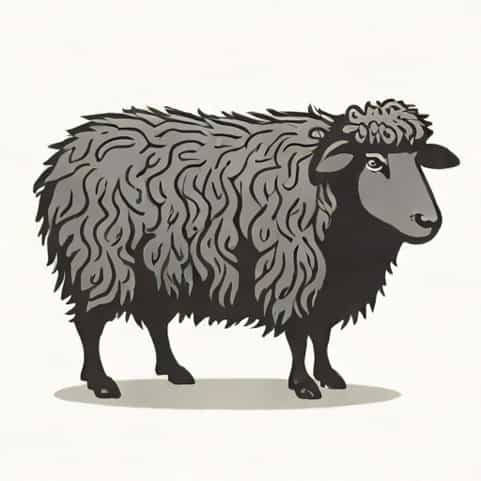
For many people, the nursery rhyme Baa Baa Black Sheep is one of the first songs they learn in childhood, yet few stop to wonder where it originally came from or why the words are arranged the way they are. The origin of Baa Baa Black Sheep contains layers of historical meaning, cultural change, and linguistic development. Although it is often viewed as a simple children’s tune, the rhyme’s background reflects elements of medieval taxation, folk traditions, and evolving interpretations through the centuries. Exploring these origins helps us understand how a short verse has lasted so long and why it remains familiar across generations.
The Early History of the Rhyme
Most scholars trace the earliest written version of Baa Baa Black Sheep to the 18th century, though the rhyme likely existed in oral form long before that. It first appeared in print around the 1740s, at a time when many English nursery rhymes were beginning to be documented for children’s books. The language of the rhyme fits well with the rhythm and style common to folk songs of the period, which helps support the theory that it originated as a simple, memorable verse passed along by word of mouth.
The rhyme’s structure short lines, repetition, and a clear pattern made it ideal for teaching language skills to children. Because of this, it quickly became widely circulated. However, the deeper discussion around its origin suggests that it was more than a playful song. Some historians believe it reflects real economic conditions in England.
The Connection to Wool and Medieval Taxes
One well-known explanation links the origin of Baa Baa Black Sheep to the medieval wool trade. During the Middle Ages, wool was one of England’s most important commodities. Black wool, in particular, was valuable because it could be spun into dark cloth without dyeing. This may help explain why the rhyme mentions a black sheep instead of a white one.
Another widely discussed theory connects the rhyme to the heavy wool taxes imposed by King Edward I in the 13th century. According to this view, the line one for the master, one for the dame, and one for the little boy who lives down the lane symbolizes how profits were distributed among authorities, landowners, and laborers. Though there is no definitive proof, the theory remains popular because it aligns with known historical events and adds a layer of meaning to the rhyme.
The Symbolism of the Colors and Characters
The imagery in the rhyme is simple, yet it has inspired many interpretations over time. The choice of a black sheep, for example, has raised questions. In some cultures, a black sheep symbolizes an outsider or someone who is different. In the context of the rhyme, however, the black sheep may have had purely practical significance due to the value of dark wool.
The three recipients of the wool the master, the dame, and the little boy also invite interpretation. While some see them as representing social classes, others argue that they merely reflect household roles familiar to children of the time. The lack of explicit explanation leaves much to the imagination, which helps the rhyme maintain its charm and mystery.
Alternative Theories About Its Meaning
Over the years, several creative theories about the origin of Baa Baa Black Sheep have emerged. Though many are speculative, they offer interesting perspectives
- Some believe the rhyme references a farming tradition, representing a typical exchange between shepherds and household members.
- Others propose it has allegorical elements, reflecting social hierarchies without necessarily relating to specific historical events.
- A few theorists suggest that the rhyme originally had a darker tone but evolved into a children’s verse over time.
These theories show how flexible folk songs can be, adapting to cultural shifts and audience expectations through the generations.
Changes in the Rhyme Over Time
Like many traditional nursery rhymes, Baa Baa Black Sheep has undergone variations as it spread across countries and cultures. Some versions include additional lines, different recipients of the wool, or alternative endings. This flexibility reflects the oral tradition in which rhymes were passed along before being recorded in print.
In more recent times, the rhyme has occasionally been adapted in certain educational contexts, sometimes replacing the color black with other colors. These adaptations are typically intended to encourage inclusivity or creativity among young children. Regardless of the version, the essential rhythm and structure remain the same, ensuring the rhyme’s recognition.
Its Role in Children’s Literature and Education
Teachers and parents often use the rhyme to help children learn about rhythm, counting, and language. In early childhood education, the rhyme supports memory development and encourages participation through singing. The simple narrative structure also makes it ideal for acting out, drawing, or storytelling activities.
Its endurance in children’s literature speaks to its ability to engage young learners while remaining easy to remember and enjoyable to recite.
The Cultural Impact of the Rhyme
The origin of Baa Baa Black Sheep is closely tied to British history, but the rhyme’s influence extends far beyond the United Kingdom. It appears in countless nursery collections, music books, and educational programs worldwide. Over time, it has become one of the most recognizable English-language nursery rhymes.
Its cultural impact is also visible in modern entertainment. The rhyme has inspired storybooks, adaptations, and creative reinterpretations. Its simple melody has been rearranged into numerous musical styles, making it familiar across different generations and regions.
Why It Remains Popular
The rhyme’s longevity can be attributed to several factors
- Its easy-to-remember rhythm and repetition
- Its appeal to young children learning language
- Its blend of imagery and narrative simplicity
- Its ability to adapt across cultures and time periods
These qualities allow the rhyme to remain relevant even as educational approaches evolve.
Misunderstandings and Modern Interpretations
In recent years, discussions about nursery rhymes have sometimes led to misunderstandings about their origins. Some people assume that Baa Baa Black Sheep carries negative connotations, but historical evidence does not support this interpretation. Most scholars agree that the rhyme’s themes relate to economic and agricultural contexts rather than racial symbolism.
This highlights how easily modern cultural frameworks can influence how old songs are interpreted. It also emphasizes the importance of understanding the historical origin of Baa Baa Black Sheep rather than assigning meanings that were not part of its early development.
The Value of Historical Context
When examining old nursery rhymes, historical context provides essential clarity. Without it, interpretations can become misleading. In the case of this rhyme, understanding the medieval wool trade and the nature of folk tradition helps reveal why the verses were originally structured as they were.
By exploring the past, readers gain a more balanced view of the rhyme’s purpose and evolution.
The origin of Baa Baa Black Sheep offers a fascinating blend of history, folklore, and cultural development. What seems like a simple children’s rhyme may actually reflect deep connections to England’s medieval wool industry and the passing down of stories through oral tradition. Its adaptability has allowed it to remain a beloved part of childhood for centuries. Through its rhythm and charm, the rhyme continues to bridge generations while reminding us that even the simplest verses can carry rich historical significance.