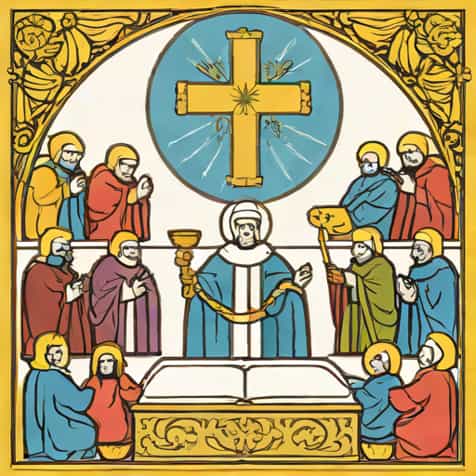
The Second Vatican Council, commonly known as Vatican II, was a pivotal event in the modern history of the Catholic Church. Convened by Pope John XXIII in 1962 and concluded under Pope Paul VI in 1965, the council introduced significant reforms that reshaped the Church’s approach to worship, doctrine, and engagement with the contemporary world. Among the most transformative changes were the liturgical reforms, which aimed to make the Mass more accessible, participatory, and spiritually enriching for the faithful. These reforms reflected a broader theological vision of renewal, emphasizing active engagement, communal celebration, and understanding of sacred rites.
Background of Vatican II
Before Vatican II, the Catholic Church maintained a largely uniform liturgical practice, centered on the Tridentine Mass, which was celebrated in Latin and followed a rigid, highly structured format. While rich in tradition, this form often left many congregants as passive observers. Pope John XXIII called for the council with the intention of addressing modern challenges and opening the Church to a pastoral renewal. The council gathered bishops, theologians, and experts from around the world to discuss reforms in theology, ecumenism, social teaching, and liturgy, laying the groundwork for significant changes that continue to influence Catholic worship today.
The Goals of Liturgical Reform
The liturgical reforms of Vatican II were guided by several key goals
- Active ParticipationEncouraging the laity to actively engage in the Mass, rather than being mere spectators.
- UnderstandingPromoting clarity and comprehension of the prayers, readings, and rituals to enhance spiritual reflection.
- AccessibilityUsing the vernacular language of local congregations to make worship more approachable and meaningful.
- Unity and RenewalFostering a sense of communal celebration while maintaining continuity with traditional Catholic worship.
- Pastoral SensitivityAdapting liturgical practices to address contemporary pastoral needs without undermining theological integrity.
Key Changes Introduced
The reforms introduced by Vatican II affected nearly every aspect of the Catholic liturgy, fundamentally altering how Mass and sacraments were celebrated.
Use of Vernacular Languages
One of the most noticeable changes was the permission to celebrate the Mass in local languages rather than exclusively in Latin. This shift allowed congregants to understand the prayers, readings, and hymns directly, fostering deeper engagement and spiritual reflection. The use of vernacular languages also made the liturgy more inclusive, as local customs and musical traditions could be incorporated while preserving the essential structure of the Mass.
Active Participation of the Laity
Vatican II emphasized the role of the laity in the liturgy, encouraging them to take an active part in singing, responses, and the overall worship experience. The council recognized that worship was not solely the domain of the clergy but a communal act that included all faithful members of the Church. This principle of active participation transformed the atmosphere of Mass, creating a more interactive and spiritually engaging experience for parishioners.
Revision of the Liturgical Calendar
The council also led to a reorganization of the liturgical calendar and lectionary, ensuring that Scripture readings were more representative and varied throughout the year. The revised lectionary introduced a three-year cycle for Sunday readings and a two-year cycle for weekday readings, allowing congregants to hear a broader selection of biblical texts over time. This change enhanced biblical literacy and provided a richer theological experience for the faithful.
Altar and Sanctuary Reforms
Another significant change involved the physical arrangement of the altar and sanctuary. Altars were often repositioned to face the congregation, symbolizing communal celebration and greater inclusion of the laity. Liturgical furnishings and vestments were simplified in many cases, reflecting a balance between tradition and accessibility. These spatial adjustments contributed to a sense of unity and engagement, aligning with the council’s vision of active participation.
Reform of Liturgical Music
Vatican II also encouraged the use of music that facilitated congregational participation. Hymns and chants could be sung in the vernacular, and contemporary musical styles were sometimes incorporated alongside traditional Gregorian chants. The council highlighted the importance of music in enhancing the prayerful atmosphere and helping the faithful internalize the spiritual message of the Mass.
Impact on Sacraments and Rites
The reforms extended beyond the Mass to other sacraments and rites, including Baptism, Confirmation, Marriage, and the Liturgy of the Hours. The council called for clearer, more understandable celebrations that emphasized pastoral care and spiritual significance. Rituals were often simplified to remove unnecessary complexity while retaining theological depth, making sacraments more accessible to participants and emphasizing their role in the spiritual life of the Church.
Ecumenical and Pastoral Effects
Vatican II’s liturgical reforms also had a profound ecumenical impact, facilitating dialogue and cooperation with other Christian denominations. By emphasizing participation, comprehension, and inclusivity, the Church fostered a sense of openness and shared spiritual experience. These reforms reinforced the council’s broader goals of modernizing the Church and enhancing pastoral care, ensuring that the liturgy remained relevant and spiritually enriching in contemporary society.
Challenges and Controversies
While widely celebrated, the liturgical reforms also faced criticism and resistance. Traditionalists expressed concern over the departure from Latin and the perceived dilution of sacred rituals. Some argued that rapid changes could undermine reverence and continuity with centuries of liturgical tradition. Over time, however, many communities adapted to the reforms, and the emphasis on understanding and participation proved transformative for global Catholic worship.
Ongoing Developments
The legacy of Vatican II continues to shape liturgical practice today. Ongoing discussions focus on balancing innovation with tradition, ensuring that reforms maintain theological integrity while meeting the spiritual needs of contemporary congregations. The council’s principles continue to guide liturgical education, music, and pastoral planning, influencing how Catholics experience worship across diverse cultures and communities.
The liturgical reforms of Vatican II marked a transformative period in the history of the Catholic Church, reshaping worship to emphasize understanding, participation, and communal celebration. By introducing vernacular languages, promoting active engagement, revising the liturgical calendar, and updating sacraments and music, the council made worship more accessible and spiritually meaningful. While the reforms sparked debate and required adaptation, they ultimately reinforced the Church’s mission to engage faithfully with the modern world. Vatican II’s liturgical legacy continues to influence Catholic practice, ensuring that the sacred rites remain a vibrant and inclusive part of spiritual life.