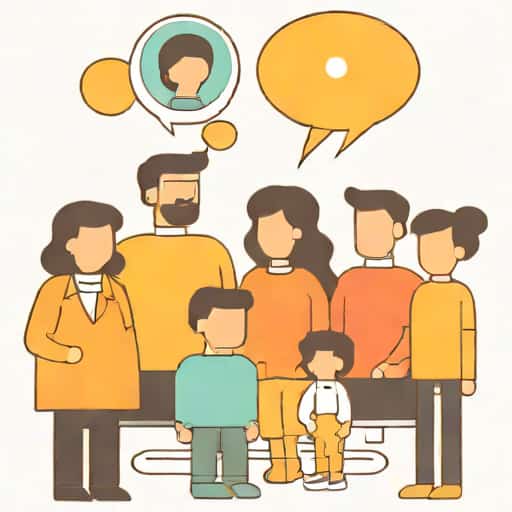
Family dynamics play a crucial role in shaping individual behavior, communication styles, and personal development. Among the many factors that influence these dynamics, family conversation and conformity orientations are particularly significant. These orientations affect how family members interact with each other, make decisions, and navigate disagreements. Understanding the relationship between conversation and conformity orientations provides valuable insight into family communication patterns and their impact on emotional, social, and cognitive development.
Understanding Family Conversation Orientation
Family conversation orientation refers to the degree to which families encourage open dialogue and the free exchange of ideas among members. In families with a high conversation orientation, all members are encouraged to express their thoughts, feelings, and opinions freely. Such families value communication as a tool for fostering understanding, problem-solving, and emotional connection. High conversation orientation is often associated with active listening, inclusivity in decision-making, and a supportive environment that promotes the development of critical thinking and interpersonal skills.
Characteristics of High Conversation Orientation
- Open discussion on a wide range of topics, including personal, social, and academic matters.
- Encouragement for children and adolescents to share their opinions freely.
- Active listening and respectful responses from parents and other family members.
- Collaborative decision-making and negotiation in resolving conflicts.
- Promotion of individuality and self-expression within the family unit.
Families with high conversation orientation often create environments where children feel empowered to develop their communication skills and confidence. These environments foster emotional intelligence and social competence, equipping family members to navigate interactions both within and outside the family context effectively.
Understanding Family Conformity Orientation
Conformity orientation, in contrast, reflects the extent to which families emphasize uniformity of beliefs, attitudes, and behaviors among members. Families with high conformity orientation value obedience, adherence to family rules, and respect for authority. In such families, maintaining harmony and agreement is often prioritized over individual expression. This orientation can shape the way family members interact, influencing how conflicts are handled and how decisions are made.
Characteristics of High Conformity Orientation
- Expectation that family members adhere to established norms and values.
- Limited tolerance for dissenting opinions or divergent behavior.
- Strong emphasis on obedience to parental authority.
- Conflict avoidance to maintain family harmony.
- Prioritization of family goals and consensus over individual desires.
High conformity orientation can foster stability and order within a family. However, excessive conformity may suppress individuality, limit creativity, and hinder the development of independent thought. Children raised in highly conforming families may become skilled at following rules but may struggle with self-expression or critical thinking outside the family context.
The Interaction Between Conversation and Conformity Orientations
Family communication patterns are often shaped by the interplay between conversation and conformity orientations. These orientations can combine in different ways, resulting in distinct family communication environments. Researchers often categorize these environments into four types consensual, pluralistic, protective, and laissez-faire, based on the levels of conversation and conformity orientations present.
Consensual Families
Consensual families exhibit high levels of both conversation and conformity orientations. Open dialogue is encouraged, but there is also a strong emphasis on agreement and adherence to family norms. In these families, children are allowed to express their opinions, but parents ultimately guide decisions and expect alignment with family values. This environment fosters critical thinking while maintaining a sense of family cohesion.
Pluralistic Families
Pluralistic families have high conversation orientation and low conformity orientation. These families value open discussion and encourage independent thinking. Differences of opinion are welcomed and respected, and decision-making often involves negotiation and collaboration. Children in pluralistic families develop strong communication skills, self-confidence, and the ability to engage in thoughtful debate.
Protective Families
Protective families display low conversation orientation and high conformity orientation. Communication is limited, and obedience to authority is emphasized. Family harmony and rule adherence are prioritized over individual expression. Children in protective families may learn discipline and respect for authority but might struggle with assertiveness and self-expression outside the family unit.
Laissez-Faire Families
Laissez-faire families show low levels of both conversation and conformity orientations. Communication is minimal, and there is little emphasis on rules or uniformity. Children are often left to navigate social and personal challenges independently. While this environment encourages self-reliance, it may lack emotional support and guidance, potentially leading to feelings of neglect or disconnection within the family.
Implications for Child Development
Family conversation and conformity orientations significantly impact child development. High conversation orientation fosters cognitive and social skills, encouraging children to articulate thoughts, resolve conflicts, and make informed decisions. Conversely, high conformity orientation emphasizes behavioral control and adherence to family norms, which can instill discipline but may limit creativity and self-expression. Striking a balance between the two orientations can help children develop into well-rounded, emotionally intelligent individuals capable of navigating diverse social environments.
Developing Effective Communication Skills
Children raised in families with high conversation orientation tend to excel in verbal and interpersonal communication. They learn to listen actively, engage in dialogue respectfully, and express themselves confidently. Families that balance conversation with appropriate conformity provide guidance while encouraging children to form their own opinions and values, promoting a healthy sense of autonomy.
Maintaining Family Cohesion
Conformity orientation, when balanced with open communication, can strengthen family cohesion. It helps families maintain shared values, resolve conflicts constructively, and navigate decision-making processes effectively. Families that achieve this balance create supportive environments that nurture both individuality and collective harmony.
family conversation and conformity orientations play a central role in shaping communication patterns, emotional development, and interpersonal skills within the family unit. While conversation orientation emphasizes openness, dialogue, and self-expression, conformity orientation stresses adherence to norms, obedience, and family cohesion. The interaction between these orientations produces distinct family environments that influence the development of children and their ability to navigate social situations. Understanding these orientations allows parents and family members to foster environments that balance individuality with collective harmony, promote healthy communication, and support the growth of emotionally intelligent, socially competent, and resilient individuals. Recognizing and adapting these orientations thoughtfully can lead to stronger family relationships and more effective communication across generations.