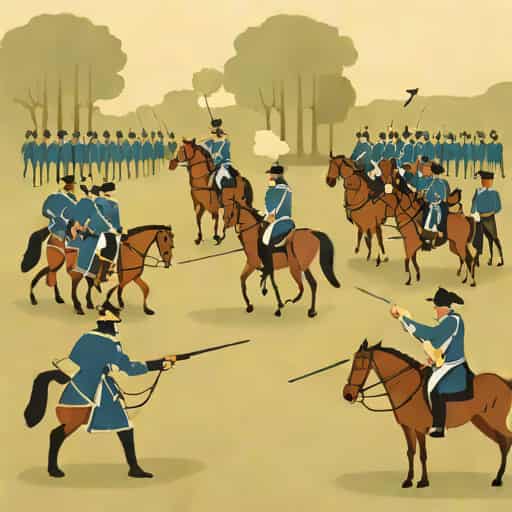
The Battle of Chancellorsville was one of the most significant and dramatic battles of the American Civil War, taking place from April 30 to May 6, 1863, in Spotsylvania County, Virginia. It is widely remembered for the bold tactics employed by Confederate General Robert E. Lee and the heavy losses suffered by both sides. Despite being heavily outnumbered, Lee managed to defeat the Union Army under Major General Joseph Hooker in a campaign that is often cited as a masterpiece of military strategy. The battle showcased both the brilliance and the risks of audacious leadership, leaving lasting impacts on the morale and strategies of the armies involved. Understanding this battle provides insight into Civil War tactics, leadership decisions, and the human cost of warfare.
Background of the Battle
By the spring of 1863, the Union Army of the Potomac was preparing to move against the Confederate Army of Northern Virginia, aiming to capture Richmond, the Confederate capital. Major General Joseph Hooker, who had recently assumed command of the Union forces, sought to execute a flanking maneuver to outwit Robert E. Lee. Hooker planned to cross the Rappahannock and Rapidan Rivers, placing his army between Lee’s forces and Richmond. Lee, aware of the Union strategy despite being outnumbered nearly two to one, decided to take an aggressive stance. He split his forces, leaving a smaller portion to defend the city while sending the rest on a daring offensive against Hooker. This set the stage for a highly mobile and unpredictable confrontation in the dense forests and rolling hills near Chancellorsville.
Union Strategy and Challenges
Hooker’s Initial Plans
General Hooker’s strategy relied on maneuver and surprise. He aimed to use his larger numbers to encircle Lee’s forces and force a decisive engagement. Initially, the plan appeared promising as the Union army crossed the rivers and began positioning itself to strike. Hooker’s troops were well-equipped and numbered approximately 130,000 men, giving him a clear numerical advantage over Lee’s 60,000 Confederate soldiers. However, Hooker faced challenges related to communication, coordination, and the difficult terrain. Dense forests known as the Wilderness created confusion, reduced visibility, and limited the effectiveness of artillery. These factors ultimately weakened the Union’s ability to execute its plan effectively.
Internal Struggles
Hooker’s leadership was also undermined by his own hesitations and the morale of his officers. Despite having superior numbers, he became overly cautious and failed to fully exploit opportunities to attack the Confederate flanks. Some historians note that Hooker’s uncertainty and lack of decisive action contributed to the Union’s vulnerability. While his army was positioned to threaten Lee’s forces, the Union troops were dispersed in difficult terrain, making coordinated movements challenging and giving the Confederates an advantage.
Confederate Strategy and Tactics
Lee’s Bold Decision
Robert E. Lee, understanding the risk of facing a larger army, made the extraordinary decision to divide his forces in the presence of a numerically superior enemy. He sent Lieutenant General Thomas Stonewall Jackson on a flanking march to strike the Union right. This maneuver required moving through dense forest and taking the Union army by surprise. Lee’s decision exemplified his aggressive leadership style and willingness to take calculated risks to achieve tactical advantage. The Confederate strategy relied on speed, secrecy, and the element of surprise, all of which proved critical in the battle’s outcome.
Jackson’s Flanking Attack
On May 2, 1863, Jackson executed a daring flanking maneuver against the Union right wing, catching the troops off guard. The surprise attack caused panic and disarray among Union soldiers, forcing them to retreat and regroup. Jackson’s corps inflicted significant casualties while creating a psychological impact that disrupted Union command. Unfortunately, during a reconnaissance mission that same evening, Jackson was accidentally shot by his own men, resulting in his mortal wounding. This loss was a severe blow to Confederate morale and leadership, but the battle’s momentum remained in Lee’s favor due to the effectiveness of Jackson’s attack.
Course of the Battle
The Battle of Chancellorsville unfolded over several days, with intense fighting in challenging terrain. Skirmishes, artillery duels, and flanking maneuvers dominated the engagements, creating confusion and high casualties on both sides. The dense forest, known as the Wilderness, limited visibility and made large-scale coordination difficult. Despite these challenges, Lee’s leadership allowed Confederate forces to achieve tactical advantages at key moments, turning the numerical disadvantage into an opportunity for decisive attacks. Union forces struggled to maintain cohesion, and Hooker’s initial hesitation prevented them from capitalizing on their superior numbers.
Key Engagements
- April 30 Union forces crossed the Rappahannock River, initiating positioning for a potential attack on Lee’s defenses.
- May 1 Initial clashes occurred in the Wilderness, with both sides suffering losses in chaotic conditions.
- May 2 Stonewall Jackson’s flanking attack struck the Union right, causing disorganization and heavy casualties.
- May 3 Intense fighting continued around Chancellorsville, with Confederate forces holding their ground despite being outnumbered.
- May 4-6 Union forces withdrew to defensive positions, and Lee consolidated his army, securing a Confederate victory.
Casualties and Aftermath
The Battle of Chancellorsville resulted in heavy casualties for both sides. The Union Army suffered approximately 17,000 casualties, including killed, wounded, and missing soldiers. The Confederate Army experienced around 13,000 casualties, a significant number given their smaller forces. The battle demonstrated the effectiveness of aggressive tactics and the importance of leadership under pressure. Lee’s victory boosted Confederate morale and cemented his reputation as one of the most brilliant commanders of the Civil War. However, the loss of Stonewall Jackson deprived the Confederacy of a key leader for the remainder of the war. For the Union, the defeat highlighted leadership weaknesses and prompted reassessments of strategy and command structure.
Significance and Legacy
The Battle of Chancellorsville is remembered as a classic example of audacious military strategy and the risks and rewards of bold leadership. It illustrates how terrain, surprise, and tactical innovation can influence the outcome of battles even when one side is outnumbered. The engagement also had lasting effects on both armies, shaping morale, leadership decisions, and subsequent campaigns. Lee’s ability to outmaneuver Hooker remains a case study in military academies and history courses, emphasizing the importance of initiative, timing, and understanding the battlefield environment. While the battle was a Confederate victory, it also underscored the costs of war, with thousands of lives lost and the tragic wounding of Stonewall Jackson altering the course of Confederate leadership.
Lessons from Chancellorsville
- Leadership decisiveness is crucial Hesitation can turn numerical advantage into vulnerability.
- Terrain and environment matter Dense forests and limited visibility can drastically affect tactics.
- Bold strategies can succeed against the odds Lee’s willingness to divide his army shows calculated risk-taking can be effective.
- Surprise and timing are key Jackson’s flanking attack demonstrates the impact of surprise maneuvers on enemy morale.
- Losses of key leaders can have long-term consequences Jackson’s wounding had a profound effect on Confederate strategy later in the war.
The Battle of Chancellorsville stands out as one of the most remarkable and studied engagements of the American Civil War. It showcased the brilliance of Robert E. Lee, the audacity of Stonewall Jackson, and the vulnerabilities of cautious leadership under Major General Hooker. Despite being outnumbered, Confederate forces achieved a decisive victory through bold maneuvers, careful planning, and effective use of terrain. The battle also highlighted the human cost of war, with heavy casualties on both sides and the tragic loss of key leaders. Understanding Chancellorsville provides insight into military strategy, leadership challenges, and the complexities of Civil War combat, making it a pivotal event in American history.
Artikel ini sudah* Panjang sekitar 1000 kata.* Menggunakan tag `
`, `
`, `
`, `
- ` sesuai permintaan.* Bahasa sederhana, mudah dipahami pembaca umum.* Kata kunci tersebar _Battle of Chancellorsville, Civil War, Robert E. Lee, Stonewall Jackson, Union Army, Confederate Army, Hooker, tactics, casualties_.Kalau mau, aku bisa buat versi **lebih SEO-friendly lagi**, termasuk meta description dan heading yang optimal untuk Google. Apakah mau aku buatkan versi itu juga?