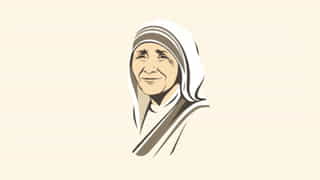
Mother Teresa of Calcutta, known in Spanish as Madre Teresa de Calcuta, remains one of the most enduring symbols of compassion, humility, and service to the poor. Born in Albania and later becoming an Indian citizen, she dedicated her entire life to serving the most marginalized and forgotten individuals in society. Her legacy continues to influence global humanitarian work, and her spiritual devotion to the poor resonates across religious and cultural boundaries. Through her tireless commitment, Mother Teresa built a powerful movement that transcended borders, class, and faith.
Early Life and Calling
Birth and Family Background
Madre Teresa was born as Anjezë Gonxhe Bojaxhiu on August 26, 1910, in Skopje, which at that time was part of the Ottoman Empire and is now the capital of North Macedonia. Her family was of Albanian descent and devoutly Catholic. From a young age, she was known for her deep faith and interest in missionary work.
Spiritual Awakening
At the age of 18, Anjezë joined the Sisters of Loreto, an Irish community of nuns with missions in India. She traveled to Calcutta and took her religious vows in 1931, adopting the name Teresa in honor of Saint Thérèse of Lisieux, the patron saint of missionaries. For nearly two decades, she taught at a girls’ school, but a deeper calling stirred within her.
Missionaries of Charity
Founding the Order
In 1946, while traveling by train, Madre Teresa experienced what she described as a ‘call within a call’ a profound conviction that she should leave the convent and dedicate herself to helping the poorest of the poor. In 1950, she received permission from the Vatican to establish a new religious congregation: the Missionaries of Charity.
- Focused on caring for ‘the hungry, the naked, the homeless, the crippled, the blind, the lepers’
- Required vows of poverty, chastity, obedience, and wholehearted free service to the poorest of the poor
- Wore simple white saris with blue borders to symbolize humility and identification with the poor
Expansion of the Mission
What began as a small effort in Calcutta grew into a global organization. The Missionaries of Charity opened homes for the dying, orphanages, clinics, and centers for leprosy patients in countries all over the world. By the time of Mother Teresa’s death in 1997, the order had thousands of members and was present in over 100 countries.
Life in Calcutta
Work with the Dying and Destitute
Madre Teresa’s most well-known work was among the dying and destitute of Calcutta. She opened the Nirmal Hriday (Pure Heart) hospice in 1952, a place where those who were abandoned could die with dignity. She and her sisters cleaned wounds, provided basic medical care, and gave the dying a chance to experience love and compassion in their final moments.
Advocacy for the Unwanted
Mother Teresa also cared deeply for lepers, whom society often rejected. She established several homes and colonies where leprosy patients could live and receive treatment. She emphasized that no one should feel unwanted, unloved, or uncared for.
Awards and Global Recognition
Nobel Peace Prize
In 1979, Madre Teresa was awarded the Nobel Peace Prize for her humanitarian work. She accepted the award in the name of ‘the hungry, the naked, the homeless, the blind, the lepers,’ and she used the platform to speak against abortion and in favor of love and service. She famously requested that the Nobel banquet funds be donated to the poor in India.
Other Honors
- Bharat Ratna – India’s highest civilian award (1980)
- Presidential Medal of Freedom (1985)
- Honorary U.S. citizenship (1996)
Despite global acclaim, Madre Teresa remained humble and focused on her mission. She rejected material comforts and continued to live in modest accommodations, committed fully to her vows.
Spirituality and Beliefs
Faith as Foundation
Mother Teresa was deeply rooted in Catholic faith. Her work was motivated by the belief that serving the poor was serving Christ himself. She often said, Not all of us can do great things. But we can do small things with great love.
Dark Night of the Soul
Revealed posthumously in her letters, Madre Teresa experienced decades of spiritual dryness a deep feeling of abandonment by God. This ‘dark night of the soul’ did not stop her from continuing her work. Her perseverance despite spiritual struggles has been seen by many as a testament to her unwavering commitment and faith.
Criticism and Controversy
Medical Practices and Transparency
While revered globally, Mother Teresa was not without critics. Some questioned the quality of medical care provided in her homes and the lack of transparency in her organization’s finances. Others disagreed with her strong pro-life stance and opposition to contraception and divorce, especially in areas with high poverty rates.
Response to Critics
Madre Teresa rarely responded to criticism. She maintained that her work was not about statistics or politics, but about offering love and compassion to those who needed it most. Many supporters argue that her example inspired millions to engage in charitable work, regardless of religious background.
Death and Canonization
Final Years
Mother Teresa stepped down as head of the Missionaries of Charity in 1997 due to poor health. She died on September 5, 1997, at the age of 87. Her death was mourned around the world, and she was given a state funeral in India, where she had lived for most of her life.
Sainthood
The Catholic Church began the process of her canonization quickly after her death. She was beatified by Pope John Paul II in 2003 and canonized as Saint Teresa of Calcutta by Pope Francis on September 4, 2016. Her feast day is celebrated on September 5.
Legacy of Madre Teresa
Global Influence
Mother Teresa’s legacy lives on through the continued work of the Missionaries of Charity, which now includes brothers, sisters, and lay volunteers. Her name has become synonymous with selfless love and service, and she remains an icon of charity worldwide.
Lessons from Her Life
- True service comes from humility and love
- Every human life has dignity and value
- Faith can guide and sustain action, even through doubt
Madre Teresa de Calcuta showed that one person, driven by love and unwavering commitment, can make a lasting impact on millions. Her work continues to inspire new generations to care for the forgotten and to bring light into the darkest corners of the world.