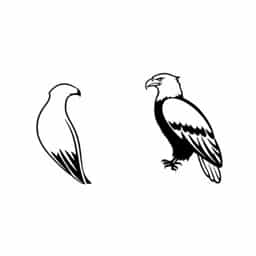
The natural world is full of awe-inspiring creatures, and among birds of prey, few comparisons spark as much curiosity as the matchup between the Gyrfalcon and the Bald Eagle. Both species hold iconic status in their respective regions the Gyrfalcon as the largest falcon and a master of speed and precision, and the Bald Eagle as the national bird of the United States, symbolizing strength and freedom. While both are raptors, their behaviors, habitats, hunting techniques, and physical attributes differ significantly, making the comparison both fascinating and insightful for bird enthusiasts and wildlife observers.
Physical Characteristics
Gyrfalcon Overview
The Gyrfalcon (Falco rusticolus) is the largest of the falcon species, often found in Arctic and sub-Arctic regions. Its plumage varies from white to gray to dark slate, depending on its geographical location. Gyrfalcons typically weigh between 2 and 4.5 pounds, with females being larger than males. Their wingspan can reach up to 4 feet, and they are built for speed, with pointed wings and a streamlined body.
Bald Eagle Overview
The Bald Eagle (Haliaeetus leucocephalus) is a larger and more robust bird. Adult bald eagles are easily recognized by their white head and tail feathers contrasted against a dark brown body. They typically weigh between 6 and 14 pounds, with a wingspan stretching up to 8 feet. Built more for soaring and gliding, Bald Eagles have broader wings and a heavier frame than falcons.
Habitat and Range
Gyrfalcon Habitat
Gyrfalcons are birds of the far north. They inhabit the tundra and open mountainous regions of the Arctic Circle. Their nesting sites are often cliffs or rocky outcrops, and during winter months, some may migrate south, though many remain in cold environments year-round. They are well adapted to the harsh, frigid climates and are known for their resilience.
Bald Eagle Habitat
Bald Eagles prefer habitats near large bodies of open water, such as lakes, rivers, and coastal shorelines, where food is plentiful. Their range includes most of North America, from Alaska and Canada down through the contiguous United States. They build massive nests in tall trees or cliff edges, returning to the same location year after year.
Hunting and Diet
Gyrfalcon Hunting Behavior
The Gyrfalcon is a high-speed aerial hunter. It primarily preys on birds, such as ptarmigan, ducks, and seabirds, though it will also take small mammals like lemmings. Gyrfalcons use surprise and speed to their advantage, often flying low and fast before striking their target mid-air. Their sharp talons and beaks allow for a quick, efficient kill.
Bald Eagle Hunting Behavior
Bald Eagles are opportunistic feeders. They mostly feed on fish, which they snatch from the water with their powerful talons. However, they are not above scavenging and will often steal food from other birds, including ospreys. Their strong beaks and large claws make them effective predators, and they can carry prey weighing up to four pounds while flying.
Behavior and Temperament
Gyrfalcon Personality Traits
Gyrfalcons are solitary and elusive. They are not commonly seen in populated areas and tend to avoid human activity. Their flight is agile and purposeful, demonstrating a high level of control and skill. In falconry, Gyrfalcons are highly prized for their power and precision, but they require experienced handlers due to their independent nature.
Bald Eagle Personality Traits
Bald Eagles are more social and tolerant of human presence, often seen perched in trees near lakes or rivers. They can be both majestic and aggressive, especially during breeding season or when protecting a food source. They are vocal birds, known for their high-pitched calls that are often dubbed over in media with the cry of a red-tailed hawk.
Reproductive Behavior
Gyrfalcon Nesting
Gyrfalcons lay their eggs in cliffside nests with little to no added material. The female typically lays 2-5 eggs, and both parents are involved in feeding and protecting the chicks. Incubation lasts around 35 days. Due to their remote nesting locations, young Gyrfalcons face threats primarily from natural predators rather than human disturbance.
Bald Eagle Nesting
Bald Eagles construct large, elaborate nests known as eyries. These nests can be reused and expanded for several years, sometimes weighing over a ton. The female usually lays 1-3 eggs per season. Both parents participate in incubation and feeding. Their reproductive behavior is heavily studied due to their visibility and symbolic status.
Conservation Status
Gyrfalcon Conservation
The Gyrfalcon is listed as a species of least concern, though its populations are closely monitored. Habitat destruction and climate change pose long-term threats, particularly in the Arctic. Because they rely heavily on specific prey species, any disruption in the food chain could impact their numbers significantly.
Bald Eagle Conservation
Bald Eagles were once on the brink of extinction due to habitat loss and DDT pesticide use. However, after decades of conservation efforts, including legal protection and habitat restoration, they have made a remarkable recovery. Today, they are no longer considered endangered and are one of the greatest success stories in North American wildlife conservation.
Key Differences and Final Thoughts
- Size: Bald Eagles are significantly larger and heavier than Gyrfalcons.
- Habitat: Gyrfalcons live in cold Arctic environments, while Bald Eagles favor temperate zones near water.
- Hunting style: Gyrfalcons rely on speed and precision; Bald Eagles often scavenge or fish.
- Conservation: Bald Eagles have recovered from near extinction; Gyrfalcons remain stable but vulnerable to environmental changes.
Which Is More Powerful?
While Bald Eagles win in sheer size and strength, Gyrfalcons excel in speed, agility, and aerial hunting skill. Each bird dominates its ecological niche. A direct physical confrontation between the two would likely favor the eagle due to its size, but in terms of technique and stealth, the Gyrfalcon is unmatched.
The comparison between Gyrfalcon vs Bald Eagle showcases two majestic raptors with unique adaptations. Whether you’re interested in their hunting prowess, majestic appearance, or symbolic meaning, both birds are fascinating examples of nature’s design. They highlight the diversity of birds of prey and remind us of the importance of preserving their habitats for generations to come.