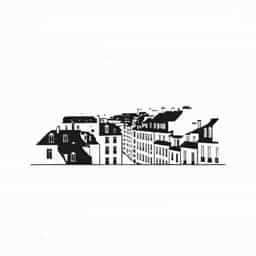
Maurice Utrillo, a prominent French painter of the 20th century, remains a compelling figure in the history of modern art, especially known for his evocative depictions of Montmartre and Parisian street scenes. His works often capture a serene yet haunting beauty, showcasing empty streets, whitewashed buildings, and the quiet charm of urban life. Despite personal struggles, including mental illness and addiction, Utrillo produced a vast number of artworks that reflected his unique vision and emotional sensitivity. Exploring the obras de Maurice Utrillo offers insight into a painter who combined impressionist technique with a raw, personal atmosphere that remains influential today.
Early Artistic Development
Background and Beginnings
Maurice Utrillo was born in 1883 in Paris, the son of the famed artist and model Suzanne Valadon. Although his biological father is uncertain, the Spanish artist Miguel Utrillo legally recognized him as his son. Utrillo’s early life was marked by instability and illness, leading to prolonged periods of confinement. It was during one of these periods that his mother encouraged him to paint, both as therapy and as a creative outlet. This decision would shape his future and introduce the world to a deeply introspective and talented painter.
Development of His Signature Style
Utrillo did not receive formal training like many of his contemporaries. Instead, he learned by observing and painting what he saw in his immediate surroundings. His early works were influenced by post-impressionism, but he gradually moved toward a more personal and simplified form, often categorized under the ‘School of Paris.’ He focused mainly on street scenes, buildings, and churches, with a special interest in Montmartre, where he lived much of his life.
Thematic Focus in Utrillo’s Paintings
Montmartre and Urban Landscapes
The heart of Maurice Utrillo’s obras lies in his dedication to capturing Montmartre and the architecture of Paris. He painted these scenes not as bustling places full of people, but rather as quiet, reflective settings. His use of soft tones and thick impasto gave his paintings a distinctive look. Utrillo’s fascination with the urban landscape allowed him to turn ordinary buildings into poetic images.
- ‘Rue des Abbesses’– A narrow Parisian street painted with subtle grays and whites.
- ‘Church of Saint-Pierre, Montmartre’– A recurring subject showcasing Utrillo’s attachment to sacred architecture.
- ‘Place du Tertre’– Often depicted from different angles and in various seasons.
Color Periods: White Period and Beyond
One of the most recognizable phases of his career is known as the ‘White Period’ (circa 1909-1914), during which he used white tones extensively. This era featured heavily textured walls and muted palettes, evoking a sense of silence and stillness. His use of zinc white, sometimes mixed with plaster, created a unique chalky surface that added depth to the façades of buildings. Later in his career, Utrillo embraced more color, but the mood of calm and solitude remained a hallmark of his style.
Techniques and Materials
Unconventional Methods
Utrillo’s artistic methods were notable for their originality. He often mixed his paint with unusual materials such as plaster or sand to enhance texture. He preferred oil on canvas but was not shy about using anything available to achieve the desired effect. This tactile quality, combined with limited but powerful color palettes, gave his works a raw and emotional impact.
Influence of Photography and Memory
Although many of his paintings were created en plein air, others were based on photographs or memory. This gave his paintings a somewhat dreamy or static appearance. They are not photorealistic but rather meditative interpretations of places that held personal significance. His tendency to leave streets empty of people further emphasized a mood of introspection and timelessness.
Recognition and Exhibitions
Public and Critical Reception
While Utrillo faced personal challenges throughout his life, his works gained recognition during his lifetime. By the 1920s, he was a well-known figure in Parisian artistic circles. His paintings were exhibited in major galleries and appreciated by collectors for their emotional honesty and technical simplicity. He was awarded the Cross of the Legion of Honor in 1929, a rare distinction for an artist with no formal academic training.
Collections and Museums
Today, Maurice Utrillo’s paintings can be found in many prestigious museums and private collections. Institutions in France, the United States, and Japan hold some of his most notable works. The Montmartre Museum in Paris dedicates part of its collection to Utrillo and his mother, Suzanne Valadon, highlighting their artistic contributions and unique family dynamic.
Legacy and Artistic Influence
Impact on Modern Urban Landscape Painting
The obras de Maurice Utrillo influenced a new way of portraying cities not as centers of activity, but as places of quiet beauty and reflection. His legacy lives on in artists who depict urban spaces with similar restraint and poetic vision. Utrillo showed that even the most common street corner could become a subject worthy of deep artistic exploration.
Enduring Appeal
Utrillo’s work continues to resonate with audiences today because it speaks to universal themes solitude, memory, and the passage of time. His paintings do not rely on grand scenes or dramatic events. Instead, they find beauty in the everyday, inviting viewers to look more closely at the familiar. His ability to evoke emotion through architecture and landscape remains a powerful testament to his vision.
Maurice Utrillo’s body of work stands as a unique and enduring contribution to modern art. His ability to transform ordinary urban landscapes into deeply personal and emotive paintings is what sets his art apart. Through his characteristic techniques, subdued palettes, and focus on Montmartre, he created a visual language that continues to inspire and move viewers. The obras de Maurice Utrillo are not just windows into a bygone Paris, but also reflections of an artist’s inner world quiet, contemplative, and profoundly human.