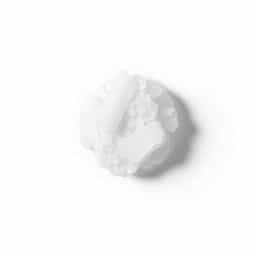
Microcosmic salt, also known as sodium ammonium hydrogen phosphate (Na(NH₄)HPO₄·4H₂O), may not be a household name, but its significance in scientific laboratories and historical applications is noteworthy. This compound has been used for centuries in analytical chemistry, particularly in the field of qualitative inorganic analysis. Known for its crystalline structure and reliable reaction properties, microcosmic salt continues to be useful in modern science and education. Understanding the diverse uses of microcosmic salt reveals how a seemingly obscure substance holds an important role across different fields of study and application.
Chemical Composition and Properties
Microcosmic salt is a double salt consisting of sodium, ammonium, hydrogen phosphate, and water of crystallization. It forms colorless, transparent crystals that are soluble in water and decomposes when heated strongly. One of the key features that make it valuable is its ability to form a clear, stable glass when heated in a loop, which is central to its use in bead tests.
Thermal Behavior
When microcosmic salt is heated, it undergoes decomposition, releasing ammonia and water, leaving behind a sodium metaphosphate. This reaction is especially useful in flame tests and bead tests to analyze metal ions based on the colors they produce when heated with the salt.
Educational Uses in Analytical Chemistry
One of the most well-known uses of microcosmic salt is in educational laboratories, especially during inorganic qualitative analysis. It is frequently used in ‘bead tests’ to help identify metal cations based on their color reaction with the salt when exposed to flame.
Bead Test Procedure
- A platinum or nichrome wire is first cleaned and formed into a small loop.
- The loop is dipped into powdered microcosmic salt and then held in the flame to create a transparent glass bead.
- The bead is then dipped into a sample containing a metallic ion and reheated.
- The resulting color of the bead is observed and matched to known results for metal identification.
For example, copper typically produces a green or blue-green bead, while cobalt gives a deep blue color. These visual cues make it easier for students to learn about ionic properties and the behavior of metals under heat.
Historical Role in Alchemy and Early Chemistry
Before modern scientific terminology was established, microcosmic salt had a place in the world of alchemy. Early chemists used it as part of experiments related to the transformation of substances. Though their theories were far from today’s scientific understanding, their experiments contributed to the foundational knowledge that led to the development of analytical chemistry as we know it.
Microcosmic Salt in 18th and 19th Century Science
During the 18th and 19th centuries, microcosmic salt was often used by scientists studying the reactivity and solubility of metals. Its consistent chemical behavior made it ideal for repeatable experiments and observations. The compound helped researchers understand more about molecular reactions and electron exchange in inorganic salts and oxides.
Application in Mineral Testing
Geologists and mineralogists have also relied on microcosmic salt in identifying unknown minerals. In field tests and laboratory settings, the bead test is still occasionally used to determine the presence of transition metals within mineral samples. Its ability to reveal specific metal ions based on color reactions provides a fast, low-tech way to analyze samples when advanced equipment is not available.
Examples of Metal Detection
- Iron (Fe) – yellow to brown bead when heated in oxidizing flame
- Chromium (Cr) – green bead under both oxidizing and reducing flames
- Manganese (Mn) – violet bead in oxidizing flame, colorless in reducing flame
These results help geologists make preliminary identifications of mineral content before sending samples for more detailed analysis.
Demonstrations in Educational Chemistry
Microcosmic salt is commonly used in academic demonstrations to show how transition metals behave in different oxidation states. It is especially valuable in demonstrating flame chemistry and electron transition because of its strong visual output.
Why Instructors Choose Microcosmic Salt
Teachers and lab instructors prefer microcosmic salt for demonstrations because it is predictable, visually engaging, and safe when handled properly. It offers an accessible way to teach fundamental chemistry principles without needing expensive instruments or complex procedures. The bead test also stimulates interest in chemistry by connecting theoretical knowledge to observable outcomes.
Use in the Study of Coordination Compounds
Another valuable use of microcosmic salt is in the study of coordination chemistry. When metal ions react with the phosphate group in the salt, they often form complex compounds that demonstrate different coordination behaviors. Observing these reactions allows students and researchers to explore ligand-metal interactions and oxidation-reduction dynamics.
Understanding Metal Complexes
Studying the color changes of metal beads when heated with microcosmic salt can also serve as an introduction to the field of ligand field theory. This helps explain why different metal ions show distinct color patterns and gives insight into the arrangement of electrons in d-orbitals of transition metals.
Safe Handling and Storage
Though microcosmic salt is not considered highly toxic, proper lab protocols should always be followed. The compound should be stored in a dry, cool place and kept in sealed containers to avoid moisture absorption. When heating the salt, work in a well-ventilated area and wear protective goggles and gloves to avoid exposure to hot materials or fumes.
Disposal Guidelines
Small quantities used in bead tests can usually be disposed of with standard laboratory waste, but larger quantities should be treated as chemical waste and disposed of according to local environmental regulations. Avoid releasing unused microcosmic salt directly into water systems.
Availability and Alternatives
Microcosmic salt is available through most laboratory supply vendors, often in crystalline form or as a fine powder. While there are synthetic alternatives and other phosphate-based compounds, few match the historical reliability and clarity of reaction that microcosmic salt provides in classic analytical tests.
Comparable Testing Materials
- Borax (sodium borate) – often used in similar bead tests, especially in cases where microcosmic salt is unavailable
- Sodium metaphosphate – forms as a result of heating microcosmic salt and can also serve as a bead medium
Still, microcosmic salt remains a preferred choice in settings where traditional testing methods are valued.
While modern spectroscopy and advanced instrumentation have taken center stage in analytical chemistry, microcosmic salt retains its place as a reliable and educational tool. Its unique chemical properties, historical relevance, and clear visual reactions make it indispensable in bead testing and qualitative analysis. Whether you are a student, teacher, geologist, or chemist, understanding the uses of microcosmic salt deepens your appreciation for how simple compounds can play crucial roles in science. By maintaining its relevance in practical applications, microcosmic salt continues to serve as a bridge between classic chemistry education and modern scientific exploration.