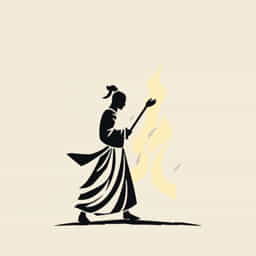
Kuoshun’s act of selfimmolation in 1948 stands as a poignant reminder of the lengths to which individuals will go to protest religious repression and cultural destruction. As China’s Communist regime under Mao Zedong initiated campaigns to eradicate Buddhist temples and sacred objects, Kuoshun, a Buddhist monk, chose to become his own message an incendiary symbol of spiritual resistance. His sacrifice echoed throughout Asia, influencing both contemporary and later protests rooted in profound moral conviction.
Historical Context of the 1948 SelfImmolation
Communist Campaigns Against Religion
After the Chinese Civil War, Mao Zedong’s new Communist government embarked on systematic efforts to reshape Chinese society religious institutions were not spared. Temples were destroyed, texts were burned, and monks faced increasing persecution. Buddhism, once deeply woven into China’s cultural fabric, became a target of state-led campaigns seeking to eliminate old beliefs
Kuoshun responded with the most drastic form of resistance: selfimmolation. His act wasn’t aimed at ending his life it was a statement meant to shock the world, to expose the violence inflicted on Buddhist traditions, and to demand attention to spiritual and cultural extinction.
The Act Itself: A Monastic Sacrifice
In a chilling yet solemn display, Kuoshun arranged himself upon a pile of sawdust soaked in soybean oil. He sat in lotus position motionless yet explosive before setting himself aflame
Within Buddhist thought, selfimmolation may be viewed as a pernicious form of autocremation: a last resort when persuasion and passive resistance have failed
Influence on Future Acts of Protest
Inspiration for ThÃch Quảng Äức
Kuoshun’s selfimmolation remained relatively obscure at the time, known among monastic circles but not widely publicized. Yet it set a precedent. In 1963, Vietnamese monk ThÃch Quảng Äức’s more famous immolation against Ngo Dinh Diem’s regime carried powerful echoes
TransCultural Buddhist Precedents
Selfimmolation in Buddhist contexts extends beyond China and Vietnam. From medieval Chinese autocremations to modern Tibetan selfimmolations in protest of Chinese rule, the practice has repeatedly surfaced as an ultimate assertion of conscience
Understanding the Spiritual Dimensions
Emptiness and Selflessness in Buddhism
Buddhist doctrine emphasizes anatta (nonself) and sunyata (emptiness). To burn oneself is to exhibit extreme nonattachment to the body, to life, and to suffering
Protest vs. MeritMaking
Buddhist self-immolation may be motivated by protest or by religious merit. Kuoshun’s was clearly political a refusal to kneel to oppression. But it also carried profound religious undertones, merging activism with ritual, turning an individual death into a communal rallying cry.
Legacy and Lessons
- Pioneering protest tactic: Kuoshun’s act represents an early example of selfimmolation used purposefully to protest authoritarian destruction of religious culture.
- Martyrdom and memory: Though his story is less told, monastic traditions in Asia honor him as a martyr, a man whose fire spoke louder than any sermon.
- Template for protest: His act set a moral standard and visual blueprint that influenced later Buddhists in Vietnam, Tibet, and beyond.
- Symbolic power of the body: In burning himself, Kuoshun made his own body the medium of protest, embodying suffering, resistance, and spiritual conviction in a single act.
Modern Relevance
Today, selfimmolation remains a controversial form of protest. Tibetan activists, environmental advocates, and political dissidents in various countries continue to adopt it to signal despair at injustice or oppression For historians and advocates, understanding Kuoshun is vital: he reminds us that such protests are not spontaneous extremes, but part of a longer cultural and spiritual genealogy.
Kuoshun’s selfimmolation in 1948 was a radical act rooted in Buddhist tradition and political resistance. It was born of despair and devotion, faith and fury. As a monk, he gave his life to preserve something greater the integrity of Buddhist culture under attack. His sacrifice resonates through decades of subsequent protests across Asia, challenging observers to reflect on the value of life, the depth of belief, and the ultimate price some are willing to pay for spiritual freedom. Kuoshun may not be a household name, but his flame continues to illuminate the path of moral protest.
: