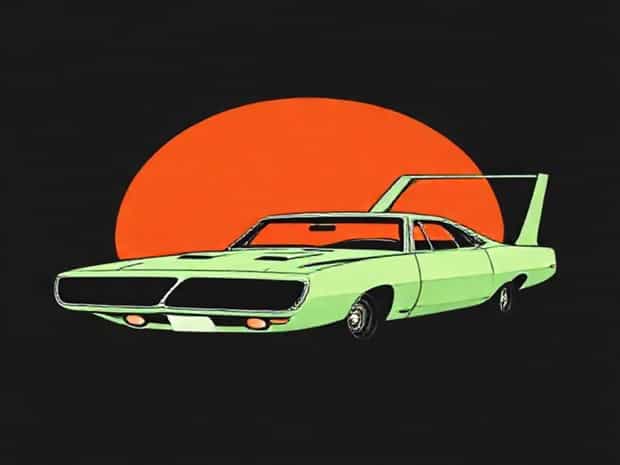
The 1970 Plymouth Superbird is one of the most iconic muscle cars ever built, a vehicle that represents both speed and bold design. Created during a golden era of American performance cars, it was developed with one purpose in mind to dominate NASCAR racing. With its striking aerodynamic features, powerful engine options, and a design unlike anything else on the road, the Superbird remains a legendary symbol of 1970s automotive culture. Today, it is remembered not only as a racing machine but also as a rare collectible that fascinates enthusiasts around the world.
The Origins of the Plymouth Superbird
The story of the 1970 Plymouth Superbird began with its predecessor, the Dodge Charger Daytona. Chrysler’s engineering team knew that NASCAR competition in the late 1960s was fierce, and aerodynamics had become just as important as raw horsepower. Plymouth needed its own version of the Daytona to remain competitive, so the Superbird was born. With only around 1,920 units built, the car was designed primarily to meet NASCAR’s homologation requirements, meaning it had to be sold to the public before it could race on the track.
Unique Design Features
The most recognizable aspect of the Superbird is its radical aerodynamic styling. It was engineered to cut through the air with as little resistance as possible, something traditional muscle cars often struggled with. Several features set it apart from other cars of its time
- Extended Nose ConeThe Superbird’s pointed nose added nearly 19 inches to the car’s length, improving aerodynamics at high speeds.
- High Rear WingPerhaps its most famous feature, the massive rear spoiler stood about two feet tall. While it appeared exaggerated, it provided stability during racing at over 200 miles per hour.
- Flush Back GlassEngineers reshaped the rear window into a more streamlined angle, reducing drag and turbulence.
- Pop-Up HeadlightsTo maintain a smooth surface across the front end, the Superbird used hidden headlights that retracted when not in use.
Engine Options and Performance
Under the hood, the 1970 Plymouth Superbird offered several powerful V8 engines. Buyers could choose from the standard 440 cubic-inch Super Commando, the 440 Six Barrel with three two-barrel carburetors, or the legendary 426 HEMI. Each engine delivered impressive horsepower, ranging from 375 to 425, ensuring that the Superbird was more than capable of backing up its race-inspired appearance. Paired with either a four-speed manual or a three-speed automatic transmission, the car was built to thrill anyone brave enough to push the accelerator.
NASCAR Dominance
The entire reason for the Superbird’s existence was racing. Plymouth built it so drivers like Richard Petty could compete against Ford and Mercury rivals who had been dominating the track. With its aerodynamic advantages and powerful engines, the Superbird proved itself quickly. In the 1970 NASCAR season, it secured multiple wins, demonstrating how engineering innovations could change the outcome of races. Its design was so effective that NASCAR later changed its rules, banning such extreme aerodynamic modifications in future cars.
Impact on the Muscle Car Market
While the Superbird was designed with racing in mind, it also had to be sold to the public. At the dealership, its radical appearance divided buyers. Some loved its futuristic styling, while others found it too outrageous. Many cars sat unsold for months, and some dealers even modified them to look like standard Road Runners to make them easier to sell. Ironically, what was once seen as too extreme has now become one of the most valuable collector cars of the muscle car era.
Collectibility and Value Today
In modern times, the 1970 Plymouth Superbird is considered a prized possession for car collectors. Because only a limited number were made, surviving examples fetch high prices at auctions. A well-preserved HEMI Superbird can easily command hundreds of thousands of dollars. Collectors admire not just its rarity but also its place in history as one of the wildest cars ever produced by a major American manufacturer.
Reasons for Its Rising Value
- Low production numbers and limited availability.
- Strong connection to NASCAR and Richard Petty’s racing legacy.
- Unique aerodynamic design that stands out even today.
- Association with the golden age of muscle cars.
Driving Experience
For those lucky enough to drive one, the 1970 Plymouth Superbird delivers an experience unlike any other. Its large size, heavy steering, and booming exhaust note remind drivers of the raw power muscle cars were known for. The car is not built for comfort or subtlety; instead, it commands attention everywhere it goes. While modern cars easily outperform it in terms of handling and technology, few vehicles capture the same level of excitement and nostalgia.
Pop Culture and Legacy
The Superbird’s unusual design has made it a favorite in pop culture. It has appeared in movies, television, and even animated films, helping new generations discover its charm. Beyond entertainment, the car continues to symbolize an era when manufacturers pushed boundaries and dared to create machines that were both outrageous and functional.
The End of the Aero Wars
The Superbird represents the peak of what became known as the aero wars in NASCAR, where manufacturers used radical designs to gain an edge. After the 1970 season, rule changes effectively ended the development of such extreme cars. This makes the Superbird a rare snapshot in history, capturing a brief but thrilling moment when imagination and engineering collided without limits.
Why the Superbird Still Matters
Decades after its release, the 1970 Plymouth Superbird continues to capture the imagination of car lovers. It is more than just a piece of machinery; it is a symbol of innovation, risk-taking, and the pursuit of speed. Whether admired in a museum, raced on a track, or displayed at a car show, the Superbird never fails to spark conversation. Its story is a reminder of a time when carmakers dared to go beyond conventional design and build something truly extraordinary.
The 1970 Plymouth Superbird stands as one of the most unforgettable muscle cars in American history. Its aerodynamic body, powerful engines, and racing pedigree make it an icon of both the street and the track. What was once considered too bold has become a treasured collectible, admired for its rarity and historical significance. From its dominance in NASCAR to its lasting place in pop culture, the Superbird continues to soar above its peers, proving that innovation and daring design can create a legend that lasts for generations.