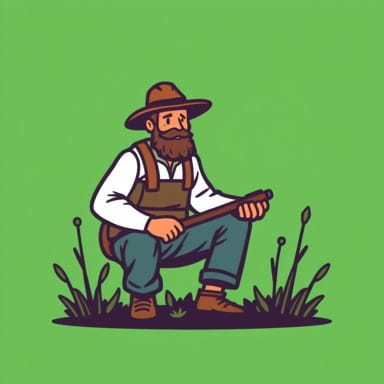
Life for a sharecropper in the post-Civil War South was a constant struggle marked by poverty, debt, and limited freedom. Although slavery had ended, many African American families remained tied to the land through an unfair system of sharecropping. Year after year, they worked long hours under harsh conditions, only to see most of their harvest profits claimed by landlords and merchants. For many, the promise of freedom and independence remained out of reach. It was this frustration, along with the hope of a better future, that inspired thousands to join the Exodusters movement in the late 19th century. A sharecropper’s story of why he chose to leave offers a glimpse into the hardships of the South and the determination to seek dignity in the West.
The Life of a Sharecropper
Sharecropping was intended to be a system of labor after the Civil War, but in reality, it left many families in a cycle of dependency. A sharecropper would farm a portion of land owned by someone else, usually a former plantation owner, and in return, he had to give up a large percentage of the crop as rent. The landlord often supplied seeds, tools, and credit at inflated rates, trapping sharecroppers in debt year after year.
For African American sharecroppers, the system felt like another form of bondage. Freedom had been won legally, but economic independence remained out of reach. Each harvest season brought uncertainty, and many families could barely afford basic necessities. This sense of being tied to land without true ownership fueled the desire for a new beginning.
The Rise of the Exodusters
In the 1870s, word began to spread about opportunities in Kansas and other parts of the West. African Americans who dreamed of escaping the oppressive environment of the South saw Kansas as a land of possibility. The name Exodusters was inspired by the biblical story of the Exodus, symbolizing a journey toward freedom and a promised land. Thousands of families packed what little they owned and set out on difficult journeys to claim land and establish new lives in the West.
A sharecropper’s reasons for joining were deeply personal but shared by many others who felt the crushing weight of inequality in the South. The decision to leave was not made lightly, as it meant abandoning familiar land, communities, and traditions. Yet, the chance for independence was too powerful to ignore.
Reasons a Sharecropper Chose to Leave
The motivations behind joining the Exodusters movement were numerous, but several stood out as especially significant for sharecroppers. Among them were
- Escape from debtEndless cycles of borrowing and repayment left families trapped. The chance to start fresh in a new land offered hope.
- Land ownershipIn Kansas and other western territories, land could be purchased or claimed through homesteading. This was something most sharecroppers could never imagine in the South.
- Freedom from oppressionRacism, violence, and intimidation were widespread in the South, particularly through groups like the Ku Klux Klan. Leaving promised safety and dignity.
- Opportunity for childrenEducation and better prospects for the next generation were vital motivations. Many families hoped their children would not be forced into the same hardships.
Challenges of the Journey
Deciding to join the Exodusters was one thing, but making the journey was another. Families often had few resources and had to rely on faith, community support, and determination. Many traveled by wagon, riverboat, or even on foot. Illness, hunger, and exhaustion were constant threats.
Despite these hardships, the journey represented hope. A sharecropper leaving the South knew he was risking everything, but the risk was worth the possibility of freedom. To him, staying behind meant a life of guaranteed struggle; leaving meant the chance, however slim, of independence.
Arriving in Kansas
When the Exodusters reached Kansas, they were not greeted with riches or easy success. Instead, they found difficult terrain, harsh weather, and limited resources. Still, the difference was ownership. Even if life remained hard, farming one’s own land gave a sense of dignity that sharecropping never could.
Communities began to form in towns like Nicodemus, Kansas, which became a symbol of African American determination and resilience. Families worked together to build schools, churches, and farms, slowly carving out a new existence that was free from the constant control of Southern landlords.
The Emotional Reasons Behind the Choice
Beyond financial and practical motivations, a sharecropper’s decision to leave was deeply emotional. The dream of freedom had not ended with the Civil War, and the constant reminders of oppression in the South made daily life painful. Violence, discrimination, and lack of opportunity created a sense of hopelessness. By joining the Exodusters, sharecroppers could transform that hopelessness into action.
For many, it was also about pride. Owning land meant more than financial security; it symbolized independence and respect. A man could stand tall knowing that the crops he planted and harvested were truly his own, not something taken by a landlord.
Voices from a Sharecropper’s Perspective
When asked why he joined the Exodusters, a sharecropper might say
- I was tired of working sunup to sundown only to end up with nothing.
- I wanted my children to know what it felt like to walk on land that belonged to us.
- I could no longer live under the shadow of fear and violence in the South.
- Freedom without land and opportunity is not true freedom.
These words capture the spirit of the movement not simply escape, but the pursuit of a fuller, richer life.
Impact of the Exodusters Movement
The Exodusters movement was not the end of struggle for African Americans, but it was a powerful step toward self-determination. While many faced hardships in Kansas, they built communities that endured and inspired future generations. Their courage sent a strong message that African Americans would not remain silent under oppression.
For a sharecropper, joining the Exodusters meant taking control of his destiny. It was not just about survival, but about reclaiming dignity and building a foundation for future generations. The legacy of these pioneers is still remembered as a testament to resilience and hope.
The story of a sharecropper who joined the Exodusters reflects a larger struggle shared by thousands of African Americans after the Civil War. Caught in the cycle of debt and oppression, he saw in the West a chance for freedom, land, and a better future for his family. Though the journey was filled with hardship, the decision to leave was an act of courage and faith. The Exodusters stand as a reminder of the enduring human desire for independence and dignity, and their story continues to inspire those who seek a life built on justice and opportunity.