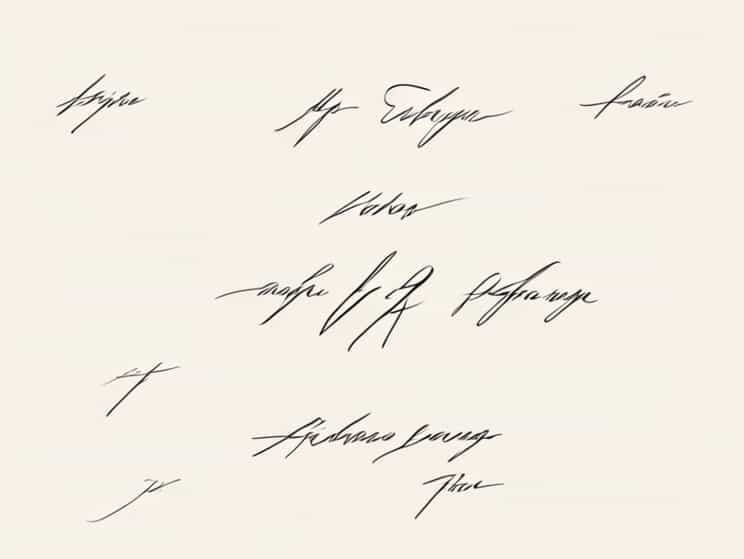
Cursive handwriting has been an essential skill for generations, offering a smooth, flowing style of writing that connects letters together. Many people learn cursive from an early age, practicing each letter from A to Z until they develop their own style. Beyond its practical use, cursive handwriting also carries cultural and historical value, representing an art form that improves fine motor skills, memory, and even creativity. In a digital world dominated by keyboards and screens, learning cursive from A to Z still has a place in education and personal development.
Understanding Cursive Handwriting
Cursive handwriting refers to a form of writing where letters are connected in a flowing manner, making writing faster and often more elegant than block letters. The style of cursive varies across regions and schools, but the general idea is to link letters together with minimal lifting of the pen.
When learning cursive handwriting A to Z, students usually begin with lowercase letters because they are more common in everyday writing. Once mastered, uppercase cursive letters are introduced, which often look more decorative and require greater control of hand movement.
The Benefits of Cursive Handwriting
Practicing cursive from A to Z is not just about beautiful writing. It has cognitive and developmental advantages as well. Some benefits include
- Improved hand-eye coordination and fine motor skills.
- Better retention of information when writing by hand.
- Development of a personal and unique writing style.
- Increased writing speed compared to print letters.
- Enhanced ability to read historical documents written in cursive.
Learning Cursive Letters from A to Z
The journey of learning cursive handwriting A to Z starts with practicing each letter individually. By repeating strokes and patterns, learners begin to form smooth connections between letters. Here’s a breakdown of how cursive letters are typically learned
Lowercase Letters
Lowercase letters are taught in groups based on similar strokes
- a, c, d, g, q, o– These letters share a round base and often begin with an undercurve.
- i, u, w, t, j– Letters with upward strokes and simple dots or crossbars.
- l, e, f, h, k– Tall letters with loops or extended stems.
- m, n, v, x, y, z– Angular or wave-like strokes that repeat.
- r, s, p, b– Letters with unique hooks or loops requiring practice for smoothness.
Each letter connects seamlessly to the next, making words flow naturally on paper.
Uppercase Letters
Uppercase cursive letters are often more elaborate. Some look very similar to their print forms, while others take on unique curves and loops. For example, cursive A looks like a slanted loop, while cursive Q can resemble the number 2. Learning them requires patience, as they often involve complex strokes.
Step-by-Step Approach to Mastery
Anyone who wants to master cursive handwriting A to Z should take a gradual approach. The key is consistency and repetition, building muscle memory over time. A suggested process includes
- Step 1Begin with basic strokes such as undercurves, overcurves, and loops.
- Step 2Move on to lowercase letters, starting with the simplest ones like i and u.
- Step 3Practice connecting letters to form short words.
- Step 4Transition to uppercase letters, paying attention to the more complex shapes.
- Step 5Write sentences and paragraphs to apply cursive naturally.
Common Challenges and How to Overcome Them
Learning cursive handwriting A to Z is rewarding, but it also comes with challenges
- Uneven Letter SizeBeginners often struggle with making letters uniform. Using lined paper helps maintain balance.
- Slow Writing SpeedAt first, cursive writing may feel slower, but speed improves with practice.
- Letter ConfusionSome cursive letters, such as r and s, may look unfamiliar. Repetition is the best way to adjust.
- Hand FatigueWriting for long periods can tire the hand. Short practice sessions prevent strain while building endurance.
Tips for Practicing Cursive A to Z
Improving cursive handwriting requires dedication and the right techniques. Here are some helpful tips
- Start with 10-15 minutes of daily practice instead of long, tiring sessions.
- Use a comfortable pen or pencil that glides smoothly on paper.
- Focus on one group of letters before moving on to the next.
- Write common words repeatedly to improve connections.
- Be patient, as muscle memory takes time to develop.
The Role of Cursive in Education
While many schools have shifted focus to typing and digital literacy, cursive handwriting A to Z still appears in some curricula. Teachers often introduce cursive in elementary grades to help students develop strong writing foundations. Beyond academics, cursive plays a role in signing legal documents, writing personal notes, and appreciating historical texts.
Advocates for cursive argue that it nurtures brain development, encourages creativity, and provides a sense of identity through handwriting. Even in the age of technology, cursive remains a valuable life skill.
Creative Uses of Cursive Handwriting
Outside of the classroom, cursive handwriting A to Z has applications in many creative fields. Calligraphy, journaling, and personal stationery often rely on cursive for an elegant touch. Artists and designers use cursive styles to add personality to their work, while individuals may choose cursive for writing letters, diaries, or decorative projects.
Practicing cursive also provides a relaxing, almost meditative activity for people who enjoy penmanship as a hobby.
Future of Cursive Writing
The future of cursive handwriting A to Z is uncertain in some regions, as technology reduces the need for handwritten communication. However, many educators, historians, and handwriting enthusiasts continue to promote its value. As long as cursive remains tied to tradition, identity, and creativity, it is unlikely to disappear completely.
Parents and teachers who encourage cursive practice ensure that younger generations continue to appreciate this unique form of expression, balancing digital skills with traditional penmanship.
Learning cursive handwriting from A to Z is a timeless skill that blends practicality, creativity, and personal expression. It helps build fine motor control, enhances memory, and fosters individuality in writing. By practicing consistently and approaching each letter step by step, anyone can master cursive and enjoy the flow of connected letters on paper. In an increasingly digital age, cursive stands as both a useful skill and an art form worth preserving for future generations.