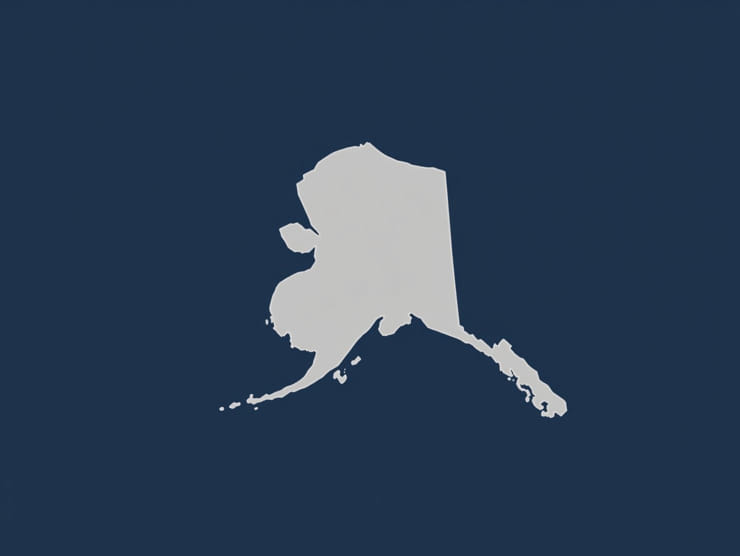
When people think of Alaska, they often imagine its vast wilderness, icy landscapes, and remote location. What many may not realize is that Alaska holds a unique geographical distinction it is simultaneously the northernmost, westernmost, and easternmost state of the United States. This fact surprises many and sparks curiosity. Understanding why this is true involves a fascinating exploration of geography, the International Date Line, and how Alaska’s islands stretch across time zones and hemispheres. Let’s take a closer look at why Alaska earns this extraordinary geographical title.
Northernmost Point of the United States
Point Barrow The Top of the Nation
The northernmost point of the United States is Point Barrow, located in the state of Alaska. Also known by its Iñupiat name, Utqiaġvik, this remote area lies along the Arctic Ocean and is the northern tip of the North Slope Borough. It sits at approximately 71.3° N latitude, making it farther north than any other point in the United States.
Point Barrow is significant not just for its latitude, but also for its cultural and environmental importance. The area is home to the Indigenous Iñupiat people and plays a role in Arctic research, climate monitoring, and Native Alaskan heritage. Its position means long, dark winters and long, sunny summers, as it experiences polar day and night phenomena.
Westernmost Point of the United States
Attu Island The Edge of the West
Moving west, the westernmost point of the United States is found on Attu Island, which belongs to the Aleutian Islands chain in Alaska. This island lies in the Bering Sea and is part of the Aleutians West Census Area. Attu is the last island in the chain and lies beyond the 180th meridian, placing it geographically in the Eastern Hemisphere.
Despite being in the Eastern Hemisphere by longitude, Attu is still west of the mainland U.S. due to the layout of the Aleutian arc. This makes Alaska the westernmost state by virtue of the International Date Line’s deviation, which curves to keep all of Alaska within the same date. Attu Island was once inhabited and even played a role in World War II, but is now uninhabited and protected as part of the Alaska Maritime National Wildlife Refuge.
Easternmost Point of the United States
Semisopochnoi Island Geography vs. Time
Perhaps the most surprising geographical fact is that Alaska is also home to the easternmost point of the United States. This designation belongs to Semisopochnoi Island, another part of the Aleutian Islands. It lies just east of the 180th meridian, which means it is technically in the Eastern Hemisphere.
Semisopochnoi is located at approximately 179°46′ East longitude. Since longitude lines wrap around the globe, anything east of the 180th meridian starts counting again toward the Prime Meridian in Greenwich, England. By this geographic rule, Semisopochnoi is farther east than any point in the continental U.S., including places like Maine.
Understanding the International Date Line
The International Date Line (IDL) is a critical factor in understanding Alaska’s triple distinction. The IDL is an imaginary line that runs roughly along the 180° longitude line and separates two consecutive calendar days. However, the line is not straight it zigzags to avoid splitting countries or territories into two different days.
In Alaska’s case, the Aleutian Islands cross the 180th meridian, but the International Date Line curves around them so that the entire state shares the same calendar day. This manipulation of the date line allows Alaska to include both the westernmost and easternmost geographic points of the United States.
Geographic Curiosities and Their Implications
These unique geographical features give Alaska several interesting distinctions
- Northernmost stateDue to Point Barrow, which is farther north than any point in any other U.S. state.
- Westernmost stateBecause of Attu Island, which lies further west than Hawaii or the mainland U.S.
- Easternmost stateThanks to Semisopochnoi Island, which is technically in the Eastern Hemisphere.
These points also highlight how geography is not always intuitive. Political boundaries, map projections, and the curvature of the Earth all affect how we define east and west. The presence of Alaskan territory on both sides of the 180th meridian is a rare feature shared by very few places in the world.
Alaska Compared to Other States
When compared to other U.S. states, Alaska stands out for its size, geography, and location
- It is thelargest statein the U.S. by land area larger than Texas, California, and Montana combined.
- It has thelongest coastlineof any U.S. state, bordering both the Pacific and Arctic Oceans.
- Its location makes itcloser to Russiathan any other U.S. state only about 55 miles away at the Bering Strait.
- It spansmultiple climate zones, from temperate rainforests in the southeast to Arctic tundra in the north.
Alaska’s geography influences its culture, economy, and way of life. Many Alaskans live in remote communities accessible only by air or sea. Natural resources like oil, fishing, and tourism are vital to the state’s economy, and the extreme weather conditions shape everyday life.
Cultural and Historical Context
Alaska was purchased from Russia in 1867, an acquisition often referred to as Seward’s Folly” at the time. It became the 49th U.S. state in 1959. The state is home to a diverse population that includes many Indigenous communities, such as the Iñupiat, Yupik, Aleut, and Athabaskan peoples.
Its unique geographic position has also made Alaska strategically important, particularly during World War II and the Cold War. Several military bases and radar stations were established to monitor Soviet activity and to serve as defense points in the Pacific.
Alaska’s title as the northernmost, westernmost, and easternmost state of the United States may seem contradictory at first, but it is a result of the state’s wide-reaching geography and the quirks of global longitude. From the Arctic coastline of Point Barrow to the far-flung Aleutian Islands, Alaska’s extremes make it a place of intrigue, natural beauty, and geographic wonder. Whether you are a geography enthusiast or simply curious about the world, Alaska offers a compelling example of how boundaries and coordinates can tell surprising stories. As the state that quite literally stretches across both east and west, Alaska remains one of the most fascinating and diverse regions in the world.