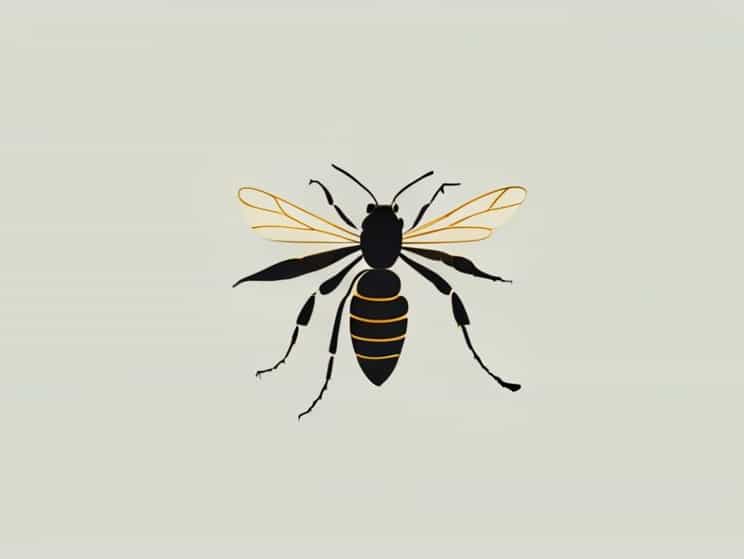
Ants are among the most familiar insects encountered by humans, known for their complex social structures, impressive strength relative to size, and ability to adapt to a wide range of environments. Many people wonder if ants are actually wingless wasps due to their physical resemblance and shared behaviors, such as social organization and predatory habits. Understanding the relationship between ants and wasps, as well as their evolutionary history, helps clarify why ants are sometimes thought of as wingless wasps and what makes them distinct as a unique group of insects within the Hymenoptera order.
The Evolutionary Relationship Between Ants and Wasps
Ants belong to the family Formicidae, which is part of the larger order Hymenoptera, the same order that includes wasps, bees, and sawflies. Fossil evidence and genetic studies indicate that ants evolved from wasp-like ancestors around 140 to 168 million years ago during the Cretaceous period. This evolutionary link explains why ants share many anatomical and behavioral traits with wasps, such as segmented bodies, elbowed antennae, and social hierarchies. Despite these similarities, ants have developed unique adaptations that differentiate them from wasps.
Similarities Between Ants and Wasps
Several characteristics contribute to the perception that ants are wingless wasps
- Body StructureBoth ants and wasps have a segmented body with a head, thorax, and abdomen, and possess a narrow waist called a petiole.
- Social BehaviorMany ants and social wasps live in colonies with complex social structures, including divisions of labor among workers, queens, and males.
- Reproductive RolesBoth groups have winged reproductive individuals (queens and males) that engage in mating flights, while most workers are wingless.
- Predatory and Defensive TraitsAnts and wasps often use stingers or mandibles for defense and hunting, and some species exhibit aggressive behavior toward intruders.
Key Differences Between Ants and Wasps
Despite these similarities, ants are not simply wingless wasps. Their evolutionary adaptations and life cycles distinguish them from their wasp relatives. Understanding these differences is crucial for accurate identification and comprehension of their ecological roles.
Worker Ants Are Wingless
One of the most noticeable differences is that most ant workers are wingless, while in wasps, workers usually retain wings. Winged ants only appear during reproductive phases, when queens and males leave the nest to mate in a nuptial flight. After mating, queens lose their wings to establish new colonies, whereas in wasps, workers continue to have wings for hunting and foraging. This adaptation allows ants to specialize in ground-based tasks such as foraging, nest building, and caring for larvae.
Nesting and Colony Structure
Ants exhibit unique nesting behaviors, including building extensive underground tunnels, soil mounds, or arboreal nests. While some social wasps also construct nests, they are typically above ground and often made from chewed wood fibers or papery materials. Ant colonies are generally more permanent and structured, with a clear hierarchy and specialized roles that are maintained throughout the colony’s life cycle. Wasps, on the other hand, often establish annual colonies that are rebuilt each season.
Feeding Habits
Ants and wasps also differ in feeding strategies. Ants are often omnivorous, feeding on plant material, nectar, fungi, and other insects. Some species, like leafcutter ants, cultivate fungi for food, a behavior not seen in wasps. Wasps tend to be more predatory or scavenging, focusing on capturing prey or feeding on sugary substances like nectar and fruit. These differences in diet and foraging behavior reflect the diverse ecological niches ants occupy compared to wasps.
Genetic and Morphological Evidence
Molecular studies provide further evidence that ants are closely related to certain groups of wasps but are not identical. Genetic analyses indicate that ants form a distinct evolutionary lineage within the Aculeata, a subgroup of Hymenoptera that includes stinging insects like bees and wasps. Morphologically, ants have elbowed antennae, a constricted petiole with one or two segments, and modified mandibles for carrying and manipulating objects. These features are consistent across Formicidae but differ from most wasps, supporting the idea that ants evolved from wasp-like ancestors rather than being wingless versions of wasps.
Behavioral Adaptations
Ants have developed complex communication and cooperative behaviors that further separate them from wasps. They use pheromones to mark trails, signal alarm, and coordinate tasks, allowing for highly organized foraging and defense. Some species practice trophallaxis, a behavior where individuals exchange food or fluids mouth-to-mouth, strengthening colony cohesion. While wasps can display social behaviors, ants generally exhibit a higher degree of cooperation and specialization within colonies.
Why the Misconception Exists
The misconception that ants are wingless wasps likely arises from superficial similarities and shared ancestry. Observing a wingless worker ant may resemble a wasp without wings, especially since winged reproductive ants do look like small wasps during mating flights. Additionally, popular science and casual observation often highlight behavioral and physical similarities without delving into evolutionary distinctions. Understanding evolutionary history and taxonomy clarifies that while ants are related to wasps, they are a separate and highly specialized group of insects.
Importance of Correct Classification
Correctly identifying ants as distinct from wasps is important for ecological studies, pest management, and biological research. Ants play unique roles in ecosystems, including soil aeration, seed dispersal, and population control of other insects. Misclassifying them could lead to misunderstandings of their ecological functions and the development of inappropriate management strategies in agriculture or urban areas.
ants are not wingless wasps, but they do share a close evolutionary relationship with certain wasp lineages. While they possess many similarities in body structure, social behavior, and reproductive strategies, ants have evolved distinct adaptations such as wingless workers, permanent colony structures, specialized feeding habits, and advanced communication systems. Recognizing these differences allows us to appreciate the unique ecological roles and fascinating behaviors of ants. By studying their evolutionary history and biological characteristics, we gain a deeper understanding of why ants are an exceptional and independent group within the insect world, rather than merely a wingless version of wasps.