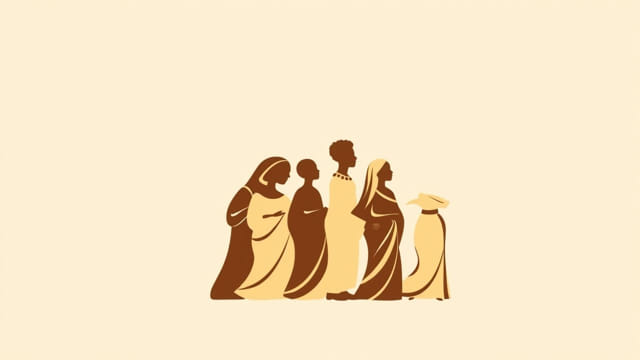
The question of whether Sudanese people are Arab is one that reflects the country’s complex history, ethnic diversity, and cultural evolution. Sudan, located in northeastern Africa, has long been a crossroads of African and Arab civilizations. While many Sudanese identify as Arab, the reality is far more layered, involving a fusion of African heritage, Islamic influence, and linguistic assimilation. Understanding the identity of Sudanese people requires looking at history, language, culture, and self-perception to appreciate why the term Arab might apply to some Sudanese, but not uniformly to all.
Historical Context of Arab Influence in Sudan
Early Civilizations and African Roots
Before the Arab expansion into Africa, Sudan was home to several powerful and ancient African civilizations. The Kingdom of Kush, which thrived along the Nile Valley, is one of the most significant early African empires. These civilizations had distinct African cultures, languages, and religions, long before the arrival of Islam or Arab groups.
The African foundation of Sudanese identity is still visible today in local customs, music, dress, and tribal structures, particularly in regions such as Darfur, the Nuba Mountains, and parts of South Sudan before its independence in 2011.
Arrival of Arab Traders and Islamization
Arab influence in Sudan began in earnest around the 7th century with the expansion of Islam. Arab traders, missionaries, and settlers gradually introduced Arabic language and Islamic customs into northern Sudan. Over centuries, many local populations converted to Islam and adopted Arabic as a common language. This process, known as Arabization, was not immediate or uniform but happened through intermarriage, trade, religious exchange, and sometimes conflict.
By the medieval period, many northern Sudanese tribes began to identify culturally and linguistically with the Arab world, forming what is today referred to as the Sudanese Arab identity.
Ethnic and Linguistic Diversity in Sudan
The Multicultural Mosaic
Sudan is incredibly diverse, with more than 500 ethnic groups and over 100 languages spoken across the country. While Arabic is the official language and widely spoken, it coexists with languages such as Nubian, Beja, Fur, Zaghawa, and others. Each of these groups has its own cultural traditions, histories, and ancestral lineages.
- Nubians: One of the oldest groups in Sudan, with deep roots in the Nile Valley and a distinct non-Arabic heritage.
- Beja: Indigenous people in eastern Sudan with a Cushitic language and pre-Islamic heritage, although many have adopted Islam.
- Fur and Zaghawa: Ethnic groups from the Darfur region, with African origins and unique cultural practices.
- Arabized Tribes: Groups like the Shaigiya and Ja’alin who trace partial lineage to Arab ancestors and are more integrated with Arab culture.
Arabization vs. Ethnicity
It’s essential to differentiate between cultural Arabization and ethnic Arab ancestry. Many Sudanese people have been Arabized in terms of language and religion but do not necessarily have genealogical ties to the Arabian Peninsula. Ethnic identity in Sudan is fluid and often based on cultural affiliation rather than strict genetic lineage.
This distinction is especially important in discussions about whether Sudanese people are Arab. Some people identify as Arab due to cultural, linguistic, and religious reasons, while others identify as African or by their specific ethnic group, even if they speak Arabic and practice Islam.
Sudanese Identity: Arab, African, or Both?
Self-Identification Among Sudanese
The way Sudanese people identify themselves varies widely. In northern and central Sudan, many people identify as Arab due to their use of Arabic, Islamic faith, and cultural practices associated with the Arab world. This Arab identity is often promoted in national institutions, education, and media.
In contrast, people in western, eastern, and southern Sudan may see themselves more as African or tied to their tribal identities rather than pan-Arabism. The civil conflict between the north and the south, which ultimately led to South Sudan’s independence, partially stemmed from this cultural and ethnic divide.
Pan-Arabism and National Policy
Sudan’s post-independence governments, particularly during the rule of Jaafar Nimeiri and later Omar al-Bashir, often emphasized an Arab-Islamic identity as part of national unity efforts. Arabic was promoted as the language of governance and education, and Islamic law was incorporated into national legal frameworks.
While this policy helped strengthen ties with the Arab League and countries like Egypt and Saudi Arabia, it also alienated non-Arab and non-Muslim communities, leading to ethnic tensions and civil unrest.
The Role of Language and Religion
Arabic as a Common Language
Arabic is the lingua franca in Sudan and is used in education, business, and media. However, just because Arabic is widely spoken does not mean all Sudanese are ethnically Arab. Arabic was adopted largely due to historical factors, trade, and Islamic influence. It acts as a unifying language among people with otherwise diverse ethnic backgrounds.
Islam and Cultural Unity
Islam is practiced by a large majority of Sudanese, and it has played a significant role in shaping cultural values and social norms. Religious identity sometimes blends with Arab identity, making the two difficult to separate. Yet, many non-Arab groups also practice Islam while maintaining their own distinct cultural traditions.
Modern Perspectives and Global Views
Perception in the Arab World
Within the broader Arab world, Sudanese people are often accepted as part of the Arab community, especially given their linguistic and religious commonalities. Sudan is a member of the Arab League and participates in various political and cultural Arab alliances.
However, darker skin tone and African physical features sometimes result in Sudanese people facing discrimination or being viewed as less Arab by some in the Arab world. This reveals how race and colorism can complicate identity within pan-Arab contexts.
Sudanese Diaspora and Identity Abroad
Among Sudanese living abroad, particularly in Western countries, identity becomes even more nuanced. Some Sudanese immigrants emphasize their African heritage to differentiate themselves from Middle Eastern Arabs. Others align with Arab identity due to shared language and religion. In multicultural environments, identity is shaped not only by heritage but also by how others perceive and categorize them.
So, are Sudanese people Arab? The answer is both yes and no. Sudanese identity is not monolithic. While many Sudanese in the north and central regions identify as Arab due to language, religion, and culture, others embrace their African roots, tribal affiliations, and indigenous heritage. Sudan stands as a unique blend of Arab and African influences, making it a bridge between two worlds rather than belonging exclusively to one. Recognizing this complexity is essential in appreciating the depth of Sudanese culture, history, and society.