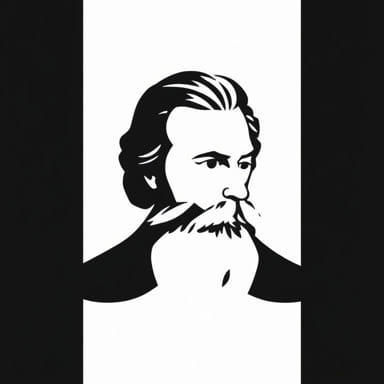
Théophile Gautier was a central figure in 19th-century French literature, known not only for his poetry and prose but also for his contributions as an art critic, dramatist, and journalist. His legacy is deeply intertwined with the Romantic and Parnassian movements, both of which shaped French literary tradition. More than just a writer, Gautier was a cultural commentator whose ideas influenced generations of artists and thinkers. Understanding his biography means exploring a life rich with creativity, conviction, and an enduring pursuit of beauty in all forms of art.
Early Life and Education
Birth and Family Background
Théophile Gautier was born on August 30, 1811, in Tarbes, a town in the southwestern region of France. His family moved to Paris when he was a child, placing him at the heart of the cultural and intellectual ferment that defined 19th-century France. From an early age, Gautier showed a deep interest in literature, art, and classical languages.
Academic Formation
He studied at the prestigious Collège Louis-le-Grand in Paris, where he formed connections with future literary figures. Gautier was also trained in painting and visual arts, which later influenced his descriptive writing style. His artistic upbringing contributed to his belief in ‘art for art’s sake’ a principle that would become a hallmark of his work.
Entry into the Literary World
Influence of Romanticism
Gautier entered the literary scene during the height of the Romantic movement. He became friends with prominent Romantics like Victor Hugo and Gérard de Nerval. His early works, including poetry and essays, reflected the emotional and imaginative intensity characteristic of Romanticism.
First Publications
His first published work, a volume of poetry titledPoésies(1830), attracted the attention of Parisian literary circles. Although it did not make a huge commercial impact, it established Gautier’s reputation as a promising young poet with a unique voice. He followed this with the historical novelMademoiselle de Maupin(1835), which controversially celebrated sensuality and beauty, drawing both praise and criticism.
Key Literary Works
Mademoiselle de Maupin
This novel was among Gautier’s most influential works. It is known for its preface, which outlined his aesthetic philosophy the idea that the purpose of art is to be beautiful rather than to convey moral or social messages. This became a guiding principle for the emerging Parnassian movement.
Ãmaux et Camées
Published in 1852, this collection of poems marked Gautier’s transition from Romanticism to a more refined and formal style. The poems focused on form, structure, and imagery, embodying the art for art’s sake philosophy. These works had a significant influence on Symbolist poets like Baudelaire and Mallarmé.
Captain Fracasse
This 1863 novel blended adventure and satire, and is often considered one of Gautier’s masterpieces. Set in the 17th century, the novel follows a nobleman who becomes an actor and travels with a theatrical troupe. Its lively storytelling and vivid descriptions made it popular with a broad audience.
Journalism and Art Criticism
Work as a Journalist
Gautier was not just a writer of fiction and poetry; he was also a respected journalist. He wrote extensively for newspapers such asLa PresseandLe Moniteur Universel, covering topics ranging from politics to theater. His travel essays, including accounts of his visits to Spain, Egypt, and Russia, showcased his ability to blend observation with poetic detail.
Role as an Art Critic
He also gained recognition as an art critic. His reviews of painting, sculpture, and architecture reflected a deep appreciation for visual aesthetics. Gautier believed in the interconnection between all art forms, and his commentary helped elevate public discourse about beauty and craftsmanship in art.
Literary Style and Philosophy
Art for Art’s Sake
Perhaps the most defining element of Gautier’s literary identity was his advocacy for ‘l’art pour l’art.’ He argued that the value of art lies in its ability to evoke beauty, rather than serve religious, political, or moral ends. This view influenced not only his own writing but also the broader movement of aestheticism in European literature.
Use of Imagery and Description
Gautier was known for his rich, sensual descriptions. Whether in poetry or prose, he painted scenes with words, often invoking color, texture, and atmosphere. This technique allowed him to create immersive experiences for his readers, making his work stand out even among the richly expressive literature of the Romantic era.
Relationships and Personal Life
Close Friendships
Gautier maintained friendships with some of the most prominent figures of his time, including Honoré de Balzac, Victor Hugo, and Hector Berlioz. These relationships helped him remain influential in both literary and artistic circles. He often collaborated with fellow artists, writing librettos and scripts for theater productions.
Family Life
Though Gautier never married, he had a long-term relationship with the singer and actress Ernesta Grisi, with whom he had two daughters. One of his daughters, Judith Gautier, became a well-known writer and orientalist, carrying on her father’s intellectual legacy.
Later Years and Death
Continued Contributions
Even in his later years, Gautier remained an active writer. He continued to publish poetry, fiction, and criticism, maintaining a strong presence in French cultural life. He was elected to the Académie française, a recognition of his contribution to French letters, although he died before being formally inducted.
Death and Legacy
Théophile Gautier died on October 23, 1872, in Neuilly-sur-Seine. He was buried in Montmartre Cemetery in Paris. Though he passed away in the 19th century, his ideas and style continued to influence literary movements well into the 20th century. Today, he is remembered as a bridge between Romanticism and Modernism, a writer whose passion for beauty continues to resonate.
Théophile Gautier’s life and work represent a remarkable dedication to the pursuit of beauty in literature and the arts. As a poet, novelist, journalist, and critic, he left behind a rich and varied body of work that continues to captivate readers. His insistence on the independence of art, his vivid imagery, and his philosophical clarity make him a timeless figure in French literary history. For anyone seeking to understand the development of modern aesthetics and the evolution of 19th-century literature, Gautier’s biography offers both inspiration and insight.