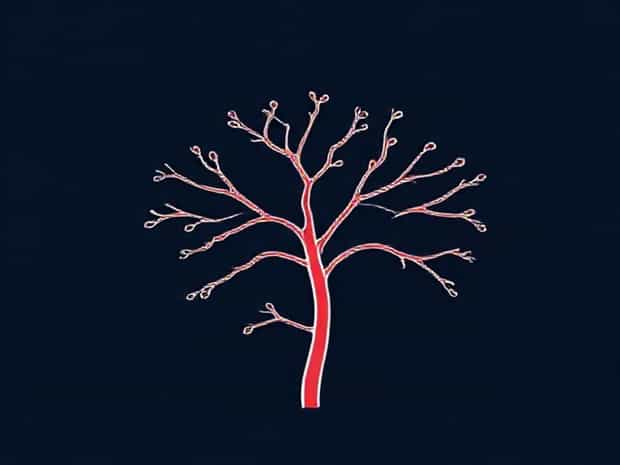
The human eye depends on a rich and complex blood supply to function properly. Among the most important vessels involved is the ophthalmic artery, which provides essential oxygen and nutrients to different structures of the eye and orbit. To truly understand how vision is supported, it is important to explore the various branches of the ophthalmic artery, their pathways, and the specific regions they nourish. This knowledge not only helps medical students and professionals but also benefits anyone interested in the anatomy of the eye and how it maintains healthy vision.
Overview of the Ophthalmic Artery
The ophthalmic artery is a branch of the internal carotid artery, arising just after the carotid exits the cavernous sinus. It enters the orbit through the optic canal, alongside the optic nerve, and then divides into multiple branches. These branches supply the eye, extraocular muscles, eyelids, lacrimal gland, and parts of the face and nose.
Main Branches of the Ophthalmic Artery
The branches of the ophthalmic artery can be divided into orbital branches and ocular branches. Each of them serves a unique function, ensuring the eye and its surrounding structures remain healthy.
1. Central Retinal Artery
The central retinal artery is one of the most critical branches. It enters the optic nerve and travels with it until reaching the retina. Once inside, it divides into superior and inferior branches, further supplying the nasal and temporal sides of the retina.
- Primary blood supply for the inner retinal layers.
- Blockage can cause sudden vision loss, known as central retinal artery occlusion.
2. Lacrimal Artery
The lacrimal artery travels toward the lacrimal gland, providing blood supply to it as well as parts of the eyelids and conjunctiva. It also gives off small branches to the lateral rectus muscle and sometimes to the dura mater of the cranial cavity.
3. Posterior Ciliary Arteries
These arteries are divided into short and long posterior ciliary arteries. They play a vital role in nourishing the choroid and ciliary body.
- Short posterior ciliary arteriesEnter around the optic nerve and supply the choroid and optic disc.
- Long posterior ciliary arteriesTravel forward to reach the ciliary body and iris, forming part of the major arterial circle of the iris.
4. Supraorbital Artery
The supraorbital artery travels through the supraorbital notch or foramen and supplies the forehead, scalp, and upper eyelid. It also sends branches to extraocular muscles such as the superior rectus and levator palpebrae superioris.
5. Supratrochlear Artery
The supratrochlear artery is a terminal branch that emerges near the trochlea of the superior oblique muscle. It supplies the forehead, scalp, and upper eyelid. It plays an important role in facial circulation as it connects with branches of the external carotid artery.
6. Dorsal Nasal Artery
The dorsal nasal artery supplies the root of the nose and medial parts of the eyelids. It also creates an anastomosis with the angular artery, a branch of the facial artery, providing an important connection between internal and external carotid systems.
7. Ethmoidal Arteries
There are two main ethmoidal arteries the anterior and posterior ethmoidal arteries. They pass through the ethmoidal foramina to supply the ethmoid sinuses, nasal cavity, and parts of the meninges.
- Anterior ethmoidal arterySupplies the anterior and middle ethmoid air cells, nasal septum, and anterior cranial fossa meninges.
- Posterior ethmoidal arterySupplies the posterior ethmoid air cells, sphenoid sinus, and part of the dura mater.
8. Muscular Branches
Muscular branches supply the extraocular muscles that control eye movements. These branches are divided into two groups
- Lateral groupLateral rectus, superior rectus, superior oblique, levator palpebrae superioris.
- Medial groupMedial rectus, inferior rectus, inferior oblique.
9. Palpebral Arteries
The medial palpebral arteries branch from the ophthalmic artery and supply the upper and lower eyelids. They anastomose with branches of the lacrimal artery to form the marginal and peripheral arterial arcades in the eyelids.
Clinical Importance of Ophthalmic Artery Branches
Understanding the branches of the ophthalmic artery is crucial in medical practice. These vessels are not only responsible for vision but are also involved in systemic circulation patterns between the internal and external carotid arteries.
Common Clinical Conditions
- Central retinal artery occlusionCauses sudden, painless loss of vision due to blockage of the central retinal artery.
- Ischemic optic neuropathyRelated to compromised blood supply to the optic nerve head from posterior ciliary arteries.
- Orbital traumaMay damage ophthalmic artery branches, leading to bleeding or ischemia.
- Sinus infectionsSpread of infection through ethmoidal branches can affect both orbit and brain.
Connections with Other Arteries
One remarkable feature of the ophthalmic artery and its branches is the presence of anastomoses with external carotid artery branches. These connections provide collateral circulation, which can be life-saving if one of the major vessels becomes blocked.
- Dorsal nasal artery with angular artery (facial artery branch).
- Supraorbital and supratrochlear arteries with superficial temporal artery branches.
- Lacrimal artery branches with middle meningeal artery branches.
Summary of Branches
To make the information clearer, here is a list of the key branches of the ophthalmic artery
- Central retinal artery
- Lacrimal artery
- Posterior ciliary arteries (short and long)
- Supraorbital artery
- Supratrochlear artery
- Dorsal nasal artery
- Anterior and posterior ethmoidal arteries
- Muscular branches
- Palpebral arteries
The branches of the ophthalmic artery form an intricate network that supports the eye, orbit, forehead, and parts of the nasal cavity. Each branch has a specific function, whether supplying the retina, muscles, or surrounding tissues. Clinically, these branches are highly significant, as blockages or damage can lead to severe visual impairment or systemic complications. By understanding the anatomy and role of each branch, medical professionals and students can better appreciate the delicate vascular system that keeps the eyes functioning and vision intact. The branches of the ophthalmic artery, though small, are essential to maintaining one of the most vital senses sight.