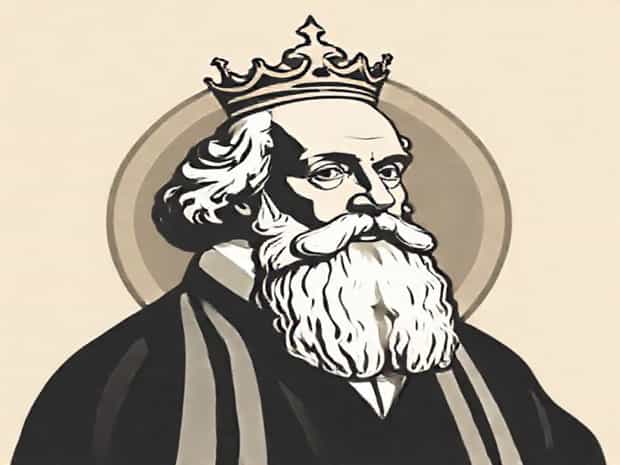
In the late 17th century, Britain made a bold move in the advancement of science by creating the position of Astronomer Royal, a role dedicated to the study of the heavens for the benefit of navigation, discovery, and national prestige. The man chosen as Britain’s first Astronomer Royal was John Flamsteed, a mathematician and astronomer whose dedication laid the foundations for accurate star catalogues and precise astronomical observations. His appointment marked not only a turning point in British science but also an important step in global astronomical progress.
The Creation of the Astronomer Royal Position
In 1675, King Charles II recognized the importance of astronomy for navigation and military power. The seas were critical for Britain’s future, and more accurate navigation meant safer and faster voyages. To achieve this, the king established the Royal Observatory at Greenwich and created the role of Astronomer Royal. The mission was clear to improve the understanding of celestial motions and help sailors determine longitude at sea. This was an ambitious project at a time when long-distance navigation remained a dangerous and uncertain endeavor.
Who Was John Flamsteed?
John Flamsteed, born in 1646 in Derbyshire, was a brilliant young man fascinated by mathematics and the stars. Despite poor health in his youth, Flamsteed pursued studies in astronomy with great passion. His knowledge and skill eventually caught the attention of influential figures, leading to his appointment as the first Astronomer Royal in 1675. He dedicated his life to careful observation, precision, and the methodical recording of astronomical data.
Flamsteed’s Early Life
- Born in Denby, Derbyshire in 1646.
- Suffered from poor health, which limited traditional schooling.
- Became self-taught in mathematics and astronomy through books and personal study.
- Published early astronomical work that gained recognition from prominent scientists.
The Royal Observatory at Greenwich
The establishment of the Royal Observatory was central to Flamsteed’s work. The observatory, located on a hill in Greenwich overlooking the River Thames, became the heart of British astronomy. Flamsteed moved there to begin the monumental task of mapping the skies with greater accuracy than ever before. The observatory later became the reference point for the Greenwich Meridian, the standard for global timekeeping and navigation.
Flamsteed’s Work as Astronomer Royal
As Britain’s first Astronomer Royal, Flamsteed faced enormous responsibility. His main goal was to improve star charts, which were essential for navigation at sea. With meticulous care, he recorded the positions of thousands of stars, creating one of the most accurate star catalogues of his time. Unlike many of his contemporaries, Flamsteed prioritized accuracy over speed, refusing to publish incomplete or flawed data.
Key Achievements
- Mapped over 3,000 stars with remarkable accuracy.
- Produced theHistoria Coelestis Britannica, an extensive catalogue of stars.
- Contributed to solving the longitude problem by improving celestial navigation methods.
- Established practices of precision in astronomical observation that influenced future generations.
Flamsteed’s Conflicts and Challenges
Despite his brilliance, Flamsteed’s career was not without difficulties. He had conflicts with fellow scientists, including Isaac Newton and Edmond Halley. Newton, eager to advance his own research, pushed Flamsteed to release data before Flamsteed felt it was ready. Halley, who later became Astronomer Royal himself, also clashed with Flamsteed over the publication of star charts. These disputes highlighted Flamsteed’s determination to protect the accuracy and integrity of his work, even at the cost of professional relationships.
The Importance of Accurate Star Catalogues
Star catalogues were more than scientific curiosities they were essential tools for sailors and navigators. Before the advent of modern technology, seafarers relied on celestial navigation to determine their position at sea. Flamsteed’s precise data reduced errors in navigation and contributed to safer and more reliable voyages. His work directly supported Britain’s rise as a dominant maritime power, linking astronomy with national strength and global influence.
Uses of Flamsteed’s Data
- Assisted sailors in determining longitude with greater accuracy.
- Improved naval efficiency and reduced losses during long voyages.
- Provided astronomers across Europe with a reliable reference for further research.
- Laid the groundwork for timekeeping systems tied to the Greenwich Observatory.
Flamsteed’s Legacy
John Flamsteed’s contributions continue to resonate in the world of science and navigation. His commitment to precision established a culture of accuracy in astronomy that influenced later figures such as James Bradley and Edmond Halley. The Greenwich Observatory, where he worked tirelessly, remains a symbol of global time and navigation standards. Flamsteed himself is remembered not only as Britain’s first Astronomer Royal but also as a pioneer who bridged the gap between scientific curiosity and practical application.
The Role of the Astronomer Royal After Flamsteed
After Flamsteed’s death in 1719, the position of Astronomer Royal continued to play a central role in British science. Each holder of the title built upon Flamsteed’s foundation, expanding the scope of research from star catalogues to planetary motion, timekeeping, and eventually space exploration. The title became one of the most prestigious honors in British science, symbolizing dedication to the pursuit of knowledge about the universe.
Interesting Facts About Flamsteed
- Flamsteed’s star catalogue included the first use of Flamsteed numbers to identify stars, a system still in use today.
- He worked for decades at the Greenwich Observatory without proper pay for much of his career, showing his dedication to astronomy.
- Despite his clashes with Newton and Halley, his data was later recognized as essential for advancing scientific knowledge.
- His name is remembered in lunar craters and asteroids named in his honor.
Why Flamsteed Matters Today
Understanding Flamsteed’s work gives insight into how science and exploration are interconnected. His role as Britain’s first Astronomer Royal was not only about studying the stars but also about securing Britain’s place in global navigation and discovery. In an age where precise data drives technology, Flamsteed’s insistence on accuracy serves as a reminder of the importance of patience, detail, and integrity in scientific work.
Britain’s first Astronomer Royal, John Flamsteed, transformed the study of the stars into a disciplined science with practical applications. His meticulous observations and unwavering commitment to accuracy laid the foundation for modern astronomy and navigation. By establishing the importance of precision in charting the heavens, Flamsteed ensured that the Royal Observatory and the title of Astronomer Royal would become lasting symbols of scientific progress. His life and work remain a testament to the power of determination and the enduring quest to understand the universe.